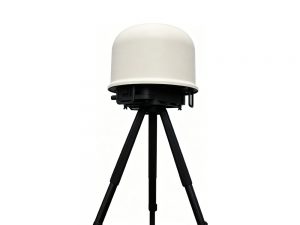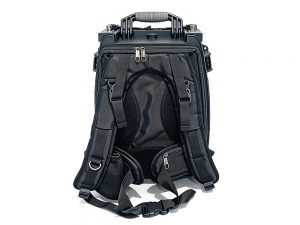
A Starlink signal jammer is an intentional radio-frequency transmitter designed to overpower the satellite downlink and disrupt user terminals. Although often tied to illegal activities, its potential applications are explored primarily within military, research, and highly controlled defense environments. Understanding these conceptual use cases clarifies why the technology draws so much interest despite strict global prohibitions. For background on the satellite network itself, you can read our explainer on Starlink communication bands.

1. Starlink Signal Jammer in Electronic Warfare
Modern battlefields increasingly rely on satellite connectivity for real‑time intelligence and drone coordination. A Starlink signal jammer can be deployed as an electronic attack tool to deny an adversary access to overhead communication. By creating a localized interference bubble, military forces can disrupt enemy command‑and‑control networks. This method falls under electronic warfare tactics (DoFollow), where spectral dominance is as crucial as physical terrain.
2. Integrating a Starlink Signal Jammer into Counter‑Drone Systems
Many advanced drones use Starlink modules for beyond‑visual‑line‑of‑sight control. Integrating a Starlink signal jammer into counter‑UAV platforms forces the drone to lose its command link, triggering a return‑to‑home or landing procedure. This application is especially relevant for protecting airports, borders, and sensitive events. The jammer must precisely target the Starlink downlink without affecting other nearby services, a technical challenge that defense engineers actively address.
3. Using a Starlink Signal Jammer for Critical Infrastructure Defense
In classified scenarios, a Starlink signal jammer can shield high‑security facilities from unauthorized satellite‑based eavesdropping or remote‑triggered threats. The concept works by establishing a protective RF perimeter. Inside this bubble, no Starlink terminal can establish a reliable link, preventing data exfiltration through commercial satellite channels. Access to such systems is strictly limited to government agencies with explicit legal authorization.
4. Red Teaming and Spectrum Validation
Security researchers and certified labs occasionally employ a Starlink signal jammer in anechoic chambers to test terminal resilience. By simulating intentional interference, engineers can evaluate how well the phased‑array antenna rejects noise and maintains lock. This controlled use helps SpaceX and other satellite operators harden their systems, much like how automobile manufacturers crash‑test vehicles. The FCC strictly regulates (DoFollow) any such testing outside shielded environments.
Starlink Signal Jammer Application Overview
| Application Area | Primary Purpose | Typical Deployment |
|---|---|---|
| Electronic Warfare | Deny enemy satellite communications | Military operations, conflict zones |
| Counter‑Drone | Force drone failsafe activation | Airports, border security |
| Infrastructure Shielding | Prevent unauthorized data leaks | Government facilities, embassies |
| Spectrum Hardening | Validate terminal interference tolerance | RF labs, anechoic chambers |
5. The Legal Reality of Any Starlink Signal Jammer Use
Despite the applications described above, using a Starlink signal jammer outside of tightly regulated military or laboratory settings is unequivocally illegal. Civilian ownership, marketing, or operation carries severe penalties worldwide. Even discussing these scenarios, it is vital to reinforce that the technology must never be deployed without explicit spectrum‑management authority and lawful purpose. The practical takeaway remains that a Starlink signal jammer is a restricted tool, with its real‑world existence largely confined to nation‑state defense and approved research — a boundary that both protects public communication and drives ongoing innovation in anti‑jamming countermeasures.