The Operational Gap Nobody Wanted to Talk About

Close protection teams face a quiet but growing threat: commercially available Starlink terminals being used to track principal movements, relay real-time positioning data, or trigger remote devices. During high-profile visits and diplomatic events, the risk isn’t just from direct attack. It’s from someone watching from a rooftop two blocks away, streaming live video over a satellite link that no local cellular network can shut down.
Fixed jamming installations around a venue help, but they leave massive holes. Principals move. Motorcades change routes. Meetings happen in buildings with no pre-planned RF coverage. Vehicle-mounted systems are too conspicuous and often can’t enter underground parking, hotel lobbies, or narrow old-city streets. The team needed something an operator could wear under a jacket or carry in a discreet bag, deploy in seconds, and use to kill a satellite uplink without drawing attention.
The BNT-S900-B8 Backpack Starlink Jammer was the only system that fit the profile.
What Five Units Covered
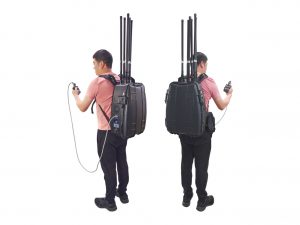
The security detail procured 5 BNT-S900-B8 Backpack Starlink Jammers, configured for rapid deployment across a rotating protection mission. Each unit shipped complete with the main pack, eight full-band omnidirectional antennas, external wired controller, AC adapter, and ruggedized power cord. Two extra hot-swap battery packs and one directional antenna kit per unit were added for extended motorcade coverage.
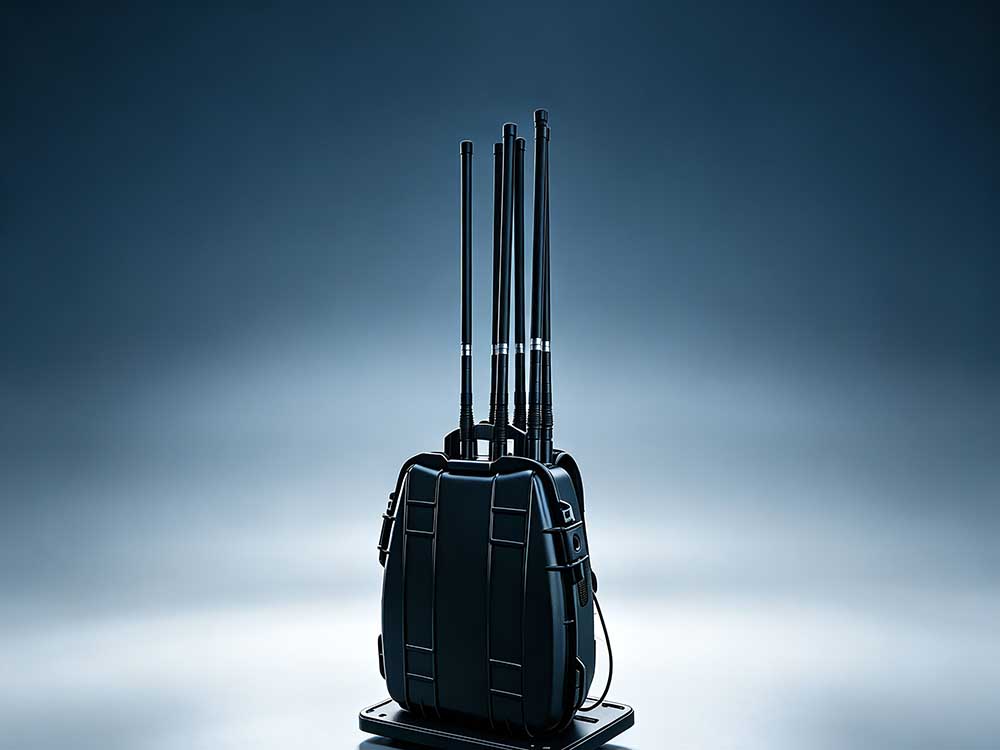
Inside each pack, eight independent 50 W SDR-driven channels cover S-band, C-band, Ku-band, and GNSS L1/L2/L5. The whole thing runs on a 29.4 V / 30 Ah Li-ion battery good for 60 to 90 minutes of continuous output. It weighs about 16 kg without antennas — heavy, yes, but manageable for a trained operator who needs real jamming power, not a toy.
Field Results During a High-Profile Visit
The five jammers were deployed across a four-day protection operation involving multiple principals, two official motorcades, and three indoor venues. Here’s what the team recorded.
-
Deployment speed: Operators averaged 15 seconds from pack removal to active jamming. The quick-release buckles and external controller made the difference in stairwells and moving corridors.
-
Omnidirectional coverage: In open-air reception areas and hotel entrances, the whip antennas produced a reliable denial zone of roughly 700 to 1,100 meters — enough to cover the immediate perimeter without reaching into neighboring buildings.
-
Directional stand-off: During one motorcade leg, a rooftop surveillance team spotted a Starlink terminal on a building 3.4 km ahead. A directional antenna kit suppressed the link in under 10 seconds, and the terminal never reconnected while the convoy passed.
-
Battery performance: At mixed output, the stock battery held for an average of 77 minutes. With one hot-swap spare, a single operator maintained continuous protection for over two hours without returning to a support vehicle.
-
Thermal stability: No overheating, no automatic shutdowns. The forced-air cooling ran continuously in 31°C ambient temperature, and the pack remained stable under full load.
The most valuable feature turned out to be the instant kill switch on the external controller. In two separate incidents, the team had to cut transmission immediately to avoid interfering with official satellite communications. One press of a button, and the spectrum went quiet.
Why the BNT-S900-B8 Worked for Close Protection
This mission profile is unforgiving. You can’t drive a rack-mounted jammer through a hotel lobby. You can’t set up a fixed antenna array on a moving motorcade. The BNT-S900-B8 changed that equation.
The core value came from four things:
-
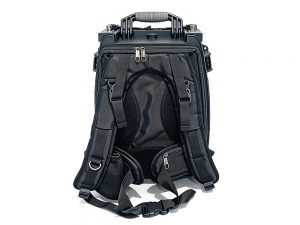
Discreet portability: The pack looks like standard tactical gear. It doesn’t scream “jammer” from across the street.
-
Instant multi-band response: Operators didn’t need to swap hardware when a new frequency popped up. The SDR handled it on the fly.
-
Extended field time with hot-swap batteries: The mission didn’t pause when the battery hit 10%. A fresh pack went in, and coverage continued.
-
No infrastructure footprint: No generators, no cables, no antenna masts. Just one operator, one pack, and a dead satellite link.
For any executive protection unit dealing with the reality of unauthorized LEO satellite surveillance, the BNT-S900-B8 delivers a level of flexibility that fixed installations and vehicle mounts simply can’t match. Five units covered what would have otherwise required a much larger, far more visible electronic warfare footprint.