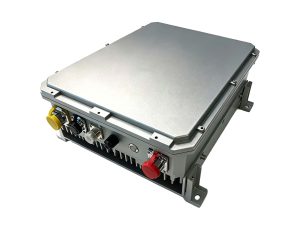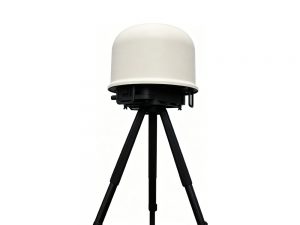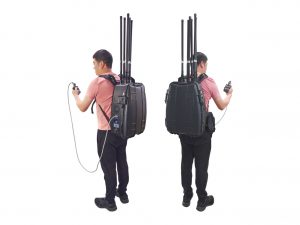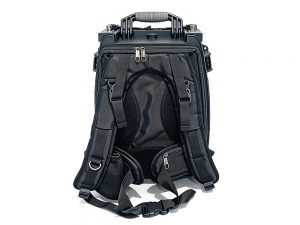
A mobile EW system against Starlink is shifting from a niche concept to a tactical priority. Low Earth orbit (LEO) constellations deliver high-throughput, low-latency connectivity that many military units now depend on. But this dependence creates a vulnerability: a small, vehicle-mounted jammer can deny that link across a wide area. This article breaks down field-ready tactics, RF techniques, and deployment trade-offs for countering Starlink-class terminals.
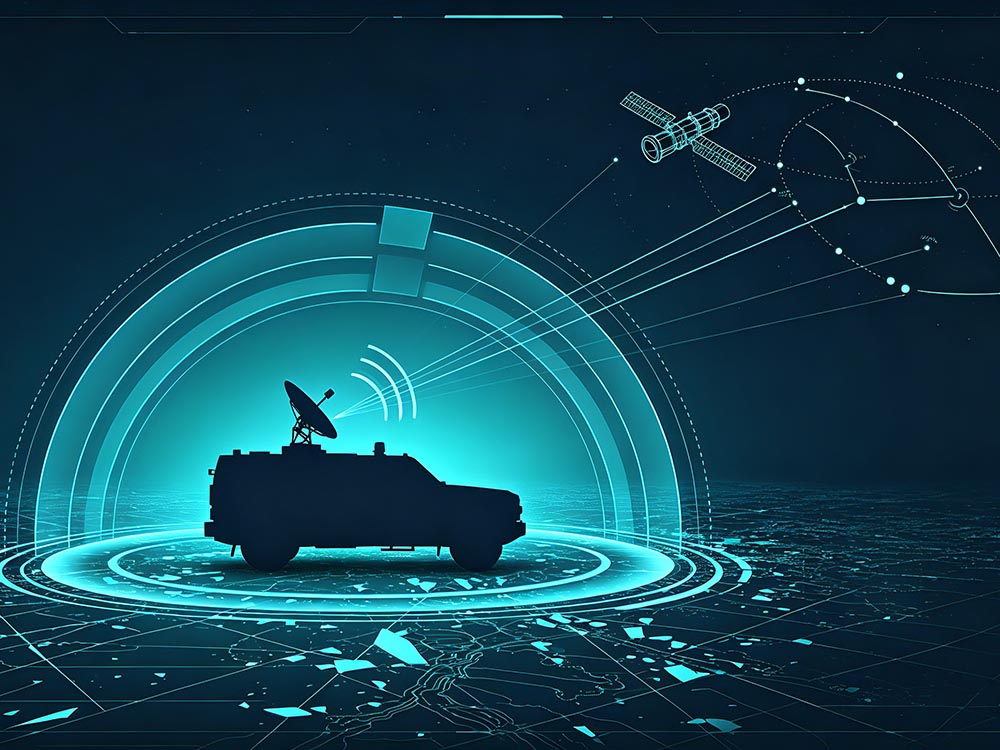
Why a Mobile EW System Against Starlink Matters
Starlink operates in the Ku and Ka bands, using phased-array user terminals that automatically steer beams toward passing satellites. A fixed jammer can be located and targeted quickly. A mobile EW system against Starlink avoids this by relocating after each emission, making it far harder to geolocate. According to Starlink’s official specifications, downlink frequencies span 10.7–12.7 GHz, while uplinks sit between 14.0–14.5 GHz. Mobile platforms can exploit this relatively narrow band allocation.
Core RF Countermeasure Techniques
Three methods dominate current mobile EW operations against LEO terminals:
-
Broadband barrage jamming – High-power noise across the entire Ku/Ka uplink band. Simple but power-hungry and easy to detect.
-
Protocol-aware jamming – Targets specific control channels or synchronization bursts, reducing required power by up to 20 dB compared with barrage.
-
Spoofing and decoy signals – Transmits fake satellite beacons or altered timing signals to force user terminals into continuous re-acquisition loops.
A mobile EW system against Starlink using protocol-aware jamming is especially effective because it disrupts only the handshake between terminal and satellite, leaving other RF traffic unaffected.
Performance Comparison of Countermeasures
| Technique | Frequency Range | Effective Range | Power Draw | Detectability |
|---|---|---|---|---|
| Broadband barrage jamming | 10.7–14.5 GHz | 5–8 km | 2–4 kW | High |
| Protocol-aware jamming | Uplink control only | 8–12 km | 300–800 W | Medium |
| Spoofing / decoy | Downlink beacon | 3–6 km | 150–400 W | Low |
Table: Typical envelope for a mobile EW system against Starlink mounted on a 4×4 tactical vehicle.
Field Deployment Challenges
Power and thermal management remain the main constraints. A vehicle-mounted amplifier capable of saturating Ku-band uplinks generates significant heat. Active cooling adds weight, reducing mobility. Terrain masking also matters: because Starlink terminals need a clear sky view, operators position jammers on high ground or use elevated masts. For current threat assessments, Jane’s Defence regularly covers mobile EW programmes.
Another challenge is emission control. Any mobile EW system against Starlink that transmits continuously becomes a beacon for anti-radiation missiles or drone swarms. The most survivable tactics use short, randomized bursts, then reposition. This “shoot-and-scoot” approach aligns with modern maneuver warfare doctrine.
Conclusion
The mobile EW system against Starlink is no longer an experimental gadget. It is a practical tool for denying satellite connectivity in contested environments. By combining protocol-aware jamming, low-observable spoofing, and rapid relocation, ground forces can degrade LEO communication links without exposing high-value assets. As LEO constellations proliferate, expect mobile EW platforms to become standard equipment in brigade-level electronic warfare units.