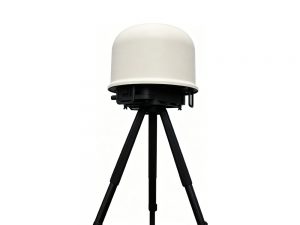
Can Starlink be jammed effectively? The short answer is yes—under specific military-grade conditions—but much less effectively than older geostationary satellite links. Starlink’s low Earth orbit architecture, phased-array terminals, and frequency reuse create serious technical and legal barriers. Below are seven factors every operator should understand before assessing jamming threats.

Technical Barriers to Jamming Starlink
Starlink operates in Ku and Ka bands using thousands of LEO satellites. Unlike a fixed geostationary dish, Starlink user terminals steer beams electronically. A jammer cannot simply aim at one satellite; it must flood a moving target or cover a wide sky area. This demands higher power, wider bandwidth, and fast tracking. Phased-array antennas also support null steering. The terminal can reduce gain in the direction of an interfering signal. Combined with encryption and dynamic beamforming, this makes local jamming less efficient. For more details, see Starlink technical documentation.
Starlink also uses adaptive frequency hopping across narrow beams. This forces a jammer to spread energy over a much larger spectrum, reducing power density. Older GEO services relied on wide fixed beams, which were easier to overpower with noise. In short, can Starlink be jammed effectively without state-level spectrum dominance? The evidence says rarely.
Can Starlink Be Jammed Effectively by Ground-Based Systems?
Ground-based jammers face horizon and line-of-sight limits. Because Starlink signals arrive from multiple elevation angles, a single ground jammer usually blocks only part of the link. High-power broadband noise can still degrade downlink SNR within a radius of 20–50 km. In Ukraine, Russian electronic warfare units have attempted to interfere with Starlink terminals. A Reuters report noted mixed results, with terminals often restored after software updates. So can Starlink be jammed effectively from the ground? Yes, but only with substantial power, favorable terrain, and constant adjustment. For casual or small-scale jammers, the answer is generally no.
Operational reports from Ukraine also show that software updates can restore service quickly after jamming attempts. This suggests that many attacks are narrowband or poorly coordinated. Effective jamming requires persistent wideband interference, which is expensive and exposes the jammer to geolocation.
Airborne and Space-Based Jamming Risks
Airborne platforms can track fast-moving satellites and illuminate larger areas, making them more effective. However, this is an act of military aggression and violates ITU Radio Regulations. See the ITU guidance on satellite interference. The legal question behind can Starlink be jammed effectively is as important as the RF physics. Such operations are generally limited to state actors. Space-based jammers are theoretically possible but rare. They would require orbital insertion, power generation, and sophisticated beam control. Legal and diplomatic costs usually outweigh tactical gains.
Jamming Effectiveness Comparison
| Jamming method | Typical range | Effectiveness against Starlink | Main limitation |
|---|---|---|---|
| Ground-based broadband | Under 50 km | Moderate | Horizon, power, tracking |
| Airborne EW platform | 100–300 km | High | Cost, exposure, legal risk |
| Space-based jammer | Regional | High but rare | Treaty violations, complexity |
| Protocol spoofing / cyber | Local | Low to moderate | Encryption and authentication |
Mitigation for Enterprise and Government Users
Operators can reduce risk by using dual LEO/MEO links, enabling beam nulling, and monitoring SNR anomalies. Military users often combine Starlink with hardened terminals and alternate SATCOM. Some governments also deploy mobile passive sensors to locate jammers by triangulating signal strength. That turns jamming from a hidden tactic into a detectable, attributable act.
Watch this short explainer for a visual breakdown: Can Starlink be jammed effectively? Video explainer.
Conclusion
So can Starlink be jammed effectively? Yes, under specific conditions—high-power airborne or military jammers, localized areas, and limited legal constraints. But for most enterprise, maritime, and government users, Starlink’s LEO design and phased-array technology make small-scale jamming ineffective. The real question is not whether it is possible, but who can afford the cost, risk, and legal exposure.