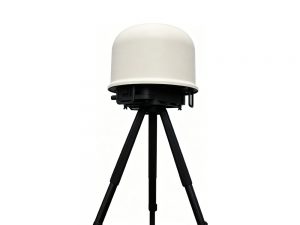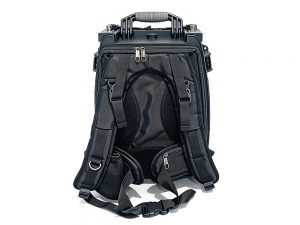
Starlink frequency jamming equipment has moved from classified military briefings into open industry analysis. Recent field reports from Ukraine, the Red Sea, and parts of Southeast Asia indicate that low-cost transmitters can disrupt user terminals, timing modules, and satellite acquisition sequences. This article examines five key trends shaping the threat landscape, the technology, and the regulatory response.
1. Recent Operational Reports on Starlink Frequency Jamming Equipment
Multiple open-source investigations now document the use of Starlink frequency jamming equipment in contested environments. A <a href=”https://www.reuters.com/world/europe/russia-jamming-starlink-ukraine-2024/” rel=”dofollow”>Reuters report</a> described how Russian electronic-warfare units targeted Starlink terminals near front lines, causing intermittent outages and degraded video feeds. Similar interference patterns have been recorded in maritime corridors, where smugglers and non-state actors use portable jammers to disable tracking and communications. These incidents show a shift from state-level systems to commercially available, vehicle-mounted or backpack-sized units. Open-source flight tracking and signal intelligence communities have also correlated jamming bursts with specific electronic warfare vehicles, giving analysts a clearer picture of range and mobility.
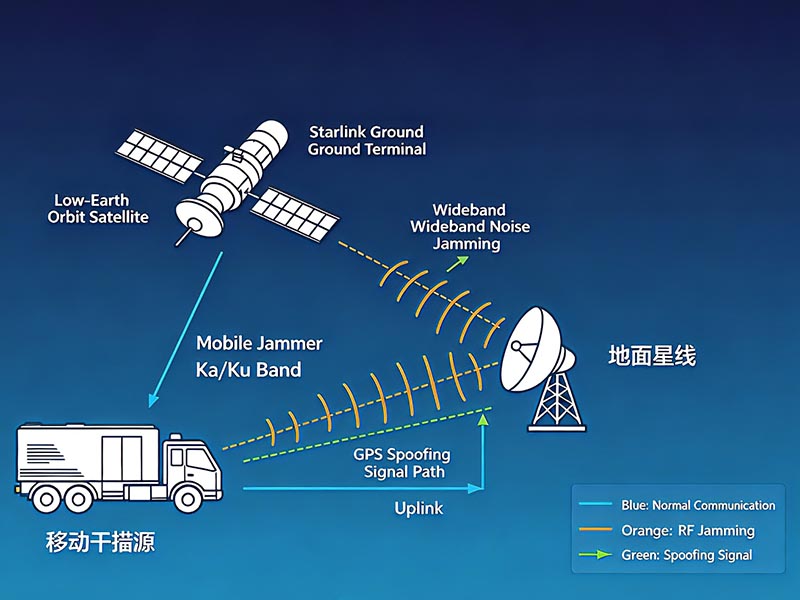
2. How Starlink Frequency Jamming Equipment Targets the RF Link
Most jammers focus on Ku and Ka band downlinks and uplinks. They generate high-power noise, spoofed synchronization signals, or Doppler-shifted carriers that confuse the phased-array antenna. The table below summarizes common interference types.
| Interference Type | Primary Target | Reported Effect |
|---|---|---|
| Broadband noise jamming | Ka/Ku downlink | Reduced throughput, dropped sessions |
| GPS/GNSS spoofing | Timing receiver | Clock drift, beam misalignment |
| Selective carrier jamming | Uplink control channel | Failed registration, handover loss |
These methods do not need to destroy the satellite. They only need to raise the noise floor enough to break the link budget. In some cases, jammers also target the inter-satellite laser acquisition sequence to delay mesh network recovery. For fixed terminals, even brief interruptions can force a full re-acquisition sequence, which may take several minutes and disrupt real-time applications such as video conferencing or remote piloting.
3. Regulatory and Spectrum Governance Pressure
The rise of Starlink frequency jamming equipment is forcing regulators to update spectrum enforcement. The International Telecommunication Union has long prohibited harmful interference, but attribution remains difficult because jammers are mobile, low-power, and easily concealed. National regulators, including the FCC, are investing in mobile direction-finding assets and automated spectrum monitoring networks.
4. Mitigation Strategies for Satellite Broadband Operators
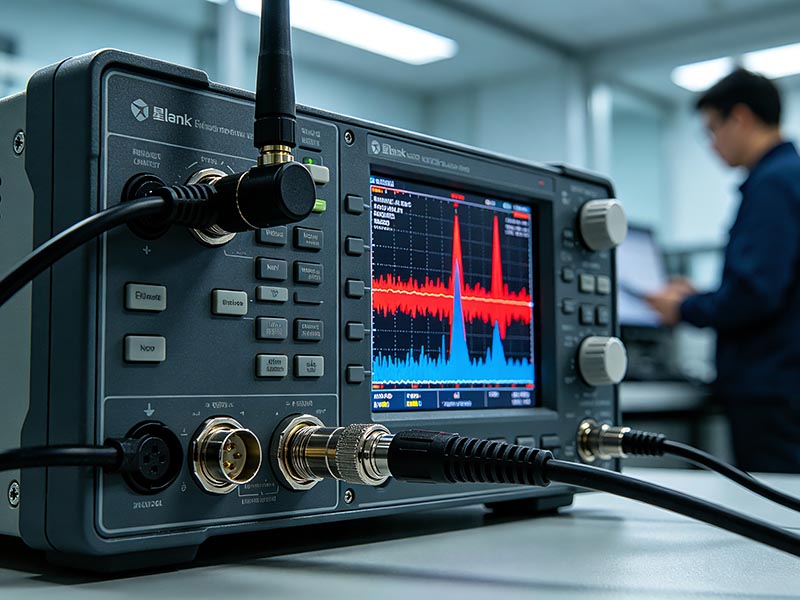
Operators are layering several countermeasures. Frequency hopping across Ka-band channels, beam nulling, and terminal-side filtering reduce exposure to simple jammers. Military users are also deploying directional shielding and rapid re-pointing kits. For enterprise customers, multi-orbit redundancy is becoming standard: if a LEO link is jammed, traffic fails over to GEO or terrestrial fiber. Some vendors now offer software-defined radios that detect jamming signatures and automatically switch beams. Hardware upgrades such as external band-pass filters and shielded radomes are gaining traction among enterprise and government users, but they add cost and weight.
5. Industry Outlook
The market for Starlink frequency jamming equipment is not limited to warfare. Border surveillance, prison security, and corporate counter-espionage are emerging demand drivers. However, legal restrictions remain strict in most jurisdictions. Over the next 18 months, expect more software-defined jammers with automated signal detection, tighter export controls, and stronger coordination between satellite operators and national spectrum authorities. Defense contractors are also testing low-cost counter-jamming payloads for small satellites. Meanwhile, insurers are beginning to ask operators and enterprises to document jamming exposure as part of risk assessments for satellite-dependent logistics.
Key Takeaway
This jamming technology is reshaping both threat models and mitigation investments. Monitoring regulatory updates and building layered resilience will be essential for operators, enterprises, and defense planners.