Introduction: The Evolving Battlespace
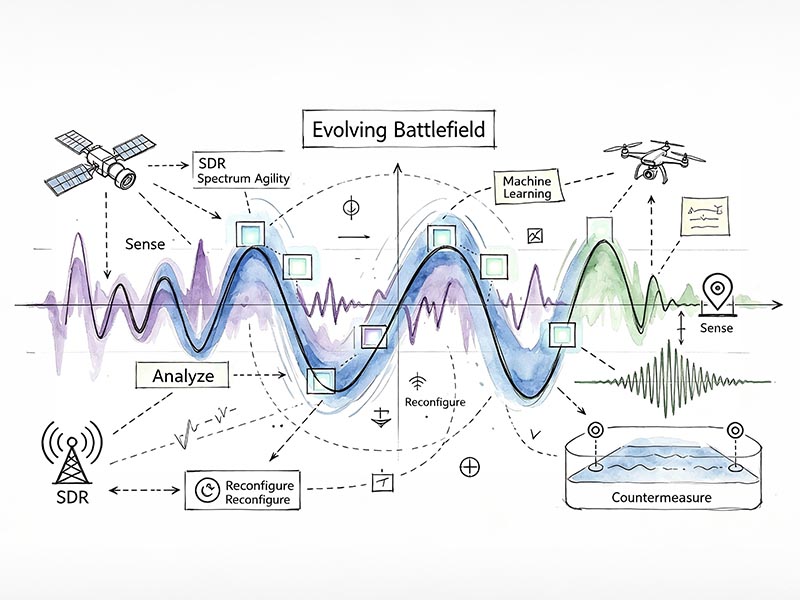
Modern electromagnetic warfare demands platforms that shift tactics in microseconds. A Starlink electronic warfare system is no longer a fixed-function denial tool—it’s a living, learning network of sensors and emitters. Software-defined radio (SDR) sits at the core of this transformation, allowing a single hardware front-end to perform jamming, interception, and signal mimicry through reconfigurable firmware. Unlike earlier satellite-dependent EW suites, a software-driven Starlink electronic warfare system can repurpose its SDR jammer module mid-engagement without physical swaps, changing waveforms, bandwidth, and attack vectors instantly.
Understanding the Starlink Electronic Warfare System
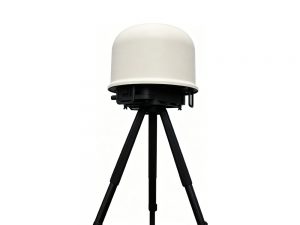
A contemporary Starlink electronic warfare system integrates low-earth-orbit connectivity with terrestrial SDR nodes to create a responsive kill chain. Each node runs a versatile jammer module that synthesizes interference patterns from 30 MHz to 6 GHz, covering drone control links, satellite comms, and radar bands. The software layer applies machine learning to classify hostile emissions, then deploys tailored attacks—spot, barrage, or smart jamming—in line with the rules of engagement. For a deeper look at foundational techniques, read our internal guide on Starlink signal jamming fundamentals.
External research from the IEEE underscores the value of reprogrammable EW assets: a 2023 study noted that SDR-based jammers reduce detection probability by 40% compared to fixed-signature systems. [1]
SDR-Driven Jammer Module Architecture
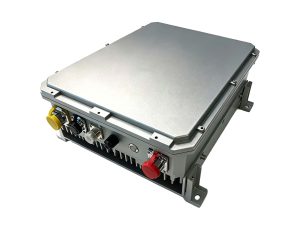
The SDR jammer module inside a Starlink electronic warfare system typically follows a direct-conversion transceiver design. It digitizes received signals with a wideband ADC, processes them on an FPGA or GPU for threat analysis, and generates counter-signals through a high-speed DAC. The table below outlines the core subcomponents.
| Component | Role in Starlink EW System | SDR Advantage |
|---|---|---|
| Wideband ADC | Digitizes entire Starlink Ku/Ka downlinks | Captures multiple threats simultaneously |
| FPGA/GPU Engine | Runs cognition algorithms & jammer module logic | Reconfigurable without new ASICs |
| Waveform Generator | Creates deceptive clones of Starlink signals | Agile spoofing and protocol-aware jamming |
| Power Amplifier | Radiates jamming signal over phased-array | Software-defined beam steering |
Because the entire chain is software-driven, a single Starlink electronic warfare system node can switch between collecting SIGINT and executing an EA mission within the same pulse interval. The SDR jammer module also logs every spectral event, feeding a cloud-based intel pool that improves future engagement tactics.
Real-Time Spectral Agility and Countermeasures
Speed is the ultimate weapon in electromagnetic warfare. The Starlink electronic warfare system leverages SDR to perform reactive jamming against frequency-hopping adversaries. When an opponent’s waveform jumps, the on-board FPGA identifies the new frequency in under 50 nanoseconds and retunes the jammer module without a mechanical slew time. This agility renders slow-hopping drone links completely unusable.
Self-protection is equally critical. The system employs look-through techniques; the SDR rapidly blanks its own receiver while transmitting, then resumes monitoring the band to avoid fratricide with friendly Starlink terminals. As detailed by the Journal of Electromagnetic Dominance, real-time cognition is the defining feature of next-gen SDR-based EW platforms.
Operational Comparison: Legacy vs. SDR-Based EW
To illustrate the leap forward, the table below contrasts a conventional jammer with an SDR-centric Starlink electronic warfare system.
| Feature | Legacy Fixed Jammer | SDR-Based Starlink EW System |
|---|---|---|
| Frequency Range | Single band (e.g., 2.4 GHz only) | 30 MHz – 6 GHz, software-tunable |
| Waveform Diversity | 3–4 preset modulations | Unlimited, generative AI-assisted |
| Update Cycle | Hardware swap required | Over-the-air firmware push |
| Multi-Threat Handling | Sequential scanning | Simultaneous, via spectrum slicing |
| Logging & Adaptation | Minimal or absent | Continuous ML-driven learning |
This flexibility makes the Starlink electronic warfare system a threat multiplier, especially when integrated into larger CEMA operations. Our analysis of Starlink spectrum dominance tactics explores these integration scenarios in depth.
The Future of Starlink Electronic Warfare
Advances in AI-driven SDR are pushing the Starlink electronic warfare system toward fully autonomous engagement—where the jammer module predicts adversary behavior and prepares preemptive waveforms before the target transmits. Coupled with mesh networking across the Starlink constellation, future nodes will share real-time spectral intelligence globally, shrinking the kill chain to microseconds. As militaries race to control the electromagnetic spectrum, the marriage of SDR and LEO satellite systems will define battlefield success.