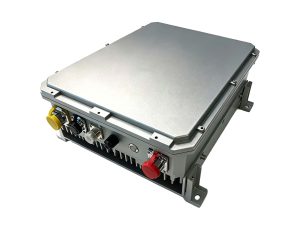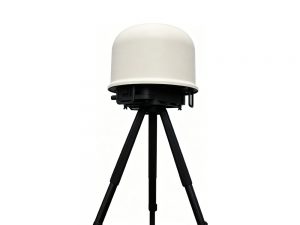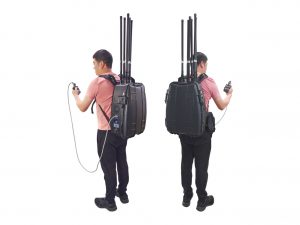
They absolutely do. For our kilowatt-class fixed stations, the RF power amplifier efficiency typically sits between 40% and 55%. In plain terms, nearly half the input electrical power turns straight into heat. If you don’t pull that heat out fast enough, the amplifier transistors can burn up within minutes. Even the feed assembly behind the antenna can suffer from thermal expansion issues that degrade the VSWR.
Our current cooling approach is “forced air or liquid cooling, you choose”, depending on site conditions and the maintenance capability of the crew:
-
For standard indoor units under 500 W, we rely on high-performance variable-speed fans. There are multiple temperature sensors inside the chassis, and the FPGA adjusts fan speed based on real-time temperature curves—they don’t just spin at full blast all the time. That saves dust buildup while keeping thermals in check. The exhaust port comes with a flange so you can hook it straight into a shelter’s ventilation duct and dump the hot air outside.
-
For transmitter cabinets over 1 kW, liquid cooling is standard. The PA modules bolt directly onto cold plates. We use an ethylene-glycol/water mix with a freezing point down to -40°C, so the same coolant works in the tropics and in arctic conditions. Outdoor cabinets get an independent circulation pump station with built-in filtration and level alarms. Every liquid-cooling loop is pressure-tested at 0.5 MPa for 48 hours before it leaves the factory—zero leaks, period.
-
The RF head up on the antenna tower has its own IP68 sealed housing and uses aluminum fin natural convection—no fans, fewer failure points. If the customer is in an extreme environment like a desert, we can bolt on an external forced-air module, but all power and control cables use quick-connect plugs that can be replaced blind in the field.
During actual deployment, we even run a basic airflow simulation for the equipment room and give the customer a simple CFD report showing them exactly how to position the air-conditioner outlets. The long-term reliability of this gear really comes down to cooling. Get that right, and the machine will sit there trouble-free for years.