FAQS
If the equipment shows no effect or throws an alarm in the field, what can an operator troubleshoot on their own?
During handover training, we teach every operator crew a quick “common-sense” checklist that doesn’t require opening the case or pulling out test gear. It usually goes in three steps. Step one: check the power and alarm LEDs. This is the most...
Can a single jammer take out multiple Starlink terminals, or jam signals from several satellites at once?
This question comes up a lot. You really have to split it into two different scenarios: jamming multiple terminals on the ground, and jamming multiple satellites in the sky. The technical difficulty is night and day. For multiple terminals: That’s the...
Do high-power fixed-site jammers generate a lot of heat? How do you handle cooling?
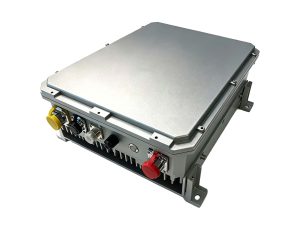
They absolutely do. For our kilowatt-class fixed stations, the RF power amplifier efficiency typically sits between 40% and 55%. In plain terms, nearly half the input electrical power turns straight into heat. If you don’t pull that heat out fast...
What jamming modes and techniques do your Starlink disruption systems support?
Our Starlink jamming platforms are built on a software-defined radio (SDR) architecture, enabling multiple sophisticated jamming modes that can be selected or programmed according to the operational scenario. The supported techniques include: Broadband Barrage Jamming: The system transmits high-power noise across...
What environmental conditions are your Starlink jamming systems designed to withstand?
All our Starlink jamming equipment is engineered for reliable operation in extreme military and field environments. Every system undergoes rigorous environmental qualification testing before delivery. Key environmental specifications include: Temperature Range: Portable and vehicle-mounted units are rated for full operational performance...
Can your Starlink jammers disrupt terminals that are in motion, such as those mounted on vehicles, ships, or aircraft?
Yes. Our Starlink jamming systems are fully capable of disrupting user terminals in motion, including those installed on land vehicles, maritime vessels, and low-altitude airborne platforms. The operational principle remains identical: overwhelming the terminal’s receiver with a higher-power signal on...
Does the factory provide system maintenance, firmware upgrades, and long-term technical support?
Yes, we offer full-lifecycle technical support services for all authorized procurement systems, ensuring peak performance throughout their service life: Firmware & Software Upgrades: The Starlink signal structure is continuously updated. We maintain a dedicated reverse-engineering and signal analysis team that persistently...
What power supply options are supported? Can the equipment operate continuously in remote or mobile environments?
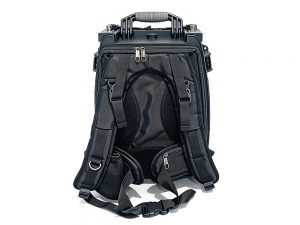
Our starlink jamming systems are designed for harsh battlefield and field environments, offering flexible power solutions: DC Power (Portable/Manpack): Standard input is 24–48 VDC, compatible with military lithium battery packs (e.g., BB-2590, MBITR battery adapters), vehicle batteries, or tactical solar charging...
Can Starlink Jammers Be Detected & Located? | Low-Probability-of-Intercept Techniques
Any RF emission can potentially be discovered by modern spectrum monitoring and direction-finding systems. However, our starlink jamming systems incorporate multiple Low Probability of Intercept (LPI) techniques to significantly enhance stealth and survivability: Power Management: The system does not transmit continuously...
How to Install Starlink Jammers? | Deployment Guide for Portable, Vehicle & Fixed Sites
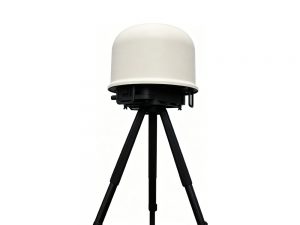
Deployment generally requires technicians certified by our factory, or client personnel with a foundational RF engineering background, depending on system complexity: Portable/Manpack Units: Designed for single-operator deployment. Setup only requires unfolding the tripod and orienting the antenna roughly toward the target...
Can Starlink Resist Jamming? | How Professional Jammers Counter FHSS & Beamforming
Yes, the Starlink system was designed from the ground up with electronic warfare survivability in mind, possessing several anti-jamming features—all of which can be effectively overcome by our advanced jamming technology: Frequency Hopping Spread Spectrum (FHSS): Starlink terminals can rapidly switch...
Are Starlink Jammers Harmful to Humans? | RF Radiation Safety FAQ
Starlink jamming equipment manufactured by our factory does not emit ionizing radiation, and under standard operation it poses no radiation hazard to operators or nearby personnel when proper protocols are followed. The devices transmit non-ionizing radio-frequency (RF) electromagnetic waves, and...
How to Buy Starlink Jammers? | Authorized Government Procurement Process
Procurement is handled through a strictly controlled, documented process: Initial Inquiry: Submit an official request via our secure contact form or encrypted email. Provide your agency/department details and intended use case. Credential Verification: We require a formal Letter of Authorization, an end-user...
What is the effective jamming range of your Starlink disruption systems?
The effective range depends on three core factors: transmitter output power, antenna gain and directivity, and the local RF environment (terrain, buildings, foliage). We categorize our systems as: Portable/Manpack Units: 20W–50W output, achieving directional disruption ranges of 200–800 meters against user...
Can your Starlink jammer block other signals like GPS, Wi-Fi, or cellular?
Yes, our factory designs modular, multi-band jamming platforms that can be configured to disrupt multiple frequency bands simultaneously or selectively. A standard dedicated Starlink jammer focuses purely on the Ku/Ka uplink and downlink frequencies. However, on a custom-build basis, we...
What are the authorized applications for Starlink signal jamming systems?
Our Starlink jamming solutions are deployed in several highly regulated, mission-critical scenarios: Military & Electronic Warfare: Creating denied communication environments during training exercises, protecting troop movements from unauthorized satellite tracking, and countering adversary command-and-control links. Critical Infrastructure Protection: Safeguarding power plants, oil...
Are Starlink jammers legal to own and operate?
The legality of Starlink jamming equipment depends entirely on the jurisdiction and the end-user’s authorization. In the United States, the Federal Communications Commission (FCC) strictly prohibits the marketing, sale, and use of signal jammers by private individuals or commercial entities....
What is a Starlink jamming device and how does it work?
A Starlink jamming device is a radio frequency (RF) transmitter engineered to disrupt the communication link between a Starlink user terminal (dish) and the low-earth-orbit satellite constellation. Starlink operates primarily in the Ku-band (10.7–12.7 GHz for downlink, 14.0–14.5 GHz for...