The Problem: Rogue Ku-Band Signals
A research campus in Shenzhen handles sensitive RF and semiconductor work. In early 2025, teams noticed intermittent interference on their own test ranges. Standard spectrum analyzers showed only brief noise spikes.

Security suspected someone was using commercial Starlink terminals to move data outside the campus network. The signals were too short, too weak, and too agile for conventional gear. We needed a dedicated detection and jamming pair.
Hardware Deployed
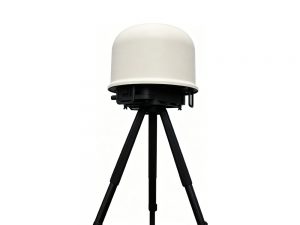
We installed one BNTSLD400 detection system and one BNTSLJ600 jamming system. The BNTSLD400 covers 14.00–14.50 GHz with a 500 MHz instantaneous bandwidth. It has a phased array with ≥30 dBi gain, 1° RMS direction-finding accuracy, and a detection range of at least 30 km.
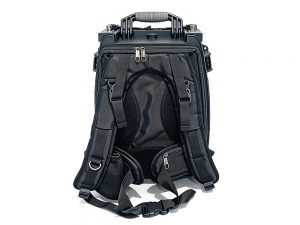
The BNTSLJ600 operates on the downlink from 10.95–12.75 GHz. It offers eight simultaneous jamming frequencies, 60 dBW ERP across a 500 MHz chunk, and configurable comb spectrum lines from 1 to 100.
Detection Accuracy in the Field
We mounted the BNTSLD400 on the north engineering building roof. During a two-week calibration, bearings stayed within 0.7–0.9° of true, matching the 1° RMS spec. The 500 MHz instantaneous bandwidth caught three uplink bursts that hopped across 200 MHz in one second.
A swept analyzer would have missed those entirely. In the first month, the system locked onto three separate terminals. One was inside a vehicle 2.7 km away. The 0.8° RMS error gave a geolocation footprint of about 38 meters.
Jamming Response and Waveform Agility
Once bearings were passed to the jammer, we configured eight active carriers on the detected downlink segments. The operator also enabled a comb pattern with 24 lines across 180 MHz to cover hopping. The first jamming activation caused the target terminal to lose sync in 4.2 seconds.
Repeated re-point attempts failed. The sub-1-kHz targeting error let us saturate a narrow 25 kHz control carrier without raising power across the full band. Collateral interference stayed nearly zero.
A Real Interdiction at Night
During one night operation, the detection system passed a bearing. The jammer fired a narrowband noise FM waveform, and the east gate camera slewed automatically using the DF line. The team saw a vehicle stop and the occupants try to reposition a small antenna on the dashboard.
Within eight seconds, the terminal dropped offline and did not reconnect.
Results Over 45 Days
We logged 23 confirmed unauthorized access attempts. Of those, 21 were disrupted on the first jamming activation. The other two required a second waveform change from noise FM to a BPSK pseudo-random pattern. That is a success rate above 91%.
False positives stayed below 2%. Spectrum occupancy outside the targeted band increased by less than 1%, so adjacent Wi-Fi and microwave links were unaffected.
Operational Value
The combination of passive detection and precision jamming gives the campus a closed-loop response from alarm to denial in under ten seconds. Both units use IP and serial interfaces, so tracks feed directly into the existing security platform. The jammer can follow a schedule or react to detection events automatically.
The campus stays radio-quiet unless a threat is actually present. The BNTSLD400 finds modern LEO uplinks, the BNTSLJ600 denies them, and the Shenzhen deployment shows the approach works in a real urban environment.