Understanding the anti-Starlink electronic warfare system price starts with recognizing that no single figure applies to all buyers. A portable backpack jammer differs wildly from a vehicle-mounted multi-target system. This guide breaks down seven technical and commercial factors that drive cost. You will also see real price ranges and learn how to budget without overpaying.

What Determines Anti-Starlink Electronic Warfare System Price?
The anti-Starlink electronic warfare system price is not fixed by any single component. Power amplifiers, frequency synthesizers, tracking sensors, and rugged enclosures each add their own cost. Buyers often overlook software licensing and operator training, which can increase total spend by 20–40%.
Transmit Power and Effective Range
Higher power means higher cost. A 50-watt system might cost $20,000, while a 500-watt unit can exceed $150,000. The anti-Starlink electronic warfare system price scales with amplifier class and thermal management needs. Long-range jamming against LEO satellites requires kilowatt-level output, pushing systems into trailer-mounted configurations.
Frequency Agility and Bandwidth
Cheap jammers cover a fixed Ku-band slice. Advanced units hop across multiple uplink and downlink frequencies. Wideband synthesizers and fast switching logic add 30–50% to the final anti-Starlink electronic warfare system price. If you only need to disrupt a narrow uplink channel, you can save money. But Starlink terminals change frequency rapidly, so fixed-band jammers often fail.
Automation and Tracking Integration
Manual systems require an operator to aim. Automated phased-array trackers follow satellites in real time. Adding radar or RF direction-finding sensors can double the anti-Starlink electronic warfare system price compared with basic noise generators. The cost difference reflects not just hardware, but also the embedded software for predictive handover tracking.
Real-World Cost Benchmarks
| System Class | Typical Power | Key Features | Price Range (USD) |
|---|---|---|---|
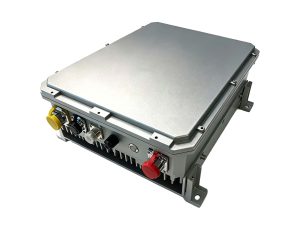
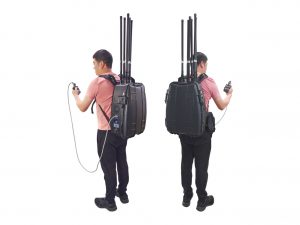
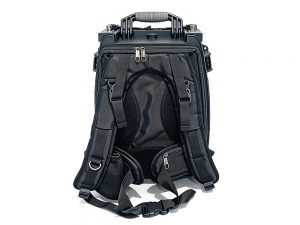
| Portable backpack | 20–50 W | Single-band, manual aiming | $15,000–$40,000 |
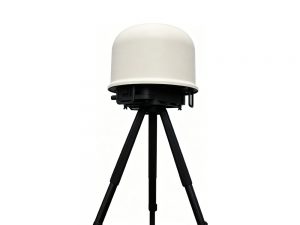
| Vehicle-mounted | 100–300 W | Multi-band, basic tracking | $80,000–$200,000 |
| Fixed-site / trailer | 500 W–2 kW | Automated tracking, networking | $300,000–$1,000,000+ |
According to open-source defense procurement data cited by Janes, military-grade satellite communication jammers frequently exceed $500,000 once spare parts and integration are included. Research published by IEEE Xplore on phased-array jamming shows that active electronically scanned array (AESA) jammers add a 60–100% premium over mechanically steered systems.
Budgeting Beyond the Sticker Price
A common mistake is comparing only the hardware anti-Starlink electronic warfare system price. Maintenance contracts, software updates, spectrum licenses, and operator training often add more than the initial purchase within three years. For fixed installations, site preparation and power conditioning can represent 15–25% of the total budget.
If you are evaluating options, start with a clear operational requirement. Do you need continuous area denial or short-duration disruption? A portable unit may be enough for tactical use, while strategic denial demands a fixed-site system. For further reading on jamming techniques, see our internal guide on Starlink uplink jamming methods and our comparison of portable vs. fixed electronic warfare platforms.