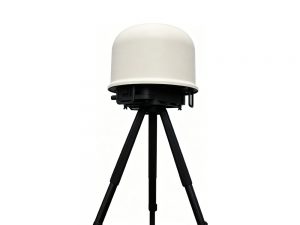
Starlink signal denial for critical infrastructure is no longer a distant concern. Utilities, ports, and emergency services now depend on low Earth orbit connectivity for telemetry, failover, and remote control. When that link is denied, operational continuity can degrade within minutes. Field teams may lose visibility of pump status, breaker states, or gate positions at exactly the moment they need real-time data.

Critical infrastructure operators often treat satellite broadband as a backup path. In practice, many remote substations and monitoring sites use Starlink as a primary WAN link. A single point of failure therefore creates a new resilience gap that traditional risk models do not fully capture. This hidden dependency makes Starlink signal denial for critical infrastructure a board-level concern.
Why Starlink Signal Denial for Critical Infrastructure Matters
The main issue is asymmetric dependency. Terrestrial fiber and cellular networks already have defined failover paths. Starlink adds redundancy, but it also introduces a common-mode failure if the denial vector is broad enough. For example, a coordinated jamming campaign near a port can disrupt crane telemetry, security cameras, and environmental sensors at the same time.
Grid operators and water treatment plants also use Starlink for SCADA backhaul in areas where fiber rollout is uneconomical. For these sites, Starlink signal denial for critical infrastructure can delay fault detection, slow down isolation commands, and force manual operations during high-risk weather events. A storm that knocks out primary power and satellite access simultaneously leaves operators with no automated fallback.
Denial Vectors That Threaten Critical Infrastructure
Denial is not limited to radio frequency jamming. When assessing Starlink signal denial for critical infrastructure, operators should evaluate four main categories. Understanding the difference between intentional and accidental denial helps prioritize security spending.
| Denial vector | Typical impact on critical infrastructure | Mitigation priority |
|---|---|---|
| RF jamming or spoofing | Loss of telemetry, false positioning, failed failover | High |
| Physical obstruction or antenna damage | Localized outage at substations, pump stations, and remote gates | Medium |
| Cyber intrusion on network management | Misconfigured traffic, revoked credentials, degraded routing | High |
| Regulatory or spectrum denial | Sudden loss of legal access to certain frequency bands | Medium |
Mitigation Controls for Network Operators
Operators should adopt a layered response. First, retain at least one terrestrial or private microwave path for critical SCADA traffic. Second, use encrypted VPN tunnels to prevent traffic analysis and session hijacking. Third, deploy spectrum monitoring at high-value sites to detect jamming before it causes full denial. These controls reduce downtime, but they only work if they are tested regularly.
This is especially true for Starlink signal denial for critical infrastructure scenarios where uptime requirements are strict. According to our satellite resilience framework, failover testing should run every 30 days. Operators should also add physical security controls at antenna sites. A simple enclosure or bollard can reduce the risk of accidental or deliberate obstruction. Redundant power supplies and hardwired console access further reduce single points of failure.
Set up continuous logging of latency, packet loss, and satellite lock status. Alerts should trigger when jamming signatures appear, such as sudden signal-to-noise degradation without weather correlation. These operational metrics give early warning before denial becomes total.
Final Recommendations
The goal is not to remove Starlink. The goal is to reduce the blast radius of denial. Run tabletop exercises that simulate Starlink signal denial for critical infrastructure during a storm or cyber incident. Document the maximum tolerable outage for each site and map it to backup links. Update these runbooks after every major network change.
Finally, monitor the regulatory environment. Satellite spectrum decisions can change quickly. External resources such as the CISA satellite communications guidance and FCC NGSO filings provide useful benchmarks for risk assessments.