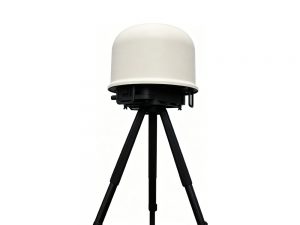
Starlink jamming systems are devices or techniques designed to disrupt communications between Starlink satellites and user terminals on Earth. As low-Earth orbit (LEO) constellations expand, understanding interference risks becomes essential for both military planners and everyday users. Unlike traditional satellite internet, the Starlink network uses thousands of small satellites working together, which creates new vulnerabilities.
What Are Starlink Jamming Systems?
At their core, Starlink jamming systems are radio frequency (RF) transmitters that overpower or mimic the signals used by Starlink terminals. Starlink operates in the Ku, Ka, and E bands, and a jammer sends noise or deceptive signals on those same frequencies. The goal is to break the link between the dish on the ground and the passing satellite. Civilian models are typically illegal, but the technology is increasingly discussed in defense and electronic warfare circles.
How Do Starlink Jamming Systems Operate?
Most jammers target the downlink or uplink paths. A ground-based jammer can aim a high-power beam at a specific area, saturating the receiver on user dishes. More advanced Starlink jamming systems use smart techniques such as protocol-aware jamming. Instead of pure noise, they replicate synchronization packets to confuse the modem without needing massive power. These systems can be vehicle-mounted, drone-deployed, or even concealed in backpacks. Because Starlink uses phased-array antennas that steer beams, a jammer must either cover a wide frequency range or predict the hopping pattern.
Are Starlink Jamming Systems Legal?
For private citizens, the answer is almost universally no. According to the International Telecommunication Union (ITU), intentional jamming of licensed communications violates international radio regulations. In the US, the Federal Communications Commission bans the marketing, sale, and use of jammers. Many countries impose severe fines and prison terms. Exceptions exist only for national security entities operating under strict government authorization. Even then, such use often triggers diplomatic disputes if the jamming crosses borders or affects neutral satellites.
Countermeasures Against Jamming
Engineers are constantly hardening the Starlink network. Spread-spectrum techniques, frequency hopping, and null steering help terminals ignore interference. On the satellite side, onboard digital processing can filter out jamming signatures before forwarding data to ground stations. Still, Starlink jamming systems remain a moving target. The U.S. Space Force and private operators regularly test new resilience features. Users can also apply RF shielding and redundant connectivity paths to stay online during an attack.
7 Essential Facts About Starlink Jamming Systems
| # | Fact | Key Detail |
|---|---|---|
| 1 | Jamming is not hacking | It denies service; it doesn’t steal data. |
| 2 | Range varies | A 10‑watt jammer can affect terminals several kilometers away. |
| 3 | Drone deployment is rising | Small UAVs carry jammers close to frontline dishes. |
| 4 | Encryption doesn’t stop jamming | It prevents eavesdropping but not RF noise. |
| 5 | Directional jamming is precise | Modern systems can target a single terminal. |
| 6 | Attribution is difficult | Locating a moving jammer requires triangulation. |
| 7 | Mitigation advances fast | Space‑based adaptive filtering is now operational. |
Starlink jamming systems highlight the constant tug-of-war between connectivity and disruption. As satellite networks become vital for emergency response, financial transactions, and telemedicine, the pressure to make them jam‑resistant grows. Looking ahead, optical laser links between satellites could one day reduce reliance on easily jammed RF downlinks, reshaping the interference landscape entirely. In the meantime, awareness and regulatory enforcement remain the first line of defense.