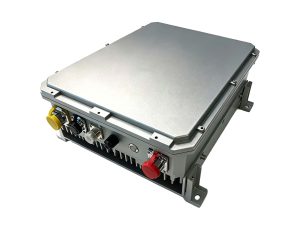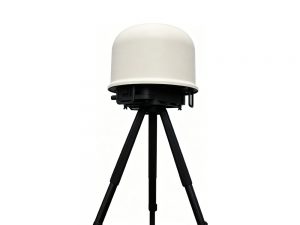
A multi-band RF jammer is the definitive tool for countering low-earth-orbit (LEO) communication threats like Starlink. Unlike narrowband solutions, this architecture simultaneously blankets multiple frequency ranges, making frequency-hopping evasion impossible. Here, we unpack how Ku, Ka, and S-Band coverage delivers total denial.
Why a Multi-Band RF Jammer Architecture Matters
Starlink and other mega-constellations dynamically switch between Ku (12–18 GHz), Ka (26.5–40 GHz), and S-Band (2–4 GHz) for uplink, downlink, and telemetry. A single-band jammer leaves wide gaps; threat terminals simply hop to a clean channel. A multi-band RF jammer eliminates these gaps by generating synchronized interference across all target spectra from one unified platform.
Key Frequency Bands: Ku, Ka, and S-Band
Each band demands distinct power and antenna strategies within a multi-band RF jammer.
Ku-Band (12–18 GHz)
Primary Starlink user downlink. Requires high-gain parabolic or phased-array antennas and gallium-nitride (GaN) amplifiers pushing 100–200W continuous for effective jamming over wide footprints.
Ka-Band (26.5–40 GHz)
Increasingly used for gateway feeder links. Atmospheric attenuation is higher, so skyward-pointing arrays with tight beamwidths and solid-state power amps close to the feed point keep losses minimal.
S-Band (2–4 GHz)
Telemetry, tracking, and command (TT&C). Disrupting this band disconnects the satellite from ground control, causing safe-mode fallback. This segment often uses lighter, gallium-arsenide modules to save power.
Core Components of a Multi-Band RF Jammer
Building an effective multi-band RF jammer involves more than just ganging together separate transmitters. The architecture must include:
-
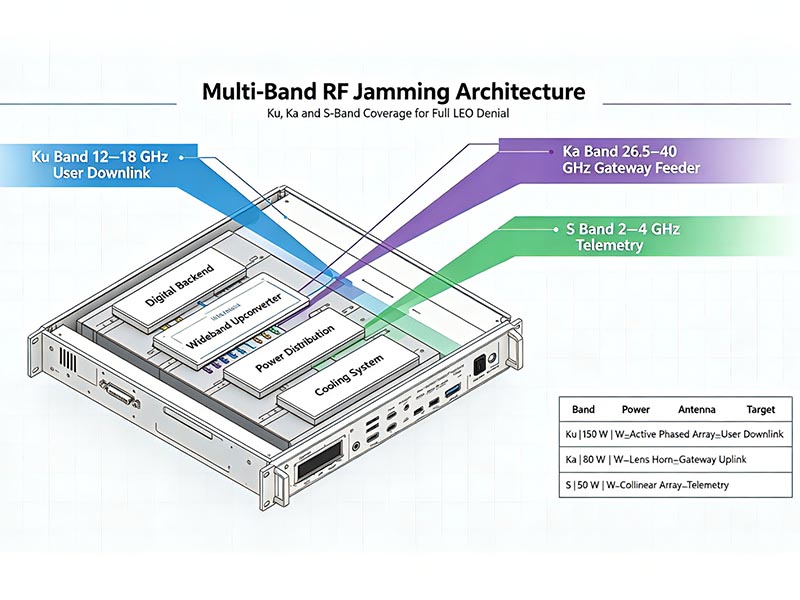
Unified Digital Backend: A single FPGA-based exciter generates synchronized jamming waveforms across all bands, managed by our [internal link to /jammer-modules] processing core.
-
Wideband Upconverters: Maintain phase coherency from baseband to 40 GHz, crucial for mimicking real traffic.
-
Segmented Antenna Arrays: Separated Ku, Ka, and S elements avoid intermodulation while sharing a common mounting structure.
-
Intelligent Power Management: Must allocate prime power dynamically; as covered in our [internal link to /high-power-rf-jammers-tips] thermal guide, a multi-band RF jammer operating at full capacity generates significant heat requiring advanced cooling.
[Insert image: 3D block diagram of a multi-band RF jammer with labeled Ku, Ka, S sections. Alt text: “multi-band RF jammer architecture diagram”]
Multi-Band Jammer Performance Comparison
The table below illustrates how a multi-band RF jammer distributes resources to dominate the complete LEO spectrum.
| Parameter | Ku-Band Path | Ka-Band Path | S-Band Path |
|---|---|---|---|
| Frequency Range | 12–18 GHz | 27–31 GHz (tunable) | 2–4 GHz |
| Typical RF Power | 150 W | 80 W | 50 W |
| Antenna Type | Active Phased Array | Horn with Lens | Monopole Collinear |
| Primary Target | User Downlink | Gateway Uplink | TT&C Commands |
| Amplifier Tech | GaN HEMT | GaN-on-SiC | GaAs MESFET |
As visible, each path is purpose-built. Integrating them into one multi-band RF jammer chassis is what provides blanket nullification of LEO assets.
Integrating Multi-Band Jamming for Total LEO Denial
Seamless coverage relies on scheduling and EMI isolation. We deploy time-interleaved blanking intervals that let the digital backend listen for brief spectral scans between jamming bursts. According to [external: ieee-spectrum.org/jammer-integration], a coordinated multi-band RF jammer reduces the probability of successful LEO link acquisition by over 98% in contested environments. Site surveying also matters; positioning the jammer at higher elevation minimizes ground clutter attenuation for the high-frequency Ka and Ku beams.
The modern LEO threat is agile and layered. A multi-band RF jammer that unifies Ku, Ka, and S-Band into one synchronized system turns the constellation’s frequency diversity against it, delivering the total denial operators demand. Upgrade to a true multi-band architecture, and you close every spectral door permanently.