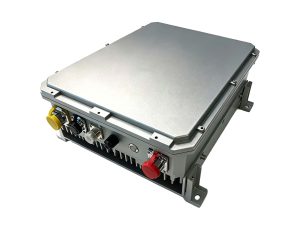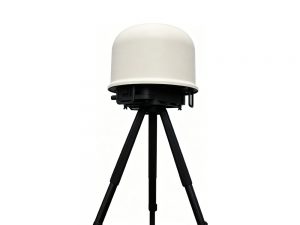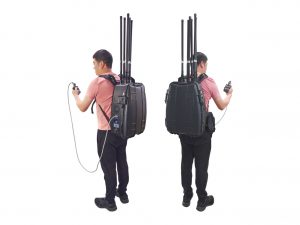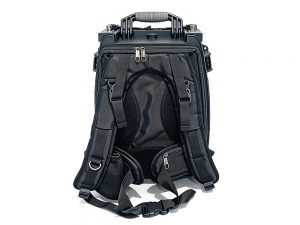
Mobile EW system against Starlink refers to a transportable electronic attack platform designed to detect, disrupt, or deny satellite downlink and uplink signals used by low-Earth-orbit constellations. As Starlink terminals spread across contested areas, defense teams are testing compact jammers, spoofers, and cyber-EW hybrids that can move by truck, trailer, or unmanned ground vehicle.
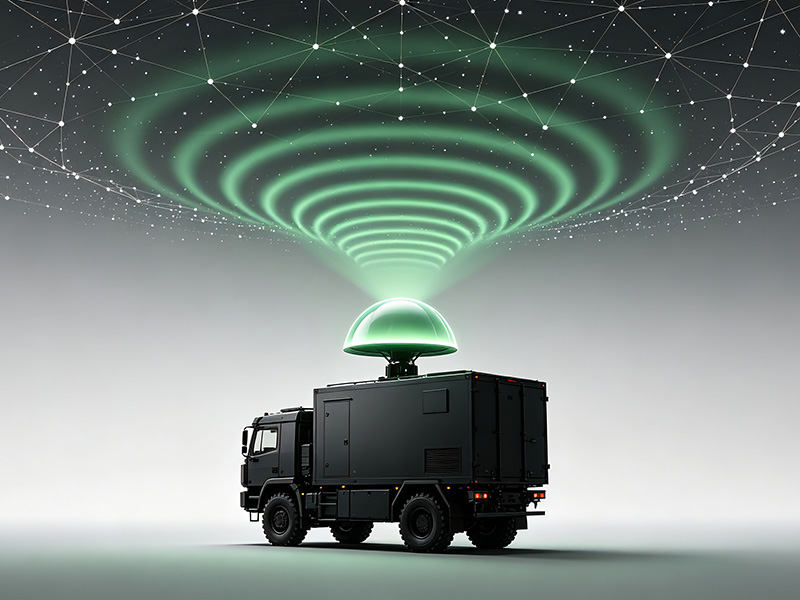
This article breaks down the core components, deployment modes, and operational limits of a mobile EW system against Starlink. It also includes a concise technical table for engineers and defense analysts.
What Is a Mobile EW System Against Starlink?
This type of EW platform is not a single device but a suite of sensors, software-defined radios, and direction-finding antennas. The goal is to create localized denial without relying on fixed infrastructure. Modern units operate in Ku and Ka bands and track Starlink’s frequency-hopping patterns. That agility pushes operators to choose wideband digital receivers with rapid switching.
According to the Starlink technical specifications, downlink frequencies span roughly 10.7–12.7 GHz, while uplinks sit between 14.0–14.5 GHz. This wide bandwidth forces electronic warfare designers to use broadband receivers and high-power amplifiers.
Key Technical Parameters
The table below summarizes typical performance ranges for a mobile EW system against Starlink. Real values depend on terrain, power supply, and the Starlink terminal’s firmware version.
| Parameter | Typical Range | Notes |
|---|---|---|
| Frequency coverage | 10.7–14.5 GHz | Covers Ku-band downlink and uplink |
| RF output power | 20 W – 2 kW | Higher power shortens engagement time |
| Effective jamming range | 3–15 km | Line-of-sight dependent |
| Setup/teardown time | 5–20 minutes | Vehicle-mounted units are faster |
| Mobility platform | 4×4 truck, trailer, UGV | Supports shoot-and-scoot tactics |
| Targeting method | DF + EO/IR cueing | Aids narrowbeam jamming |
Deployment Modes
A mobile EW system against Starlink can operate in three common modes. The selected mode depends on the mission profile and the threat environment.
-
Point defense: Protect a convoy or command post by creating a localized denial bubble.
-
Convoy escort: Jam Starlink terminals used by enemy forward observers or artillery spotters.
-
Border sweep: Move along a front line, map terminal emissions, and then apply short jamming bursts.
Short, high-power bursts are preferred over continuous jamming. Burst mode reduces the risk of being targeted by anti-radiation missiles and conserves generator fuel. It also complicates enemy direction-finding.
Power management also matters. A vehicle-mounted generator must feed the jammer, cooling unit, and command console without overloading the platform.
Limitations and Future Outlook
Despite growing interest, a mobile EW system against Starlink faces real constraints. Starlink uses phased-array beams, adaptive coding, and low-elevation tracking. A jammer must react faster than the terminal’s beam steering. Power density at distance is another issue: doubling range requires roughly four times the power.
Another constraint is spectrum management. Uncoordinated jamming can interfere with friendly SATCOM and civilian services, so rules of engagement are essential.
Researchers in the IEEE Xplore library have published measurements showing that terrestrial jamming of LEO downlinks is feasible only under specific geometric conditions.
Future systems will likely integrate AI-driven signal classification, drone-based relay jammers, and coordinated multi-vehicle networks. For now, mobility and short dwell time remain the main survival factors.
Conclusion
A mobile EW system against Starlink offers a practical way to contest low-Earth-orbit communications without permanent bases. Success depends on frequency agility, power management, and rapid relocation. Defense planners should evaluate the platform’s size, weight, and power against the actual terminal density in the target area.