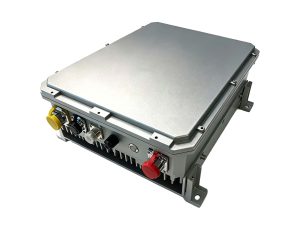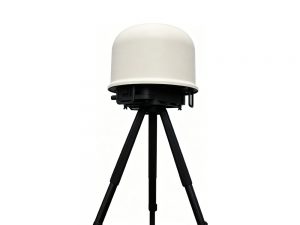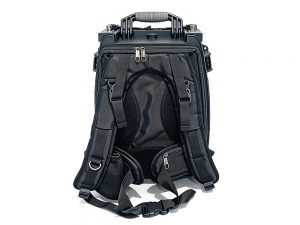
The Starlink blocker has become a focal point for RF security researchers. Unlike generic wideband jammers, this device targets specific flaws in the Starlink user terminal’s 8-channel receiver. By studying the hardware architecture, we can decode how these exploits work and what makes the terminal susceptible.
Understanding the Starlink Blocker Mechanism
Modern satellite blockers rely on precision rather than brute force. The device analyzes the downlink’s frequency-hopping pattern in real time. It then synchronizes a short, high-power pulse to coincide with the receiver’s most vulnerable moment—the automatic gain control settling window. Because the 8-channel chip processes signals in parallel, a single mistimed disruption can corrupt multiple data streams simultaneously. The blocker’s effectiveness depends on aligning its interference burst within a 2-millisecond window after the pilot symbol.
Anatomy of the 8-Channel Receiver
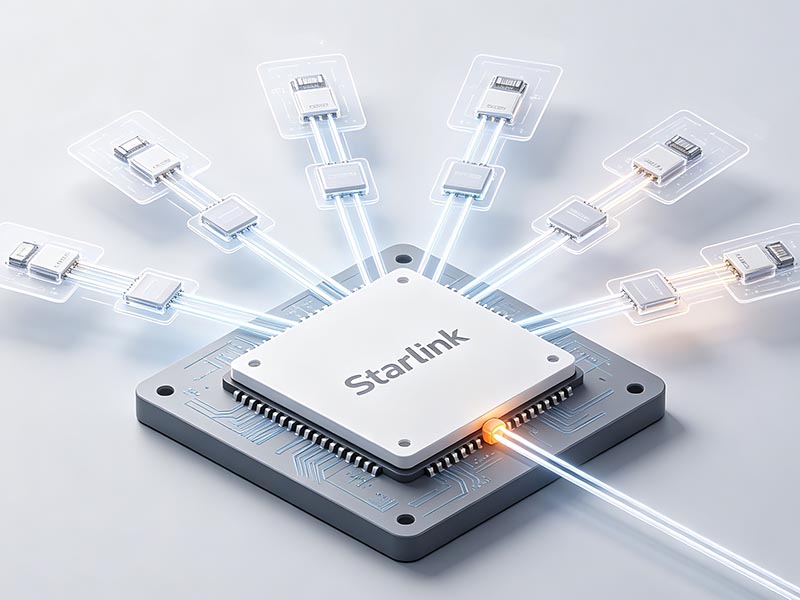
Starlink’s phased array uses eight independent RF channels combined on a beamforming IC. Each channel includes a low-noise amplifier, a phase shifter, and a mixer. The baseband processor coordinates these elements to steer the beam electronically. This tight integration reduces cost but creates shared resources; a glitch on one channel can propagate through the common control bus. This parallel architecture supports over 200 Mbps per channel. However, the shared local oscillator distribution means a single spurious tone can leak into all eight receiving paths. Beamforming is achieved by adjusting the phase of each channel with an 8-bit resolution, creating a synthesized beamwidth of approximately 2 degrees.
Hardware Loopholes a Starlink Blocker Can Exploit
Three primary hardware weaknesses stand out. First, the SPI link that configures phase shifters has no authentication. Second, the frequency synthesizer’s hopping schedule relies on an LFSR with a short repeat cycle, making it predictable after observing only a few hops. Third, the power supply lacks brown-out resilience, so a rapid voltage dip from an external pulse can reset the RF front-end. The exposed test points, intended for manufacturing calibration, provide a direct physical interface to inject malicious commands.
A Starlink blocker chains these vulnerabilities. It first eavesdrops to predict the next hop, then injects a glitch on the power rail while issuing a fake beam-steering command via the exposed test pads. The result is a complete loss of synchronization for several seconds. In lab tests, a Starlink blocker using these methods maintained a denial of service for 30 seconds, forcing a full reboot.
Exploitation Parameters
| Receiver Parameter | Vulnerability | Exploitation Technique |
|---|---|---|
| Phased Array Control (SPI) | Unauthenticated bus access | Fake beam coefficients injection |
| Frequency Synthesizer | Predictable LFSR sequence | Pre-emptive narrowband tone |
| AGC & LNA Frontend | 8 ms recovery lag | 1.5 ms saturation pulse |
| Power Management | No voltage supervisor | Timed brown-out reset |
Mitigating Starlink Blocker Attacks
Protecting terminals demands a layered approach. Firmware updates now encrypt the SPI bus and randomize the hopping seed with a true random number generator. Hardware revisions add a fast limiter before the LNA and a voltage supervisor that ignores sub-millisecond dips. For users, external shielding and phase-noise monitoring can detect a Starlink blocker in the vicinity. SpaceX has rolled out a dynamic gain adjustment algorithm that shortens the vulnerable AGC window to under 2 ms. Additionally, satellite beam hopping at the network layer can reroute traffic away from jammed cells. On the user side, deploying a software-defined radio as a spectrum watchdog can log interference patterns and alert the network operator.
According to the Satellite Industry Association, collaborative spectrum monitoring is essential. The IEEE also outlines secure satellite receiver designs in recent publications.
Conclusion
Decoding the 8-channel receiver reveals that the Starlink blocker exploits a chain of overlooked hardware gaps—from unprotected buses to predictable hopping. Addressing these flaws through secure-by-design principles will shape the next generation of resilient satellite broadband.