Military planners increasingly face contested electromagnetic environments where commercial LEO constellations like Starlink provide resilient tactical data links to adversaries. Choosing a Starlink jamming system is no longer a niche electronic warfare task—it has become a core procurement requirement for ground, naval, and special operations forces. The right system must balance raw RF power, spectrum coverage, legal constraints, and adaptability to rapidly shifting satellite handovers.

1. Define Operational Requirements First
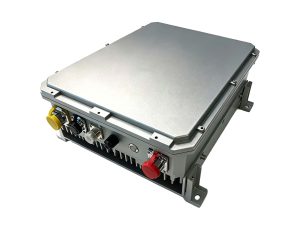
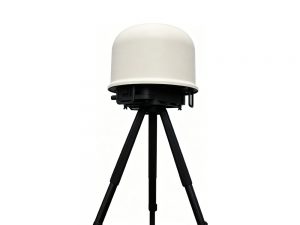
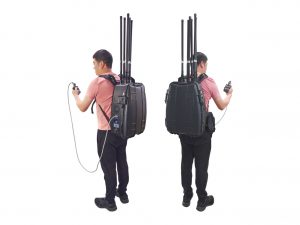
Before evaluating hardware, procurement teams must map the specific threat scenario. Are you denying Starlink terminals in a fixed urban perimeter, a moving convoy, or a wide-area border zone? A Starlink jamming system for convoy protection needs different antenna patterns and power budgets than one for static facility denial. Define required range, duration of effect, and whether the mission permits omnidirectional or directional jamming. These factors drive size, weight, power, and cost (SWaP-C) trade-offs early in the selection process.
2. Evaluate RF Power and Spectrum Agility
Starlink downlinks operate in Ku-band (10.7–12.7 GHz) and uplinks in Ka-band (14.0–14.5 GHz), with phased-array user terminals capable of rapid frequency hopping. A modern Starlink jamming system must cover both bands simultaneously or switch within milliseconds. Effective radiated power (ERP) should exceed 60 dBm for localized denial, but wide-area denial may require 80 dBm or more with high-gain directional antennas. Spectrum agility also includes the ability to track and jam specific sub-channels without blanketing the entire band.
3. Check Legal and Compliance Frameworks
Military procurement is not exempt from international spectrum regulations. The ITU Radio Regulations prohibit harmful interference to authorized satellite services, even during conflicts, unless specific wartime exceptions apply. A Starlink jamming system should include built-in geofencing, time-of-day restrictions, and automatic shutoff features to prevent collateral interference with allied or civilian satellite links. Review ITU-R SM.2153 for interference measurement guidance and NATO Allied Electronic Warfare Doctrine for operational legal frameworks. Internal legal review must be a mandatory gate before final procurement.
4. Test Against LEO Handover Dynamics
Unlike geostationary satellites, Starlink satellites move at ~7.5 km/s and a single terminal may hand off every 15–60 seconds. A jamming solution effective against one pass may fail against the next because angle of arrival, Doppler shift, and beamforming nulls change continuously. Procurement tests should simulate at least 20 consecutive handovers using live or emulated Starlink signal generators. The Starlink jamming system must maintain lock and effect through handover without manual re-aiming.
5. Prioritize Modularity and Cyber Resilience
Electronic warfare systems are prime targets for cyber intrusion. A Starlink jamming system with software-defined radio (SDR) architecture allows rapid waveform updates, but also requires hardened boot processes, encrypted command links, and air-gapped maintenance ports. Choose systems with modular RF heads so damaged antennas or amplifiers can be swapped in the field without returning the entire unit to depot. This reduces mean time to repair and increases operational availability.
6. Compare Key Procurement Parameters
| Parameter | Minimum Requirement | Preferred for Multi-Domain Ops |
|---|---|---|
| Frequency Coverage | Ku downlink only | Ku + Ka uplink/downlink |
| ERP (Effective Radiated Power) | 60 dBm | 80 dBm with beam steering |
| Handover Tracking Speed | < 100 ms | < 20 ms with predictive Doppler |
| Legal Control Features | Manual kill switch | Geofenced auto-shutoff + time windowing |
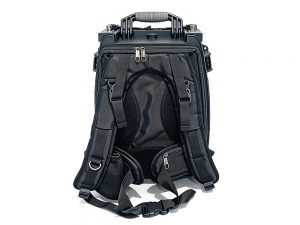
| SWaP | Vehicle-mounted | Man-portable + vehicle-mountable |
| Cyber Hardening | Encrypted firmware | SDR with secure boot + intrusion detection |
7. Final Selection Checklist
Before signing a military procurement contract, verify that the Starlink jamming system vendor provides:
-
A live demonstration against actual Starlink terminals in a controlled RF chamber.
-
Full documentation of ERP, spurious emissions, and sideband suppression.
-
Training for legal advisors and operators on lawful use.
-
A 3–5 year sustainment plan with software update commitments.
-
Interoperability with existing electronic warfare command and control (EWC2) systems.
Reference the IEEE paper on LEO constellation interference mitigation for academic validation of jamming techniques against phased-array terminals.
A disciplined procurement process—not raw power output—determines whether a Starlink jamming system delivers mission success. By scoring candidates against the table above and enforcing live handover testing, military buyers can avoid costly underperforming systems and field a capability that adapts as fast as the constellation itself.