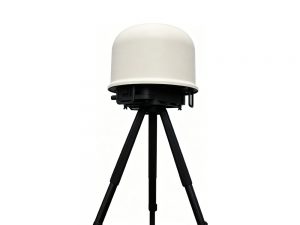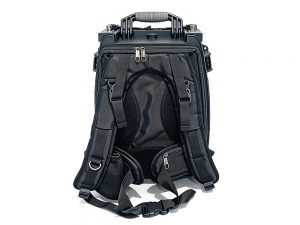
A Starlink terminal jamming device targets the user terminal rather than the satellite itself. This local interference approach has become a growing concern for remote workers, emergency responders, and maritime operators who rely on low Earth orbit connectivity. Understanding the threat starts with recognizing how a small, portable unit can degrade a high-performance link.
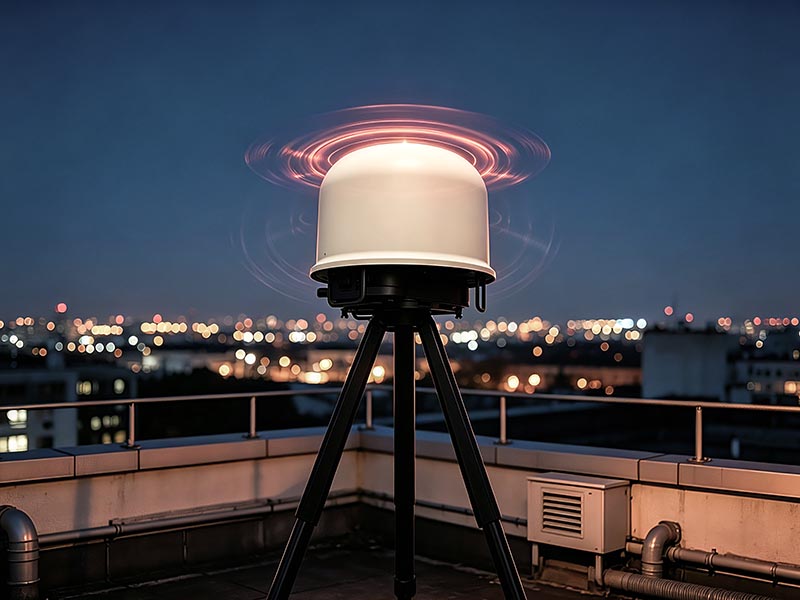
How a Starlink Terminal Jamming Device Works
Starlink terminals use phased-array antennas to track satellites automatically. A jamming device emits radio frequency energy on the same downlink or uplink bands, raising the noise floor above the terminal’s decoding threshold. The result is packet loss, dropped sessions, and slow throughput. Unlike attacks on the constellation itself, a Starlink terminal jamming device operates within a few kilometers of the user.
4 Common Jamming Techniques
-
Continuous wave jamming – a single high-power tone on the center frequency.
-
Swept jamming – the signal moves rapidly across the band.
-
Protocol-aware jamming – targets control channels or synchronization bursts.
-
GNSS spoofing – disrupts the terminal’s timing reference before link acquisition.
These methods differ in complexity, power consumption, and effective range. A Starlink terminal jamming device can switch between modes depending on the target’s behavior.
Technical Comparison Table
| Technique | Power Required | Typical Range | Primary Impact |
|---|---|---|---|
| Continuous wave | Low | < 1 km | Temporary outage |
| Swept jamming | Medium | 1–5 km | Intermittent drops |
| Protocol-aware | High | < 2 km | Persistent denial |
| GNSS spoofing | Very low | < 500 m | Terminal reboot loop |
Values are approximate and depend on terrain, antenna gain, and local spectrum conditions. Portable jammers are often battery-powered and hard to trace.
Why Starlink Terminals Are Vulnerable
Starlink’s user terminal relies on precise satellite ephemeris data and continuous tracking. The phased array has a wide field of view, so it can accept interference from many directions. Additionally, the terminal’s downlink frequency range is publicly documented, which lowers the barrier for building a crude Starlink terminal jamming device. Unlike geostationary systems with narrow spot beams, LEO terminals cannot easily filter out off-axis interference.
Detection and Mitigation
Operators can monitor signal-to-noise ratio, packet error rate, and automatic retransmission requests. A sudden drop in SNR with no weather event often indicates jamming. Physical shielding, directional nulling, and relocating the terminal can reduce exposure. Regulatory bodies such as the FCC Space Bureau provide interference reporting channels. For enterprise users, the ITU-R also coordinates cross-border cases.
Bottom Line
A Starlink terminal jamming device does not need to overpower the satellite. It only needs to raise the noise floor at the user’s location. Awareness, spectrum monitoring, and physical countermeasures remain the most practical defenses for field deployments.