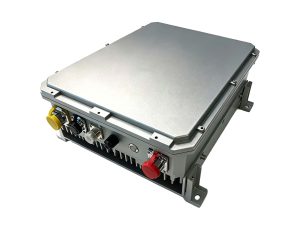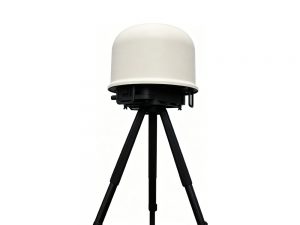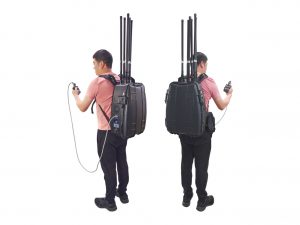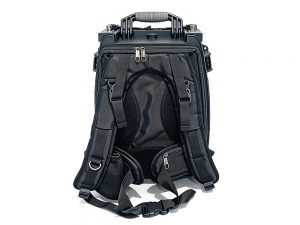
A Ku-band satellite communication jammer targets uplink or downlink signals between 12 GHz and 18 GHz. This band supports direct-to-home television, enterprise VSAT networks, maritime broadband, and military satellite links. Unlike jamming at lower frequencies, Ku-band operations face high atmospheric attenuation, narrow spot beams, and sophisticated anti-jam waveforms. These factors shape both the technical difficulty and the legal risk of any jamming attempt.

Frequency and Bandwidth Basics
Ku-band satellite transponders commonly use bandwidths from 26 MHz to 72 MHz, with multiple carriers sharing a single transponder. User terminals deploy parabolic dishes or flat-panel phased arrays with gains exceeding 40 dBi. Any effective jamming system in this band must match that gain while avoiding collateral interference to adjacent services. Power requirements often exceed several kilowatts of effective isotropic radiated power for meaningful disruption, even at short range. Rain fade and atmospheric absorption further reduce jammer efficiency, forcing operators to increase power or reposition repeatedly.
Classifying a Ku-band Satellite Communication Jammer by Power
The table below summarizes common jammer categories referenced in RF testing and defense publications.
| Jammer Type | Typical Bandwidth | Required EIRP | Legal Status |
|---|---|---|---|
| Spot jammer | 1–5 MHz | High | Illegal for civilians |
| Barrage jammer | 50–500 MHz | Very high | Illegal for civilians |
| Deceptive jammer | Signal-specific | Moderate | Illegal except authorized testing |
| Shielded enclosure | N/A | None | Legal on private property |
Building a functional Ku-band satellite communication jammer is not a simple hobby project. It requires frequency-agile exciters, high-power amplifiers, and directional antennas that most individuals cannot legally procure.
Why Most Ku-band Satellite Communication Jammer Attempts Fail
Three factors defeat most field attempts. First, modern Ku-band spot beams are narrow, often covering only a few hundred kilometers. A jammer must sit inside that footprint to have any effect. Second, satellite links use adaptive coding and modulation, shifting power and bandwidth in response to interference. Third, many terminals now feature active nulling, which steers antenna pattern nulls toward jamming sources. As a result, improvised systems usually create more interference to local terrestrial services than to the satellite itself. Without precise frequency and timing alignment, the target link simply retunes or switches beams.
Legal Exposure for Ku-band Satellite Communication Jammer Use
Under FCC and ITU rules, operating a Ku-band satellite communication jammer without authorization carries severe penalties. In the United States, fines can reach $100,000 per day for intentional interference, with equipment seizure and criminal prosecution possible. Similar rules apply across Europe and most of Asia. Even possession with intent to interfere can trigger enforcement. The FCC interference rules and ITU Radio Regulations provide clear guidance on spectrum enforcement. Regulators actively monitor Ku-band spectrum for unauthorized emissions.
Detection Technologies Against Ku-band Satellite Communication Jammer
Modern satellite operators use geolocation techniques such as time-difference-of-arrival and frequency-of-arrival to locate interference sources. A jamming source emits a detectable RF signature that ground-based sensors and satellite receivers can triangulate within seconds. Many operators share interference data through industry groups like the Satellite Interference Reduction Group.
Safer Alternatives to Illegal Jamming
Organizations needing to limit Ku-band exposure should consider legal shielding, frequency coordination, or formal regulatory complaints. RF-absorbing materials and Faraday cages can block signals on private property without legal risk. Spectrum managers can request frequency changes, relocate terminals, or file interference reports through national regulators. These approaches avoid the severe penalties tied to unauthorized jamming while still addressing operational security concerns.
Conclusion
Deploying any jamming system in Ku-band brings technical hurdles and severe legal consequences. Focus instead on compliant spectrum management and physical shielding to achieve your operational goals.