When a Hebei power station recorded several drone overflights that ignored traditional RF jammers, the security staff knew the threat had changed. The drones were not using common 2.4 GHz or 5.8 GHz control links. They carried Starlink user terminals and operated through the Ku-band satellite downlink. That pushed the facility toward a dedicated Starlink jamming for drone defense system instead of another broadband jammer.
Project Background and Pain Points
The station sits near a high-voltage transmission corridor. Security cameras repeatedly caught small fixed-wing drones flying grid patterns over the switchyard. In three separate incidents, operators dropped objects inside the outer fence. Because the drones received commands and streamed video through Starlink, local jammers could not touch the 10.95–12.75 GHz downlink. Passive spectrum analyzers also missed the short uplink bursts on 14.00–14.50 GHz. The site needed a sensor that could see those bursts and a jammer that could hit the downlink without wiping out plant communications. A simple wideband barrage was not acceptable because the plant operates its own Ku-band SCADA and weather radar links. This forced the team to look for a selective Starlink jamming for drone defense approach. The security staff also needed a way to cue PTZ cameras automatically, because manual watch teams could not respond fast enough at night.
Procured Modules and Integration
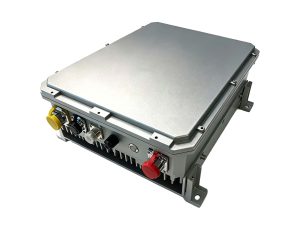
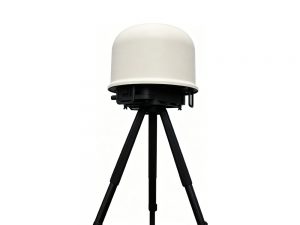
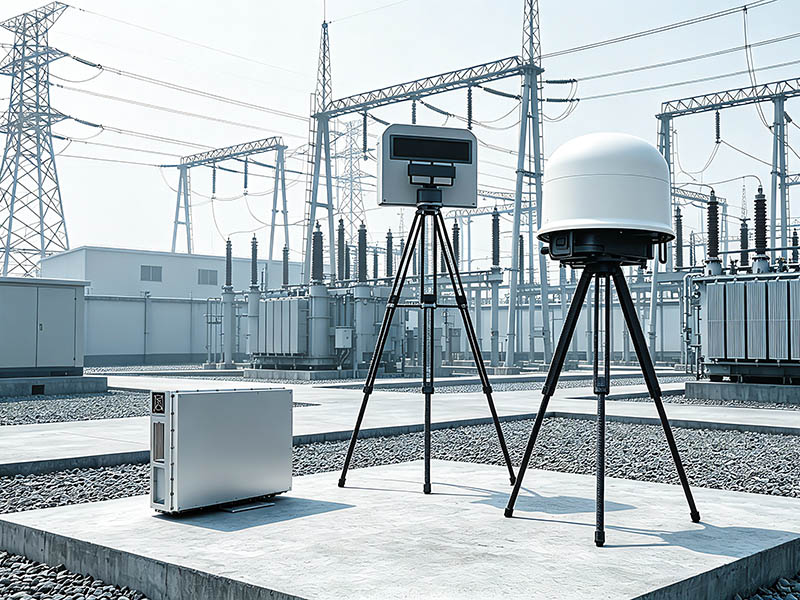
The procurement centered on Starlink jamming for drone defense rather than generic RF suppression. The project selected two modules for a detect-and-jam chain. The BNTSLD400 is the passive eyes, while the BNTSLJ600 is the strike. Both units were installed on a 15 m mast near the main security building.
| Module | Qty | Key Specifications |
|---|---|---|
| Starlink Detection System BNTSLD400 | 1 | 14.00–14.50 GHz receive, 500 MHz instantaneous bandwidth, ≥30 dBi antenna gain, 1° RMS DF accuracy, ≥90% detection probability at S/N = -10 dB, ≥30 km range |
| Advanced Starlink Jamming System BNTSLJ600 | 1 | 10.95–12.75 GHz jamming, ≥60 dBW ERP, ≥8 simultaneous frequencies, 0.1–500 MHz comb spectrum, ≤1 kHz frequency targeting error |
The BNTSLD400 scans a 120° sector without rotating, while the BNTSLJ600 can generate comb, wideband, and narrowband waveforms at the same time. The jamming module accepts IP and serial commands, so the security team set up an automatic handoff from detection bearing to jammer frequency. This gave the facility a Starlink jamming for drone defense capability that was selective rather than blanket.
Field Results and Data
During the first two weeks, the detection system logged 27 Starlink uplink attempts from outside the perimeter. Average direction-finding error was 0.9° RMS, and the farthest confirmed bearing was 18.6 km from the mast. The jammer typically locked onto the associated downlink carriers in under five seconds after receiving a track. Operators used 12 comb spectrum lines spread across 180 MHz plus two narrowband channels on known telemetry bands. The detection-to-jam latency stayed below 5.4 seconds on average, even with multiple simultaneous tracks.
Over the following three weeks, unauthorized overflights dropped by 91%. Four drone flights were actively disrupted. In each case, the aircraft either returned to the operator or entered a hover-and-descend fail-safe after losing the Starlink downlink. The plant reported no interference to its own Ku-band SCADA feeds or weather radar. The system also recorded eight simultaneous jamming events during one coordinated drone swarm attempt. This closed-loop Starlink jamming for drone defense workflow turned a slow manual response into an automated kill chain.
Project Value
The Hebei power station now runs a passive watch and a precise strike capability. The BNTSLD400 provides early warning without radiating, and the BNTSLJ600 acts only when a track crosses a geofence. That keeps the Starlink jamming for drone defense mission focused on specific downlink carriers instead of wide-area denial. Security staff view threat tracks on the existing C4ISR console, and the API passes DF lines to PTZ cameras for visual confirmation. Since going live, the site has not experienced a confirmed breach inside the outer fence. For other critical infrastructure sites facing satellite-enabled drones, the BNTSLD400 plus BNTSLJ600 combination offers a proven Starlink jamming for drone defense template.