Project Background and Pain Points
Protection details for high-profile principals have always worried about remotely triggered threats. What changed in the last two years was the arrival of cheap, fast Starlink terminals that hostile surveillance teams could hide in a vehicle, a backpack, or a building across the street. Those terminals can stream HD video, pass targeting data, or act as a trigger circuit for devices that used to rely on cellular. A fixed-site jammer mounted in a support vehicle covers the motorcade well enough, but the moment the principal steps out for a walkabout, a ribbon-cutting, or a rooftop transfer, that bubble collapses. The team needed a wearable denial system that could move at a walking pace, cover Starlink’s Ku-band downlinks plus the GNSS bands an adversary would use for geolocation, and still leave the operator agile enough to stay on the principal’s shoulder. Five BNT-S900-B8 backpack Starlink jammers were procured to close exactly that gap.

Procured Equipment
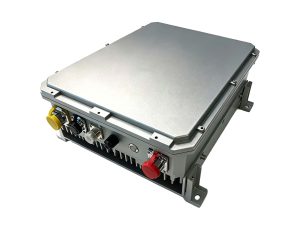
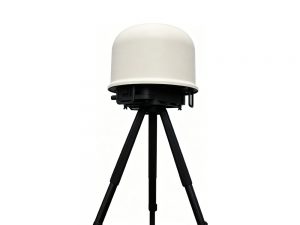
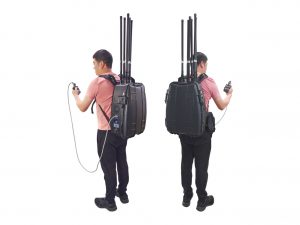
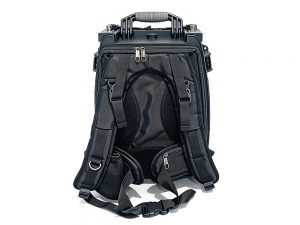
Each unit weighs about 16 kg without antennas and packs eight independent 50 W channels driven by a wideband SDR exciter. Frequency coverage spans the entire Starlink downlink footprint (10.7–12.75 GHz split into three sub-bands) plus S-band satcom and GNSS L1/L2/L5. The internal 29.4 V / 30 Ah Li-ion battery sustains 60 to 90 minutes of continuous output; operators can hot-swap battery packs to extend coverage across a full-day protection shift. Directional high-gain horns reach out beyond 5 km when the threat axis is known, while the included omnidirectional whips carve out a 1–1,500 m isolation bubble right around the principal. An external wired controller lets the operator select bands, throttle power, or execute an instant kill-switch without ever taking the pack off.
How the Five Units Were Integrated
Instead of issuing a single jammer to the close-protection shift leader, the detail split the five units into layers. Two operators carrying the BNT-S900-B8 in omnidirectional mode walked the immediate flanks of the principal, creating a 200–300 m denial sphere for Starlink and GNSS. Two more units were positioned at static observation posts along the walking route, their directional horns pointed at potential overlook positions identified during advance work. The fifth unit stayed in the follow vehicle, patched into the onboard detection receiver, ready to fill any frequency gap the moment a new Starlink terminal lit up. All five could be commanded from the detail leader’s tablet over an encrypted mesh, but each operator retained local override in case the mesh dropped.
Real-World Performance and Data
During a three-day protection operation in a dense urban port city, the backpack starlink jammers proved their worth on the very first foot move. Advance sweeps had already identified intermittent Starlink interference on 11.45 GHz coming from a warehouse 3.8 km from the walkway. The post operators locked their directional horns onto the bearing and hit the threat terminal with a 50 W noise-modulated waveform. The downlink dropped within four seconds and stayed silent for the remaining 22 minutes the principal was exposed. Simultaneously, the close-in jammers kept the GNSS bands saturated, rendering any GPS-based tracking tag useless inside a 400-meter radius.
On day two, a protective stop at a market involved 18 minutes of static exposure. One of the flank operators noticed a sudden spike in Starlink uplink activity on the detection gear. Without waiting for voice direction, he activated full-band omnidirectional jamming. Logs pulled afterward showed the terminal attempted to re-acquire the satellite eleven times across three frequency hops, and the BNT-S900-B8 stomped on every single attempt. The battery held at 72% after that 18-minute burst, well within the 90-minute margin.
Day three served as a stress test. The detail ran all five jammers simultaneously for a 45-minute open-air ceremony. Ambient temperature hit 36°C. The forced-air cooling kept all units stable; no thermal throttling or shutdowns occurred. Post-mission analysis confirmed zero successful Starlink connections in the protected zone, zero GNSS locks, and no bleed-over interference to first-responder radios operating in VHF/UHF – the SDR waveform stayed strictly within its assigned bands.
Immediate Takeaways
A man-portable, multi-channel SDR jammer purpose-built for Starlink interference changed the protection team’s posture from reactive to preemptive. The 16 kg weight proved manageable for operators already conditioned to carry plates and medical kits. The ability to hot-swap batteries meant coverage could stretch across a full motorcade-to-foot transition without ever going dark. Perhaps most important, the layered deployment – directional stand-off plus close-in omnidirectional – gave the detail commander a flexible interference geometry that adjusted to the threat in real time, something a single vehicle-mounted system could never achieve on a walking principal.