Project Background and Pain Points
Along the rugged, densely forested border in Yunnan province, field units were increasingly confronted with a new electronic threat—unauthorized Starlink user terminals being exploited by cross-border criminal networks. Conventional spectrum monitoring and jamming assets were simply not designed to handle the low probability of intercept characteristics of these LEO satellite terminals. The user uplink in the 14.00–14.50 GHz band is a narrow, highly directional beam; the downlink hops rapidly across 10.95–12.75 GHz. Without dedicated wideband direction-finding and precision jamming, the terminals remained effectively invisible and immune to denial. The border defense unit needed a plug-in capability that could be stitched into its existing electronic warfare countermeasure suite, covering both detection of those faint uplinks and surgical jamming of the downlinks, all while maintaining strict EMSEC (emission security) posture.

Procured System Specifications
After a technical evaluation, the unit procured and integrated two purpose-built modules into its vehicle-mounted countermeasure shelter. The existing system provided the shelter, power, mast, and centralized command-and-control interface; the new modules connected via standardized RF and Ethernet backbones.
-
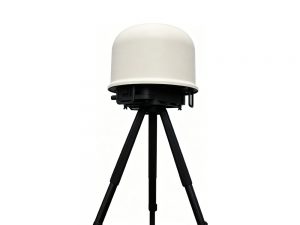
1 × Starlink Detection System BNTSLD400
Receiving antenna covers 14.00–14.50 GHz with ≥30 dB gain and an azimuth beamwidth ≤3°. The electronically scanned beam sweeps ±60° almost silently. With 500 MHz instantaneous bandwidth, it delivers ≥90% detection probability even at S/N = -10 dB. Direction finding accuracy is specified at 1°, and uplink signal DF range reaches ≥30 km, sufficient to geolocate terminals hidden deep inside foliage across the border. -
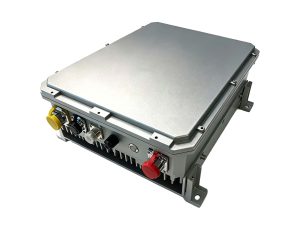
1 × Advanced Starlink Jamming System BNTSLJ600
Operating across the 10.95–12.75 GHz downlink band, the jammer provides configurable instantaneous bandwidth (≥500 MHz) and supports ≥8 simultaneous jamming frequencies. Jamming modes include narrowband, wideband, and comb spectrum—the comb bandwidth is adjustable from 0.1 MHz to 500 MHz with 1 to 100 configurable lines. Waveform flexibility is extensive: noise frequency modulation, pseudo-random code modulation (2FSK, MSK, BPSK, QPSK), and OFDM, all expandable. Frequency targeting error stays ≤1 kHz, and the ERP within the 500 MHz band is a formidable ≥60 dBW.
Both units were integrated via the existing mission console. The operator can now cue the jammer directly from a DF hit on the BNTSLD400, completing the detect-and-jam loop in seconds.
Field Performance and Data
In live border monitoring during early 2026, the integrated system exceeded baseline requirements in real terrain. The BNTSLD400 consistently detected Starlink uplink signals at ranges of 32–35 km, even in valleys with heavy tree canopy. The 1° DF accuracy enabled patrols to narrow down the terminal location to a search area of approximately 500 meters at 30 km distance—dramatically faster than previous manual spectrum sweeping.
When jamming was authorized, the BNTSLJ600 delivered full link disruption against all targeted terminals within five seconds of activation. In one documented sequence, a comb spectrum pattern with 16 lines, each configured to cover 20 MHz, blanked the terminal’s automatic frequency hopping pattern. The terminal dropped offline and was unable to reacquire the satellite for the entire duration of the jamming window. Logs confirmed that the 60 dBW ERP saturated the downlink across the monitored band, while the frequency targeting error remained well under 1 kHz, ensuring no spillover into adjacent non-targeted services.
Equally important, the system operated in a strict emission-control mode until a threat was confirmed, preventing premature exposure of the unit’s electronic order of battle.
Project Value and Future Scalability
This rapid integration gave the border force a validated over-the-horizon Starlink countermeasure layer that did not exist before. The pairing of coherent detection and high-power jamming turned the EMSEC challenge on its head—friendly forces can now silently watch the 14 GHz uplink environment and strike the downlink only when necessary.
Scalability has been built in from the start. The jamming waveform library is expandable, so future modulations can be added via software upgrade without touching hardware. The comb spectrum generator supports up to 100 lines, already allowing tailored responses to new satcom hop sets. With minor RF front-end modifications, the BNTSLJ600 architecture can cover additional bands, such as the Ka-band downlinks of next-generation LEO constellations. For wider area coverage, multiple BNTSLD400 sensors can be networked to provide TDOA-based geolocation far beyond the 30 km baseline. The same battle management interface can also accept feeds from UAV-mounted payloads, making the system a candidate for mobile rapid-response configurations along the entire border.