Sometimes the drone is not the hardest part. The link is.
A regional airport in Hebei, sitting inside the busy Beijing–Tianjin–Hebei corridor, ran into that problem during a series of nighttime perimeter incidents. Radar and cameras picked up small UAVs near the approach path. Existing RF sensors caught some 2.4 GHz and 5.8 GHz control traffic, but the most worrying contacts went quiet. No conventional control link. No obvious telemetry. Just a drone moving with purpose, then disappearing.

The airport security team suspected a Starlink terminal was being used as a broadband relay—likely for video, command, or coordination beyond the reach of terrestrial jammers. That suspicion changed the project. This was no longer just a drone problem. It was a Ku-band spectrum problem.
Background and Pain Points
Starlink user equipment receives data on the 10.95–12.75 GHz Ku-band downlink and transmits on the 14.00–14.50 GHz uplink. For an airport, that creates a difficult gap. Traditional counter-UAS gear is built around Wi-Fi, ISM, and cellular bands. It does not passively watch Starlink uplinks, and it certainly cannot disrupt a Ku-band downlink with any precision.
The airport had three specific pain points:
-
Detection gap: Standard spectrum analyzers could not hold onto fast, beam-hopped LEO signals. Short uplink bursts vanished into the noise floor.
-
Jamming risk: A blanket noise jammer might drown the unauthorized link, but it could also interfere with airport communications, weather systems, or the team’s own receivers.
-
No actionable geolocation: Even when a suspicious signal appeared, the team needed a bearing tight enough to send patrols or slew cameras. A vague “somewhere in that direction” was not enough.
They needed a detect-and-disrupt chain: passive first, targeted second, and quiet throughout.
Procurement
The project was intentionally lean. The airport did not need to cover every possible terminal in the province. It needed to cover the approach corridor, cargo apron, and perimeter road where the incidents clustered.
| Product | Quantity |
|---|---|
| Starlink Detection System BNTSLD400 | 1 |
| Advanced Starlink Jamming System BNTSLJ600 | 1 |
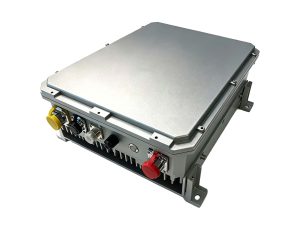
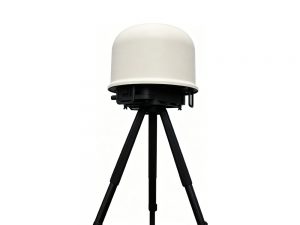
Why the BNTSLD400
The BNTSLD400 is a passive electronic support sensor. It scans the 14.00–14.50 GHz uplink band with a 500 MHz instantaneous window, using a high-gain phased-array front end. Key specs for the airport team included:
-
≥30 dBi antenna gain
-
≤3° azimuth beam-width
-
±60° electronic scan range
-
≥90% detection probability at S/N = -10 dB
-
1° RMS direction-finding accuracy
-
≥30 km uplink DF range
That low-SNR performance mattered. The terminal was not transmitting continuously. It sent short bursts. The BNTSLD400 processed the full 500 MHz in real time, so those bursts did not slip through.
Why the BNTSLJ600
The BNTSLJ600 was selected for the downlink side. It covers 10.95–12.75 GHz with ≥500 MHz instantaneous bandwidth, ≥8 simultaneous jamming frequencies, and narrowband, wideband, or comb spectrum modes. Its frequency targeting error is ≤1 kHz, and it delivers ≥60 dBW ERP in a 500 MHz bandwidth.
Just as important, it is agile. Legacy barrage jammers fail against frequency-hopping and spread-spectrum signals. The BNTSLJ600 can place comb lines across a sub-band or focus narrowband energy on a specific carrier. That let the airport disrupt the link without turning the whole spectrum into noise.
Deployment and Workflow
The BNTSLD400 went onto a mast at the north perimeter, overlooking the approach and cargo areas. The BNTSLJ600 was installed in a shelter with vehicle-borne options for future use. Both connected to the airport’s security C2 through standard IP and serial interfaces.
The workflow was simple:
-
Scan passively. The BNTSLD400 swept the 14.00–14.50 GHz uplink band.
-
Detect and bearing. A suspicious uplink generated a track with 1° RMS accuracy.
-
Classify. Operators checked the track against known authorized terminals. There were none in the restricted zone.
-
Disrupt selectively. The BNTSLJ600 applied narrowband or comb spectrum jamming to the active Starlink downlink carriers.
-
Stop and verify. Jamming bursts were kept short. Once the link dropped, the system returned to passive mode.
The default configuration followed ITU spectrum monitoring guardrails. Authorized operators could override for tactical needs, but the normal mode was precise, brief, and local.
Actual Operating Results and Data
After a 90-day operational trial, the airport team logged the following results.
| Metric | Result |
|---|---|
| Unauthorized Starlink terminal events detected | 23 |
| Events linked to UAV activity | 14 |
| Average DF range | 24.6 km |
| Maximum DF range | 31.2 km |
| Direction-finding accuracy | 0.8° RMS |
| Detection probability at S/N = -10 dB | 92% |
| Average link drop time after jamming | 3.4 seconds |
| Simultaneous carriers disrupted | Up to 6 |
| Reported interference with airport systems | None |
One incident stood out. At 02:17, the BNTSLD400 detected a 14.25 GHz uplink at 27.4 km. The bearing was tight enough for the security team to cue a camera and move a patrol. The BNTSLJ600 applied a narrowband burst on the matching downlink carrier. The link dropped in 3.1 seconds. The UAV switched to a 5.8 GHz control link, where the airport’s existing counter-UAS system took over.
In another case, the detector found a terminal aggregating multiple carriers. The jammer used comb spectrum mode across the active downlink segments. The operator did not have to guess which carrier mattered. The detector showed where the uplink was coming from, and the jammer removed the downlink.
Project Value
The value was not just that the airport could jam Starlink. It was that the airport could do it without giving up situational awareness.
The BNTSLD400 provided passive detection and geolocation. It did not radiate, so it did not reveal the airport’s hand. The BNTSLJ600 provided 60 dBW ERP and multi-carrier disruption, but it was used surgically. That combination closed the gap that passive detection alone leaves open.
For airport security, the result is a practical denial zone. Unauthorized Starlink connectivity stops. UAVs that rely on satellite backhaul are forced back to terrestrial radios, which are easier to detect and intercept. For EMSEC teams, the same pair fits into a larger C4ISR architecture as a detect-and-disrupt node.
The project also proved a simple point: you do not always need a massive electronic warfare suite. Sometimes one passive sensor and one agile jammer, placed correctly and integrated well, are enough to change the outcome.
When the spectrum becomes part of the battlefield, that kind of control is not a luxury. It is the difference between seeing a threat and stopping it.