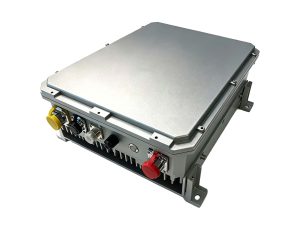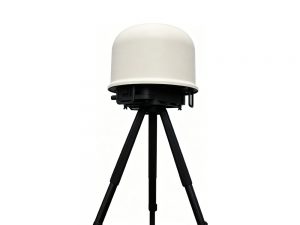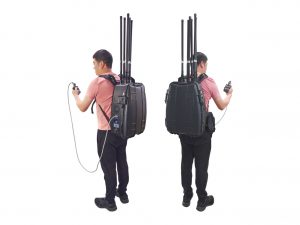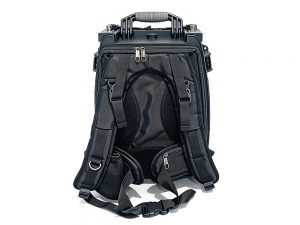
OEM Starlink jammer vs custom-built solutions is not a simple build-or-buy question. In RF denial testing, spectrum control, and authorized electronic warfare exercises, the choice affects legal exposure, tuning accuracy, and total lifecycle cost. This article compares the two paths across seven operational factors.
Why the OEM Starlink Jammer vs Custom-Built Solutions Debate Matters
Most procurement teams start with an OEM unit because it ships with a compliance envelope. An OEM Starlink jammer typically includes fixed band filters, documented output limits, and a warranty. However, it rarely allows deep modification. When a test range needs to sweep Ku-band uplink frequencies or emulate a specific interference pattern, the locked firmware becomes a bottleneck.
Custom-built solutions invert that logic. You gain control over the RF chain—PA stages, LO sources, and antenna matching—but you absorb the certification risk. The phrase OEM Starlink jammer vs custom-built solutions often appears in shielded-room test plans, where operators must prove that emissions never leave the facility.
| Factor | OEM Starlink Jammer | Custom-Built Solution |
|---|---|---|
| Regulatory paperwork | Usually included | Team responsibility |
| Frequency agility | Limited presets | Full SDR-based tuning |
| RF output ceiling | Fixed by design | Adjustable within legal limits |
| Lead time | 2–6 weeks | 8–20 weeks |
| Per-unit cost | Moderate | Higher for low volume |
| Repair path | Vendor RMA | In-house or contractor |
External guidance from the FCC Equipment Authorization rules and the ITU Radio Regulations should be reviewed before any deployment.
Cost, Compliance, and RF Control
Cost comparisons often mislead. An OEM Starlink jammer has a lower upfront price, but annual license fees and vendor-locked repairs add up. A custom build spreads cost across engineering hours, test equipment, and legal review. For a one-time event, OEM wins. For a repeatable testbed, the custom path usually wins on marginal cost.
Compliance is where the OEM Starlink jammer vs custom-built solutions split becomes sharp. OEM units come with FCC or CE marks under specific test conditions. Custom boards do not. Your team must generate a technical file, perform radiated emissions tests, and possibly file for an experimental license. This is not optional. Unauthorized interference with satellite communications violates federal law in most jurisdictions, even on private property.
RF control is the main technical argument for custom builds. You can select a higher-linearity power amplifier, add a programmable attenuator, and implement real-time power telemetry. An OEM unit may not expose these controls. If your mission requires a narrowband notch that avoids adjacent GNSS bands, custom filtering gives you that precision.
Decision Framework for RF Teams
Use this simple gate before choosing between OEM Starlink jammer vs custom-built solutions:
-
Legal basis: Do you have an experimental license or a shielded enclosure that meets IEC 61000-4-21? If yes, proceed. If no, stop.
-
Waveform need: Does the test require a fixed CW tone or a complex modulated jammer? OEM handles the first; custom handles the second.
-
Timeline: Is the range booked in under four weeks? OEM may be the only realistic option.
-
Team capability: Do you have an RF engineer and a compliance officer? Custom builds depend on both.
The final decision rarely falls cleanly. Many labs buy one OEM unit for baseline checks, then commission a custom build for the edge cases. The phrase OEM Starlink jammer vs custom-built solutions is therefore less about picking a winner and more about sequencing your RF denial capability. Start with the legal review, then map waveform requirements to cost. That order prevents expensive hardware from becoming a regulatory liability.