A LEO satellite communication jammer represents a focused tool for denying low Earth orbit uplinks and downlinks. Unlike broad-spectrum EW suites, these systems are designed around the specific frequency hops, Doppler shifts, and beam-steering behaviors of modern LEO terminals. This article examines three critical design constraints and field-tested tactics for deploying such jammers effectively.
Operating Bands for a LEO Satellite Communication Jammer
Most LEO constellations operate in Ku and Ka bands, with uplinks between 14.0–14.5 GHz and downlinks from 10.7–12.7 GHz. A narrowband LEO satellite communication jammer can target only the control or synchronization channels rather than the entire transponder bandwidth. According to the ITU frequency allocation tables, these bands are shared with terrestrial fixed services, which creates additional interference management challenges.
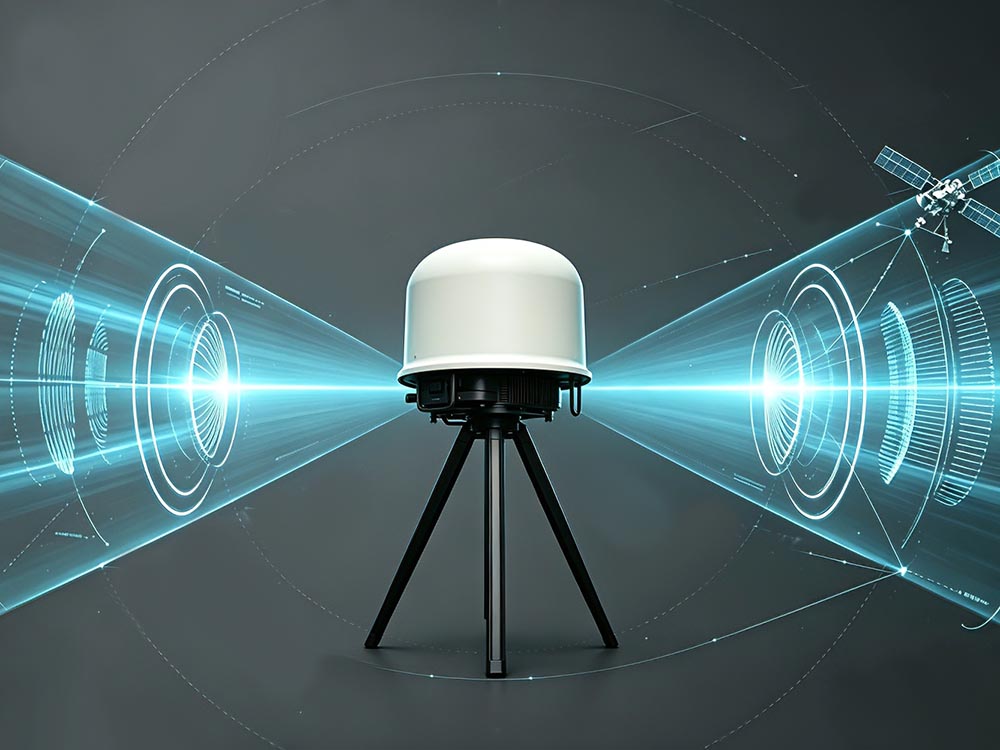
Protocol-aware jamming is often more efficient than barrage noise. By analyzing the terminal’s acquisition sequence, the jammer injects false timing offsets that force repeated re-registration. This approach reduces required transmit power by up to 15 dB compared with broadband techniques.
Mobility vs. Power in a LEO Satellite Communication Jammer
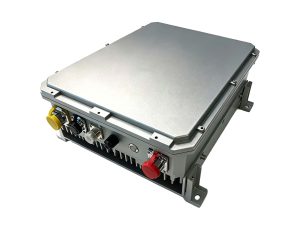
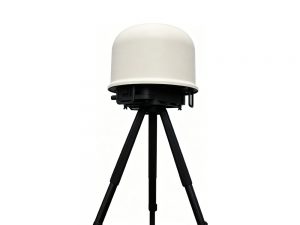
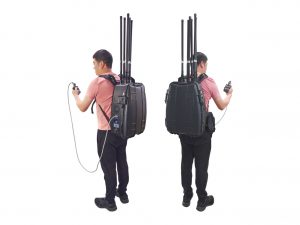
Survivability depends on rapid displacement after emission. However, high-power Ku-band amplification generates substantial heat and demands large power reserves. The table below compares typical platform envelopes for a LEO satellite communication jammer.
| Platform Type | Weight | RF Output | Effective Range | Deployment Time |
|---|---|---|---|---|
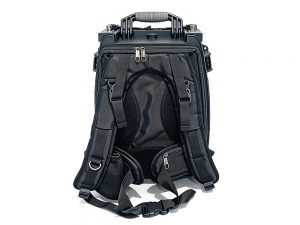
| Manpack | 15–25 kg | 50–100 W | 1–2 km | < 5 min |
| Vehicle-mounted | 200–500 kg | 500–2000 W | 5–10 km | 10–20 min |
| Containerized | 2–5 tons | 5–20 kW | 15–30 km | 1–2 hours |
Table: Operational envelopes for three classes of LEO jamming platforms.
Vehicle-mounted systems offer the best compromise between mobility and denial radius. They can reposition within minutes after each burst, reducing vulnerability to artillery or drone strikes. Manpack units suit special operations but require very short transmission windows.
Denial Metrics for a LEO Satellite Communication Jammer
Effective range is not the only metric. Operators should measure link disruption probability and recovery time. A useful benchmark is the jammer-to-signal ratio (J/S). For typical LEO modems, a J/S of 10 dB raises the bit error rate from 10⁻⁶ to 10⁻², effectively collapsing the data link.
Recovery time after jamming ceases is equally important. Well-designed terminals re-acquire satellites within 2–5 seconds. A LEO satellite communication jammer using persistent spoofing can extend this to 30 seconds or more by corrupting the stored almanac data.
Network Integration of a LEO Satellite Communication Jammer
Modern jammers do not operate in isolation. They receive cueing from passive RF sensors or electro-optical trackers that detect terminal emissions. By integrating with tactical data links, a LEO satellite communication jammer can activate only when a high-value target is confirmed, reducing unnecessary RF exposure. This concept is similar to the shoot-and-scoot approach we discussed in our earlier analysis of mobile EW systems against Starlink.
Coordinated operation also enables pseudo-random frequency hopping across multiple jammers, making it harder for the adversary to apply anti-jamming filters. The goal is not continuous denial but periodic disruption that forces terminals into unstable states.
Conclusion
A LEO satellite communication jammer is now a standard countermeasure for tactical units facing satellite-dependent adversaries. By focusing on protocol-aware techniques, balancing mobility with power, and integrating into wider sensor networks, these systems can deny LEO connectivity without becoming easy targets. As constellations proliferate, the jammer’s role will only grow in operational importance.