The Starlink jamming vs unjamming cat and mouse game explained in this article is not a static battle. It is a rapid, adaptive contest between disruptors and network engineers. Each side continuously upgrades tactics, making the outcome unpredictable.
The Core Loop of Starlink Jamming vs Unjamming Cat and Mouse Game Explained
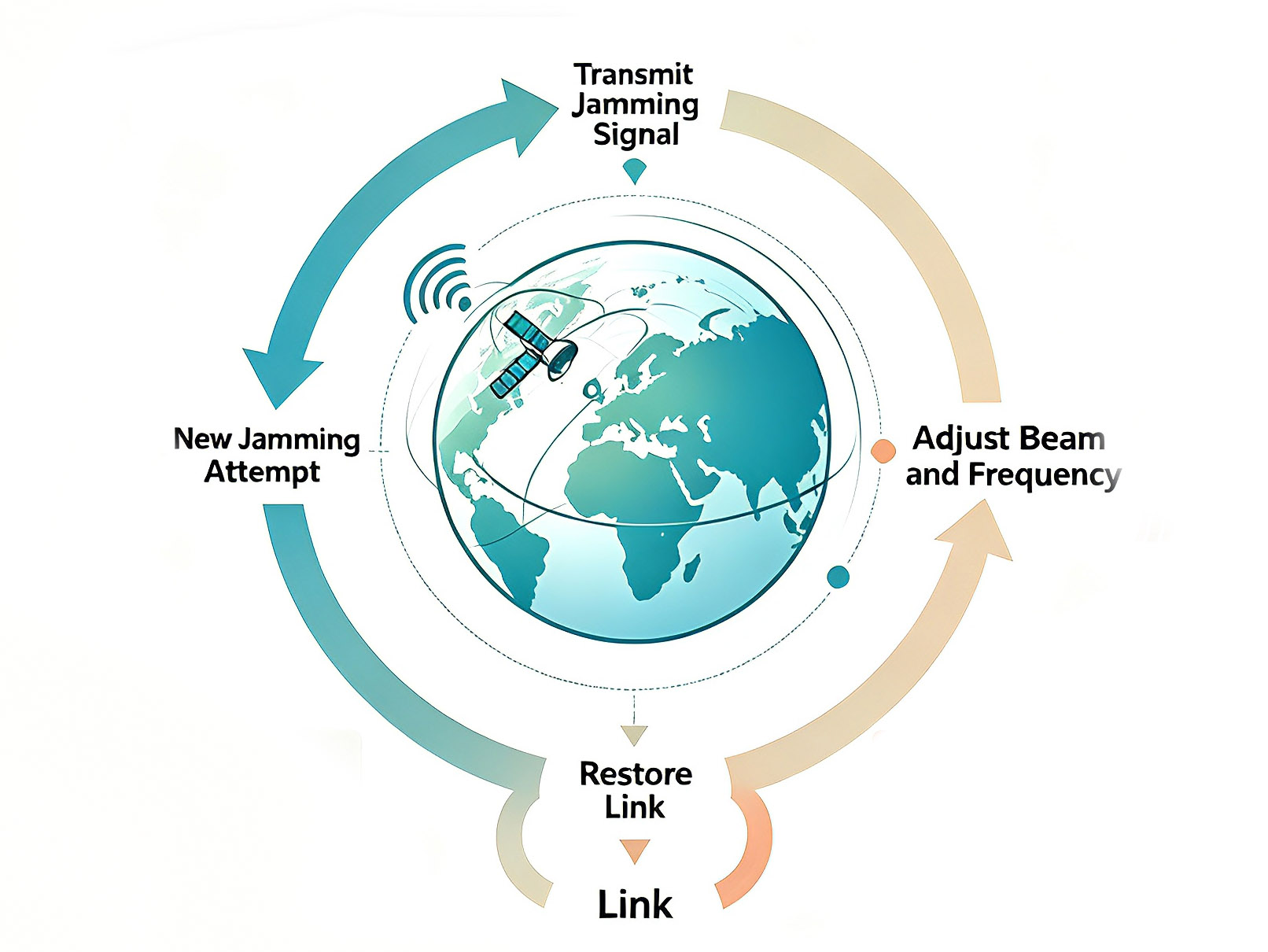
At its heart, this contest follows a simple loop. A jammer emits a signal to degrade the user terminal’s link. The Starlink system detects the interference. It then adjusts its beamforming or frequency plan to nullify the noise. The jammer responds with a new frequency or angle. This back-and-forth defines the Starlink jamming vs unjamming cat and mouse game explained here.
Offensive Tactics: How Jammers Target Starlink
Most jammers rely on three main approaches. Broadband noise raises the noise floor across the Ku-band. Spoofing attempts to inject false control signals. Directional jamming focuses energy at the dish’s side lobes. However, these methods face a moving target. The satellite is never in the same spot for more than a few minutes. This mobility forces jammers to either use wide coverage or constantly re-aim.
Defensive Maneuvers: How Starlink Fights Back
Starlink’s countermeasures are equally dynamic. Frequency hopping spreads the signal across many channels. Adaptive beamforming creates a sharp null in the direction of the jammer. The network can also hand off the terminal to a different satellite. This unjamming process is automatic and often happens in milliseconds. This rapid adaptation is central to the Starlink jamming vs unjamming cat and mouse game explained.
Here is a quick comparison of the two sides:
| Side | Primary Tool | Speed of Adaptation | Typical Result |
|---|---|---|---|
| Jammer | Wideband noise generator | Seconds to minutes | Temporary disruption |
| Starlink | Null steering & frequency hop | Milliseconds | Link restoration |
The table shows why the Starlink jamming vs unjamming cat and mouse game explained in technical papers favors the defender. However, no defense is perfect.
Why the Game Never Ends
Both sides operate under constraints. Jammers face legal penalties and power limits. Starlink must maintain throughput for millions of users. The legal and technical constraints shape the Starlink jamming vs unjamming cat and mouse game explained. New jamming chips appear on the black market. Starlink pushes software updates to counter them. For more on the physical range limits of these devices, see our internal guide on what is the range of a Starlink jammer. You can also review the FCC’s jammer enforcement rules for legal context.
Final Word on the Cat and Mouse Game
The Starlink jamming vs unjamming cat and mouse game explained above is unlikely to end soon. As long as satellite internet remains vital in conflict zones and remote areas, attempts to block it will persist. Understanding this dynamic helps network planners build resilience rather than relying on a single countermeasure.