LEO satellite communication jammer technology has moved from classified military briefings into open industry discussions. LEO constellations operate at altitudes between 500 km and 2,000 km, so the ground footprint of each satellite is small and fast-moving. Operators, regulators, and defense contractors now assess this threat alongside cyber and physical attacks. Still, non-state actors can build low-cost jammers from commercial components. Interference is now a board-level risk.

How a LEO Satellite Communication Jammer Works
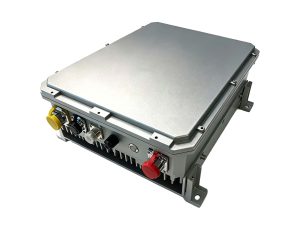
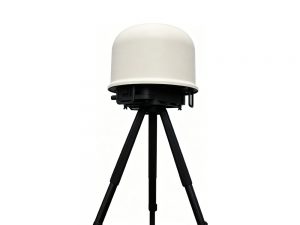
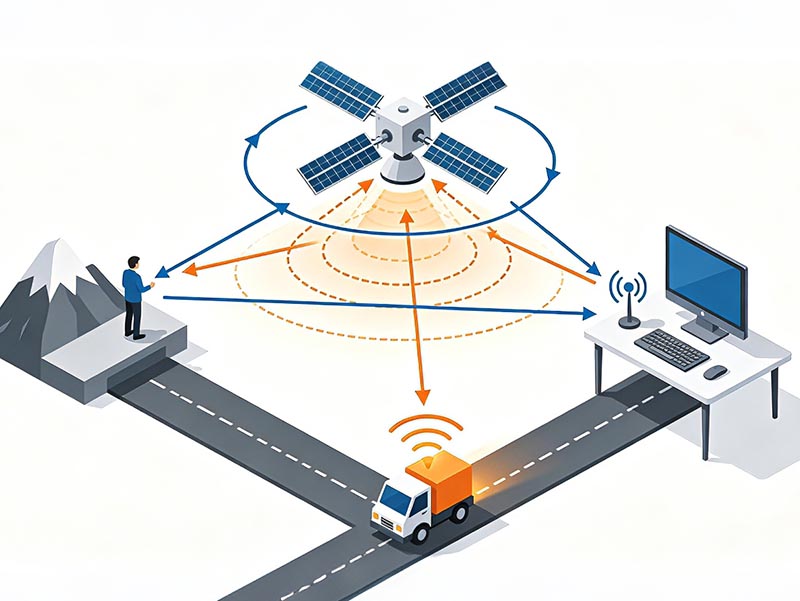
A LEO satellite communication jammer transmits radio frequency energy toward the uplink, downlink, or crosslink to raise the noise floor. The target receiver loses synchronization or cannot decode the desired signal. For LEO systems, the jammer often uses a compact directional antenna and a software-defined radio.
Uplink jamming targets the satellite receiver, which is more sensitive. Downlink jamming targets user terminals, which often use wider beams. Because LEO satellites pass overhead in minutes, the jammer can activate only when a target satellite is above the horizon.
5 Common Techniques for a LEO Satellite Communication Jammer
-
Uplink barrage jamming – High power over a wide band to block command links.
-
Downlink spot jamming – Narrowband signal aimed at user terminals.
-
Reactive jamming – The jammer listens first, then transmits on active frequencies.
-
GNSS spoofing – Indirect attack on satellite timing and synchronization.
-
Crosslink interference – Disrupting inter-satellite links in large constellations.
Barrage jamming is simple but power-hungry. Reactive jamming is harder to detect because it transmits only when a signal appears. GNSS spoofing can disrupt satellite timing.
Technical Parameters at a Glance
The exact values depend on antenna gain, line-of-sight conditions, and spectrum regulations. The table below shows a representative portable jammer profile.
| Parameter | Uplink Jamming | Downlink Jamming | Reactive Jamming |
|---|---|---|---|
| Typical Range | 5–50 km | 10–100 km | 1–20 km |
| Power Output | 100 W–2 kW | 20–500 W | 10–200 W |
| Bandwidth | Wideband | Narrowband | Adaptive |
| Main Target | Satellite receiver | User terminal | Active link |
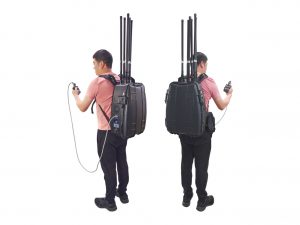
These values are illustrative. Real-world performance varies with terrain, weather, and the target satellite’s link margin. Power limits are regulated, but portable units remain difficult to detect.
Why LEO Links Are Vulnerable to a LEO Satellite Communication Jammer
LEO satellites move quickly, which shortens the engagement window but also limits beam dwell time. User terminals usually have wide beamwidth antennas, so they accept interference from many directions. Additionally, many LEO downlinks use known frequencies and open protocols, making signal identification easier.
Medium Earth orbit (MEO) and geostationary (GEO) satellites sit much farther away, so their beams can be highly directional. LEO systems trade that distance for lower latency and smaller terminals, but they become easier to disrupt locally.
A LEO satellite communication jammer does not need to destroy a satellite. It only needs to raise the bit error rate above the threshold for a few seconds per pass. That can interrupt financial timing, remote sensing, or emergency voice traffic.
Mitigation Strategies
Engineers use spread spectrum waveforms, frequency hopping, null-steering antennas, and onboard digital beamforming. Regulatory bodies such as the ITU-R track harmful interference. The FCC Space Bureau also enforces spectrum rules for satellite operators.
Operators can also use interleaving, forward error correction, and adaptive modulation. Persistent monitoring helps identify the source of interference before it affects safety-of-life services. Some systems add a backup geostationary link for critical commands.