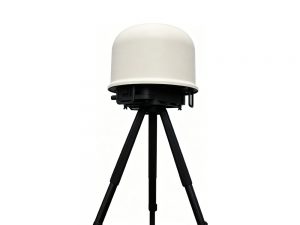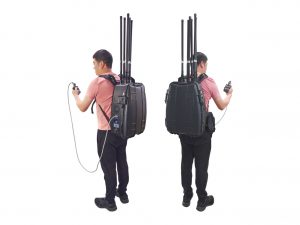
The proliferation of Low Earth Orbit (LEO) satellite constellations has revolutionized global internet access, with Starlink leading the charge. However, this technological leap introduces new vulnerabilities, particularly concerning signal interference. The most pressing threat in this domain is Starlink Uplink Jamming, a sophisticated electronic warfare technique aiming to disrupt the communication link between the user terminal (dish) and the orbiting satellite.
The Uplink Challenge: Why Ku-Band?
To understand Starlink Uplink Jamming, one must first grasp the frequency terrain. Starlink primarily utilizes the Ku-Band spectrum (12–18 GHz) for its user downlink and uplink operations. This band is prized for its high capacity and manageable antenna sizes. However, the physics that make Ku-Band ideal for broadband also make it susceptible. The uplink frequency (around 14 GHz) is the specific channel where commands and data travel from the user to the satellite. Interfering with this specific channel effectively severs the user’s ability to connect to the network.
Mechanisms of Interference
Jamming a Starlink uplink requires generating a noise signal that overwhelms the satellite receiver. This is typically achieved through high-gain directional antennas operating precisely within the 14.0–14.5 GHz uplink band.
To understand the various methods employed, consider the following table outlining common jamming techniques:
| Jamming Type | Mechanism of Action | Countermeasure Complexity |
|---|---|---|
| Barrage Jamming | Broadcasts broad-spectrum noise across the entire Ku-Band. | Low difficulty; easy to detect. |
| Spot Jamming | Concentrates full power on the specific 14 GHz uplink carrier frequency. | Medium difficulty; highly localized. |
| Deceptive Jamming | Repeats user signals with delay to confuse the satellite’s timing protocols. | High difficulty; requires advanced signal processing. |
Technical Challenges in Execution
While theoretically straightforward, the reality of executing Starlink Uplink Jamming is fraught with engineering hurdles. The primary challenge is the high Doppler shift inherent to LEO satellites traveling at over 17,000 mph. A jammer must compensate for frequency drift to ensure the noise remains on the exact target frequency.
Furthermore, Starlink employs sophisticated digital beamforming. The user terminal (Dishy McFlatface) phases its signal to track a specific satellite in real-time. A stationary jammer may find it difficult to project power into the rapidly moving receiver footprint. This dynamic environment often necessitates the use of a “Target of Opportunity” approach, where the jammer focuses on a satellite as it passes overhead.
The Broader Implications
The vulnerability of the Ku-Band uplink is a concern not just for private consumers but for military operations. In conflict zones, Starlink Uplink Jamming has been documented as a tool to disrupt enemy command and control networks.
Mitigation and Defense Strategies
In response to these threats, Starlink has developed several countermeasures to safeguard its uplink integrity:
-
Frequency Hopping: Rapidly changing the uplink carrier frequency within the allocated band to evade persistent jamming.
-
Phased-Array Nulling: Digitally steering “nulls” (zones of low sensitivity) in the satellite’s antenna pattern to block out the jamming source while maintaining focus on the user.
-
Spread Spectrum: Spreading the signal over a wide bandwidth to reduce the jammer’s effectiveness.
Conclusion
Starlink Uplink Jamming represents a critical intersection of modern telecommunications and electronic security. By specifically targeting the Ku-Band uplink, adversaries can deny access to essential services. Understanding these frequencies and the physics of interference is the first step in developing robust defenses to protect the integrity of future global internet networks.
-
reference: Satellite Industry Association.