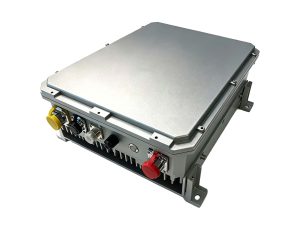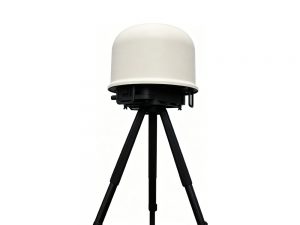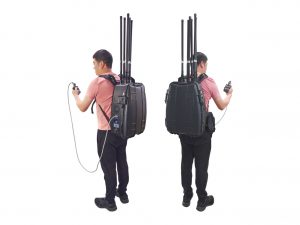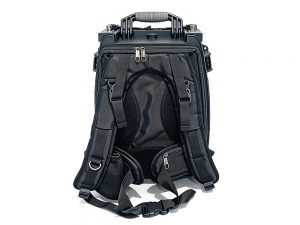
Yes. Our Starlink jamming systems are fully capable of disrupting user terminals in motion, including those installed on land vehicles, maritime vessels, and low-altitude airborne platforms. The operational principle remains identical: overwhelming the terminal’s receiver with a higher-power signal on the Ku/Ka uplink and downlink frequencies. However, engaging moving targets introduces additional engineering challenges, which we address through the following design features:
-
Wide-Beam and Sector Antennas: For mobile targets that change position rapidly, we offer sector antennas with broader beamwidth (e.g., 90° or 120° azimuth coverage) instead of narrow pencil beams. This creates a wide denied zone that the terminal cannot exit simply by moving. For convoy protection, omnidirectional antennas are often selected to maintain a continuous bubble of interference regardless of vehicle orientation.
-
High-Speed Tracking Platforms: For long-range, high-power fixed stations that need to engage moving terminals at distance, we offer optional integration with radar or RF direction-finding cueing systems. The jammer antenna is mounted on a high-speed pan-tilt unit that can slew to track the target, maintaining precise jamming energy on the terminal even as it maneuvers.
-
Doppler Shift Compensation: Terminals on high-speed platforms (e.g., fixed-wing aircraft) experience significant Doppler frequency shifts relative to the satellite. Our software-defined radio architecture incorporates real-time Doppler prediction and compensation algorithms to ensure the jamming signal perfectly overlaps the terminal’s instantaneous receive frequency, preventing frequency mismatch that could otherwise reduce effectiveness.
-
Gyro-Stabilized Maritime Mounts: For shipboard deployment, we provide gyro-stabilized antenna pedestals that compensate for vessel roll, pitch, and yaw. This keeps the jamming beam accurately pointed at the horizon or sky sector regardless of sea state, ensuring uninterrupted denial of service to nearby or airborne terminals.
-
Handover Interruption: Mobile terminals are constantly performing satellite handovers as the constellation moves across the sky. Our jammers exploit this by saturating the acquisition channels used during handover, preventing the terminal from re-establishing a link after losing the previous satellite, effectively causing a persistent outage.