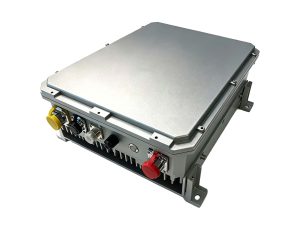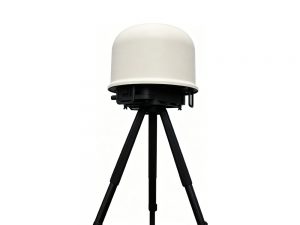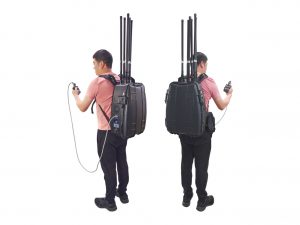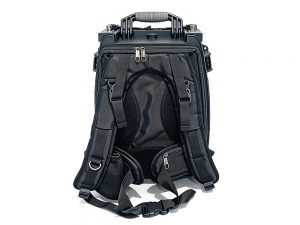
A backpack Starlink jammer is exactly what it sounds like—a portable, concealable electronic warfare tool designed to disrupt the connection between SpaceX’s Starlink terminals and passing satellites. Unlike bulky vehicle-mounted units, this system slips into a civilian backpack, making it a covert asset in modern conflict zones. (For foundational knowledge, see our overview of general Starlink jamming systems.) As satellite internet fuels drone operations and encrypted command links, understanding how a man-portable jammer works has become essential for security analysts and telecom regulators alike.

How a Backpack Starlink Jammer Overrides Satellite Links
At its heart, every backpack Starlink jammer exploits the RF link between the user terminal’s phased-array antenna and the low-Earth orbit satellites. Starlink’s signals hop across the Ku and Ka bands, but a backpack unit with a wideband software-defined radio (SDR) can track these hops. It transmits a tailored interference waveform—either raw noise or deceptive synchronization packets—that saturates the terminal’s receiver. Because a backpack Starlink jammer relies on line-of-sight propagation and a modest power budget, it is most effective within a radius of a few hundred meters to several kilometers, depending on terrain and antenna gain.
Key Components That Make It Portable
Shrinking a jamming station into a backpack requires ruthless engineering compromises. A typical backpack Starlink jammer integrates three building blocks. First, a flat-panel or collapsible high-gain antenna array fits against the pack’s frame. Second, an SDR platform—often a ruggedized single-board computer paired with an FPGA—generates agile jamming waveforms. Third, a lithium-ion battery pack supplies 100 to 300 watts for sustained operations. While these components are commercially available, combining them into a functional backpack Starlink jammer demands specialized waveform libraries and heat management solutions.
5 Powerful Realities You Must Know
| # | Reality | What It Means in Practice |
|---|---|---|
| 1 | A backpack Starlink jammer is not a toy | Even low-power prototypes can knock out critical emergency links and drone feeds. |
| 2 | Portability multiplies the threat | One person can walk into a crowded area, disrupt connectivity, and vanish quickly. |
| 3 | Detection is getting harder | Modern backpack units use directional beams to minimize their own RF footprint. |
| 4 | Rapid pulse jamming saves battery | Short, intelligently timed bursts can be more effective than constant noise. |
| 5 | Counter-drone use drives adoption | Frontline units pair this device with drone detectors to sever remote piloting links. |
These five realities underline why a backpack Starlink jammer represents a niche but rapidly evolving danger. Unlike traditional broadband jammers that broadcast indiscriminately, the latest backpack variants use protocol-aware techniques that specifically confuse Starlink’s OFDM-based waveform. This precision reduces collateral interference but also makes the hardware more complex to design and filter.
The Legal Abyss: Why a Backpack Starlink Jammer Is Illegal
Across the globe, owning or operating a backpack Starlink jammer is strictly prohibited for private individuals. The Federal Communications Commission (FCC) classifies any intentional RF blocking device as illegal, with fines reaching into the hundreds of thousands of dollars. International Telecommunication Union (ITU) rules reinforce this stance, as jamming violates the sovereign right of nations to manage their spectrum. Even military use of a backpack Starlink jammer typically requires high-level authorization, because uncontrolled interference can cascade into disruptions for aviation, maritime safety, and neighboring countries’ satellite services.
Staying Ahead of Portable Threats
Defending against a backpack Starlink jammer involves a layered approach. Satellite operators are embedding cognitive algorithms that recognize jamming patterns and instantly steer beams away from interference. On the ground, security teams deploy handheld spectrum analyzers to detect the subtle sidelobe emissions of a hidden backpack unit. As the miniaturization trend continues, we can expect even more compact jammers to appear—underscoring the need for robust, adaptive filtering on every Starlink terminal. Public awareness and strict regulatory enforcement remain our first line of defense against the proliferation of these devices.