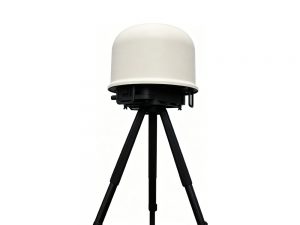
A Starlink detection system is a specialized setup designed to identify, locate, and track radio frequency signals emitted by SpaceX’s Starlink satellite constellation. As thousands of these low-Earth orbit satellites beam internet across the globe, governments, militaries, and even hobbyists are building tools to monitor this unique signal landscape. Unlike traditional geostationary dishes, Starlink terminals use phased-array antennas and dynamic beamforming, making detection both challenging and technically fascinating. (Read our introduction to satellite signal monitoring for broader context.)

What Is a Starlink Detection System?
At its simplest, a Starlink detection system combines antennas, software-defined radios (SDRs), and signal processing algorithms to recognize the characteristic waveforms of Starlink downlinks and uplinks. The constellation operates in Ku, Ka, and E bands, with terminals rapidly switching frequencies. To identify these signals, the system must scan wide bandwidths and isolate periodic synchronization bursts, pilot tones, or the unique signature of OFDM modulation. Many open-source projects now let enthusiasts build a basic Starlink detection system using an RTL-SDR dongle and a laptop.
Core Components of a Starlink Detection System
A functional Starlink detection system generally includes three core parts. First, a high-gain antenna captures weak satellite signals. Second, an SDR digitizes the radio spectrum for analysis. Third, machine learning or correlation-based software distinguishes Starlink traffic from other LEO constellations like OneWeb or terrestrial interference. Some advanced setups also incorporate directional finding arrays to triangulate the physical location of an active terminal, a capability that draws interest from defense organizations.
5 Powerful Ways a Detection System Identifies Starlink Signals
| # | Detection Method | How It Works | Challenge |
|---|---|---|---|
| 1 | Frequency Scanning | Sweeps the Ku/Ka bands to locate active downlink channels. | Signal hopping requires fast scanning speed. |
| 2 | TDOA Geolocation | Measures time difference of arrival at multiple receivers to pinpoint a terminal. | Needs precisely synchronized sensor network. |
| 3 | Spectral Fingerprinting | Analyzes unique OFDM subcarrier patterns that match Starlink waveform standards. | Background noise can mask faint patterns. |
| 4 | Beam Pattern Mapping | Detects sidelobe emissions from the phased-array antenna as it tracks satellites. | Very low power levels; long integration needed. |
| 5 | Satellite Ephemeris Correlation | Matches detected burst times with known Starlink satellite orbital passes. | Requires up-to-date TLE data and precise timing. |
Each of these techniques can be combined into a robust Starlink detection system capable of not only spotting a signal but also characterizing the terminal type and its approximate location. This multi-layered approach is essential because the constellation updates its beam schedules every few seconds, making single-method detection unreliable.
Why a Starlink Detection System Matters for Security
In conflict zones, unauthorized Starlink terminals have been used for drone operations and encrypted communications. A reliable Starlink detection system allows spectrum regulators and security agencies to identify rogue emitters that bypass local telecom controls. For example, electronic warfare units can integrate detection into a broader situational awareness platform, distinguishing civilian usage from potential threats. According to the IEEE Spectrum, passive RF sensing of megaconstellations is becoming a priority research area for national security labs.
Legal Boundaries and Spectrum Monitoring
While owning a Starlink detection system is generally legal—since it only receives, not transmits—active probing or jamming remains strictly prohibited. The International Telecommunication Union mandates that spectrum monitoring activities respect national sovereignty. In many countries, using detection data to locate private terminals without a warrant raises privacy concerns. Regulators are now drafting updated guidelines that balance innovation in RF sensing with the rights of satellite internet users.
The Future of Starlink Detection Technology
As SpaceX moves toward laser inter-satellite links and smaller spot beams, tomorrow’s Starlink detection system will need to evolve toward optical and infrared sensing alongside traditional RF methods. Researchers are also exploring the use of commercial drones equipped with compact SDRs to perform on-the-move detection in areas where ground sensors cannot be deployed. The ongoing miniaturization of powerful computing hardware means that real-time, AI-driven signal classification could soon fit inside a handheld device, making Starlink signal awareness more accessible than ever.