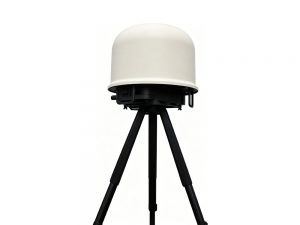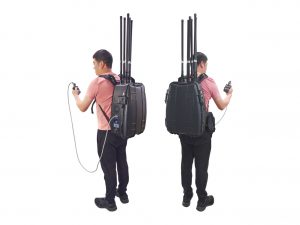
The evolution of satellite communication (SATCOM) countermeasures has shifted from crude power-jamming to sophisticated, software-defined electronic warfare. At the heart of this transition is the Starlink jammer remote control and monitoring system. This technology is no longer just about broadcasting noise on the Ku-band; it is about the precise orchestration of electronic countermeasures (ECM) from a safe, remote command center.
As defense contractors and security agencies look to protect assets against the proliferation of Low Earth Orbit (LEO) connectivity, the demand for intelligent, networked jamming solutions has skyrocketed. This article breaks down the architectural requirements and the seven critical features that define a next-generation control and monitoring platform.
The Shift to Networked Countermeasures
A Starlink jammer remote control and monitoring system represents a paradigm shift in electronic warfare (EW). Traditional “dumb” jammers simply blast high-power noise. While effective, they are prone to counter-detection and are often inefficient in power consumption. A modern approach utilizes a network-centric model. Here, the operator is far removed from the kinetic battlefield, relying on low-latency telemetry to adjust parameters.
This is crucial because Starlink utilizes Ku-band and Ka-band frequencies, specifically the Ku-band for user downlinks and Ka-band for gateways and tracking. The agility of the Starlink constellation requires that any jamming system be equally agile, capable of reacting to beam-hopping and frequency changes in milliseconds.
The Architecture of a Modern Starlink jammer remote control and monitoring system
Building a reliable system requires a three-tier architecture:
-
The Edge (Jamming Nodes): These are the actual transmitters located in the field. They must be ruggedized, low-power, and capable of high-gain directional transmission.
-
The Transport Layer: Often utilizing LTE/5G or secure satellite links (ironically), this layer ensures low-latency communication between the field units and the command center.
-
The Core (Command & Control): This is the software stack. It processes telemetry, manages encryption keys, and provides the user interface (HMI) for operators.
7 Key Features
To be effective in a contested environment, the control system must offer more than just an “On/Off” switch. Here are the defining features of a top-tier system.
1. Real-Time Spectrum Visualization
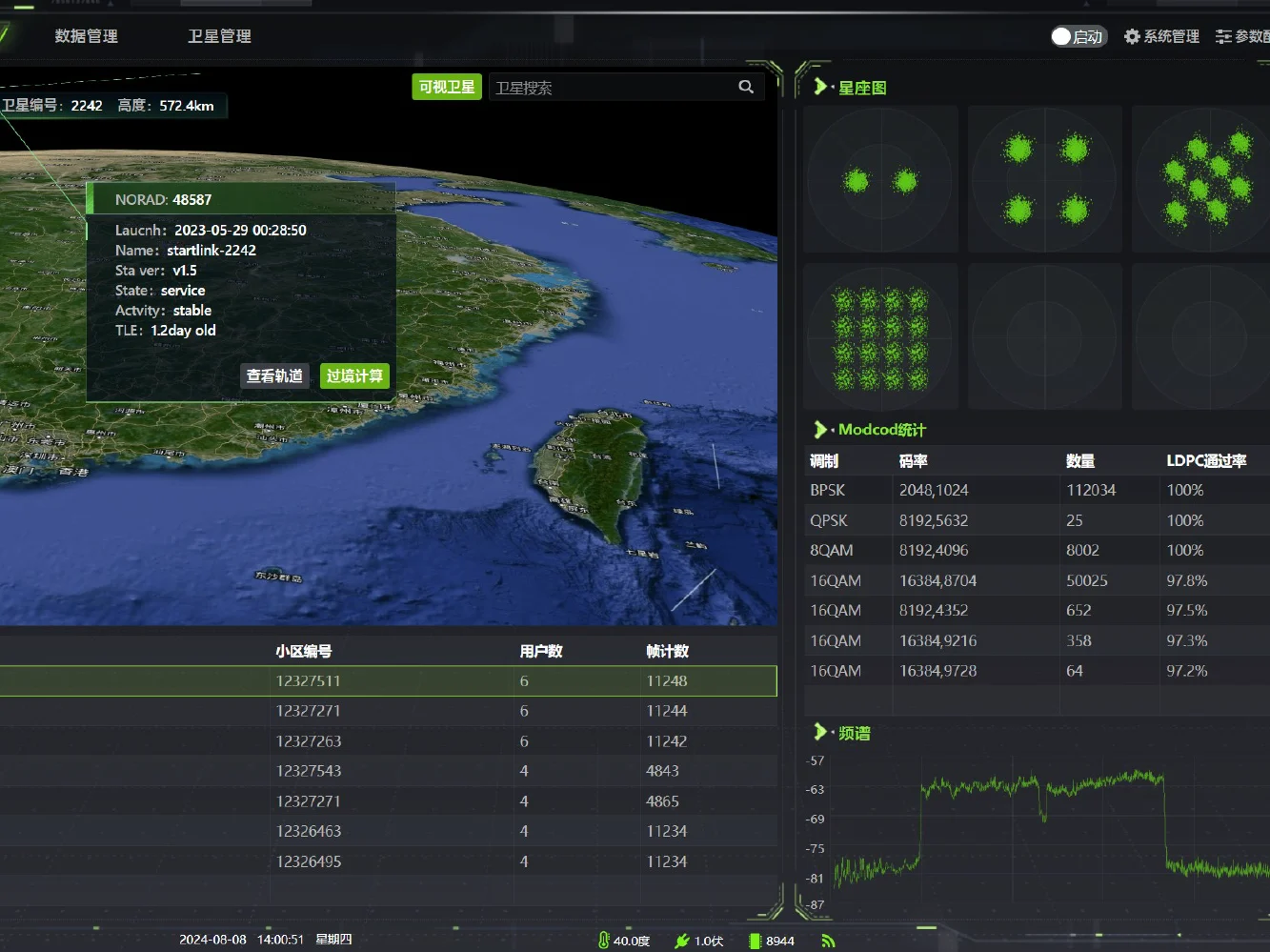
The operator must “see” the RF environment. A high-quality system provides a real-time waterfall display of the Ku/Ka bands. This allows the operator to identify legitimate Starlink traffic vs. background noise. The Starlink jammer remote control and monitoring system should employ Software Defined Radio (SDR) to analyze signal strength and frequency utilization.
2. Centralized Command Dashboard
Managing multiple jamming nodes across a wide area requires a “single pane of glass.” The dashboard should provide a map overlay showing the status of each node, battery levels, and current operational frequencies. This ensures that “gaps” in the jamming shield are identified immediately.
3. Intelligent Thermal Management
Jamming signals, particularly at high power, generate significant heat. The monitoring system must track the temperature of the Gallium Nitride (GaN) amplifiers. If a unit overheats, the system should either throttle power automatically or rotate the workload to a cooler adjacent node.
4. Automated Frequency Hopping (FHSS) Response
Starlink terminals are smart; they switch frequencies to avoid interference. A sophisticated control system uses AI algorithms to predict frequency shifts and pre-emptively adjust the jamming waveform. This requires a tight feedback loop between the monitoring sensors and the jamming transmitter.
5. GPS-Denied Synchronization
In many conflicts, GPS is the first thing to be jammed. If the jamming nodes rely on GPS to synchronize their timing (essential for multi-node coordination), the system will fail. A resilient system uses Chip-Scale Atomic Clocks (CSAC) or internal oscillators to maintain timing integrity even when the Global Positioning System is unavailable.
6. Secure Encrypted Telemetry
If the enemy can hijack your jammer, you have given them a weapon. The communication link between the control center and the jammer must be encrypted using military-grade AES-256 encryption. Furthermore, the system should feature “Dead Man’s Switch” capabilities—if the control signal is lost for too long, the unit should power down or return to a safe state.
7. Modular Firmware Upgrades (OTA)
The RF spectrum is dynamic. New Starlink frequencies or protocols may be deployed. The control system must support Over-The-Air (OTA) updates. This allows engineers to update jamming waveforms or improve monitoring algorithms without physically retrieving the hardware from the field.
Technical Specifications Breakdown
Below is a comparison of standard features versus advanced features in a top-tier monitoring system.
| Feature Category | Standard System | Advanced Starlink Jammer Remote Control and Monitoring System |
|---|---|---|
| Control Range | Line of Sight (up to 5km) | Global (IP-based via 4G/5G/SAT) |
| Telemetry Data | Basic Voltage/Current | Real-time RF Spectrum, Thermal Profile, GPS Location, VSWR |
| Frequency Bands | Fixed Ku-Band | Wideband Ku/Ka Band with Sweep Capability |
| Security | Unencrypted Wi-Fi | AES-256 Encrypted VPN Tunnel |
| Power Management | Manual Toggle | Remote Power Cycling & Load Balancing |
| Updates | Physical Cable | Encrypted OTA Firmware Updates |
| Latency | >100ms | <20ms (Critical for anti-hopping) |
Operational Challenges and Mitigation
Implementing a Starlink jammer remote control and monitoring system is not without challenges. One major issue is the “Fog of War” in the RF domain. Operators must distinguish between jamming effects and atmospheric attenuation.
To mitigate this, external resources suggest integrating cognitive radio techniques. Cognitive jamming allows the system to “listen” before it “shouts.” By monitoring the Starlink packet headers (if accessible) or signal patterns, the system can optimize its jamming efficiency.
Furthermore, power supply is a constant constraint. The monitoring system must provide granular data on battery consumption to ensure that the jamming window aligns with the tactical mission timeline. For more on the fundamentals of electronic warfare, refer to the Center for Strategic and International Studies (CSIS) for strategic context.
The Role of AI in Monitoring
The integration of Artificial Intelligence (AI) is transforming the Starlink jammer remote control and monitoring system from a reactive tool to a proactive one. AI can analyze historical data to predict when a Starlink user terminal (UT) is likely to attempt a handover to a different satellite. By anticipating this, the system can pre-emptively direct jamming power, saving energy and increasing effectiveness.
Additionally, AI-driven monitoring can detect anomalies in the hardware itself. If a Voltage Standing Wave Ratio (VSWR) reading spikes, the AI can shut down the specific transmission line to prevent a hardware burnout, alerting the operator to a potential antenna fault.
Conclusion
The Starlink jammer remote control and monitoring system is a critical component of modern electronic warfare. It combines RF engineering, software development, and cybersecurity into a single cohesive platform. As LEO constellations become more resilient, the systems designed to monitor and control them must evolve just as rapidly.
By focusing on real-time visualization, robust encryption, and intelligent thermal management, operators can ensure their counter-SATCOM capabilities remain effective in the most demanding environments. The move toward networked, remote-controlled systems is not just a convenience—it is a necessity for survivability and operational success.
For those looking to understand the legal and regulatory frameworks surrounding these technologies, the ITU (International Telecommunication Union) provides guidelines on spectrum usage that are worth reviewing.