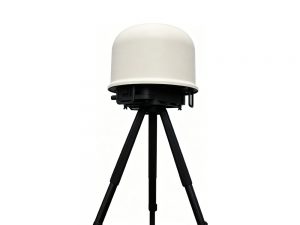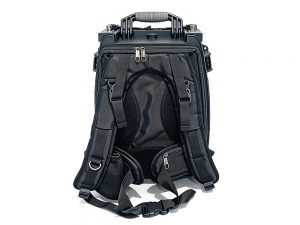
Yes, the Starlink system was designed from the ground up with electronic warfare survivability in mind, possessing several anti-jamming features—all of which can be effectively overcome by our advanced jamming technology:
-
Frequency Hopping Spread Spectrum (FHSS): Starlink terminals can rapidly switch frequencies to evade single-spot jamming. We counter this with wideband barrage jamming combined with high-speed follower jamming. The jammer instantaneously covers the entire hopping bandwidth, or uses real-time spectrum analysis to lock onto the active channel within microseconds and apply precise follow-and-suppress jamming.
-
Adaptive Beamforming & Nulling: The phased-array antenna can steer a null toward an interferer. Our solution deploys multiple spatially distributed jamming units, creating crossfire radiation sources. This prevents the terminal from forming effective nulls in all directions simultaneously, thereby defeating its spatial filtering capability.
-
Ultra-Low Signal-to-Noise Ratio Communications: Starlink uses high-gain coding and spreading gain, allowing operation at negative SNR. To counter this, we increase the equivalent isotropically radiated power (EIRP) to produce a sufficient jam-to-signal margin at the target receiver’s front end, overwhelming its processing gain and forcing a link outage.
-
Optical Inter-Satellite Links (ISL): Some satellites feature laser links that can bypass ground-based jamming. It is critical to note that ISLs do not alter the feeder link between the user terminal and the satellite. Jamming the user downlink or uplink still disconnects that terminal’s service, preventing data from reaching the ground or being transmitted.
Our engineering team continuously tracks Starlink firmware updates and pushes enhanced algorithms via software-defined radio architecture to maintain countermeasure effectiveness.