
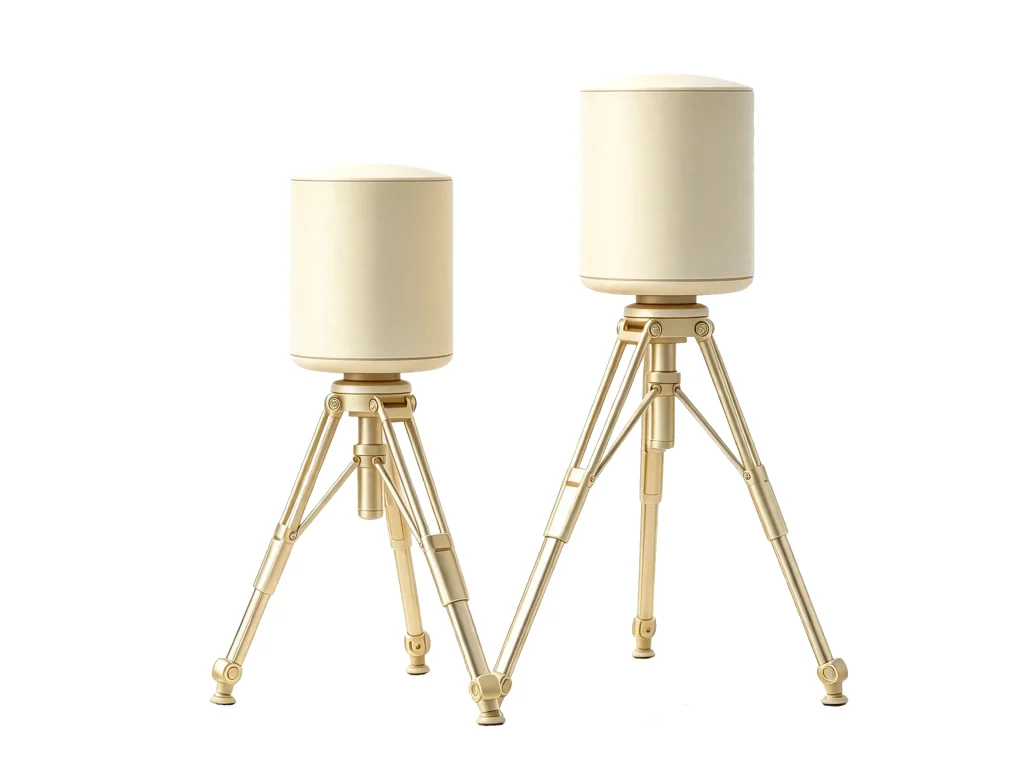

BNT-SL2000 Starlink Communication Blocker: >5 km detection, >3 km blocking, 120 W output, 10.7–12.75 GHz, <50 ms response, 220 VAC.
The BNT-SL2000 is a compact Starlink Communication Blocker designed for site-level control of SL satellite ground terminals. It does not rely on continuous high-power wide-area jamming. Instead, it watches for uplink activity, confirms a live terminal, and then applies directed blocking only where needed. This approach keeps power demand low, reduces size, and makes the system easier to deploy in fixed or temporary locations.
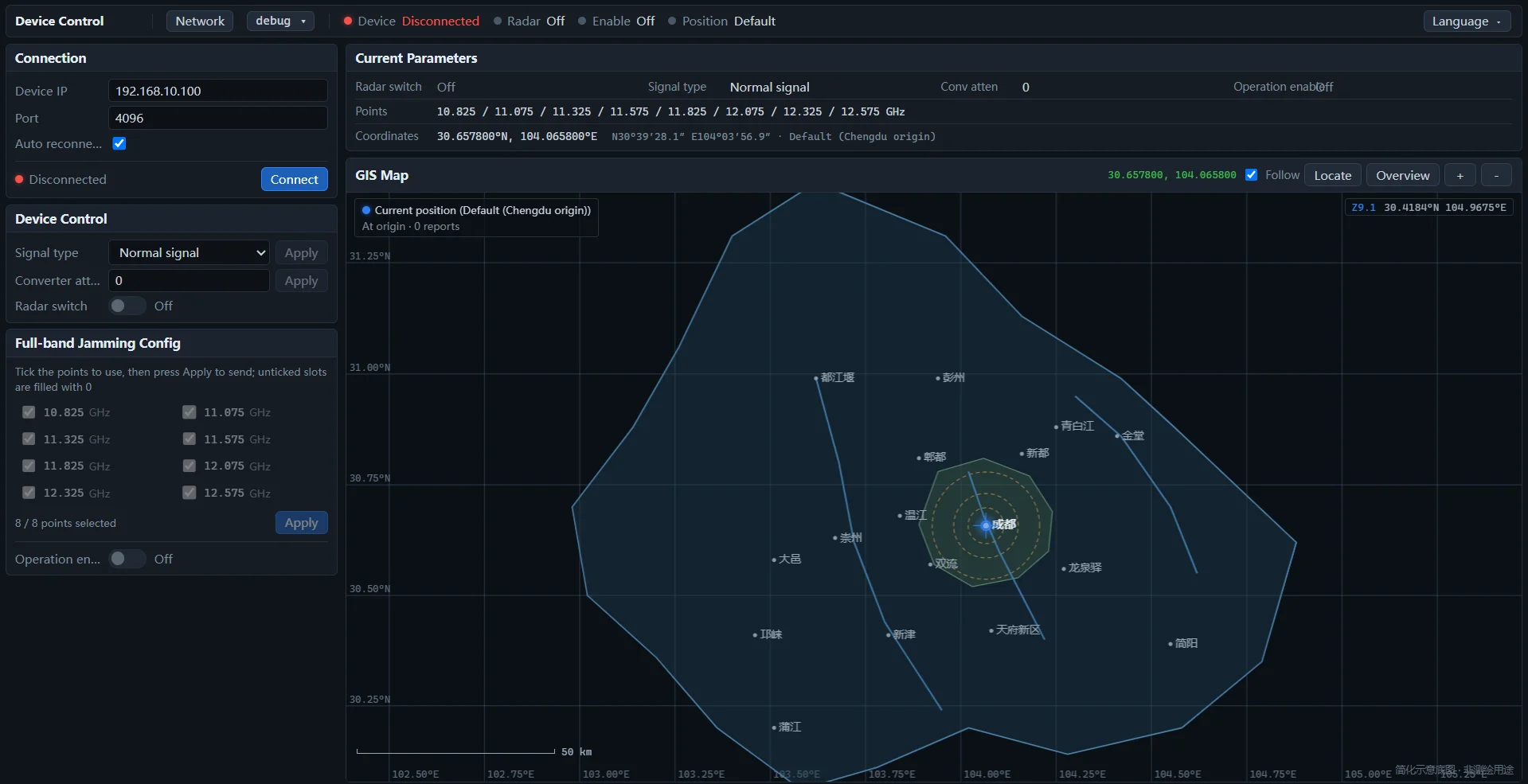
A Starlink Communication Blocker works best when it knows what to target. The detection subsystem scans the SL uplink channels and reports bearing data to the blocking subsystem. The blocking unit then points its antenna and sends a signal in the downlink band to interrupt the terminal’s receive path. Because transmission starts only after a signal is detected, the BNT-SL2000 saves energy and limits unnecessary RF output.
The BNT-SL2000 Starlink Communication Blocker covers a typical cell radius of about 3 km for blocking, while detection range is greater than 5 km. Detection speed is 10 s for a full 360° scan, with less than 20 ms response inside the antenna beam. Direction finding is one-dimensional azimuth with about 3° RMS typical accuracy. The blocking response time is under 50 ms, and the output beam width is 20°.
| Item | BNT-SL2000 |
|---|---|
| Detection range | >5 km |
| Blocking range | >3 km, line of sight |
| Detection band | 14.03125–14.46875 GHz |
| Blocking band | 10.7–12.75 GHz |
| Output power | 120 W |
| Blocking bandwidth | 240 MHz per channel, 1–8 channels |
| Power supply | 220 VAC, 50 Hz |
| Power consumption | <750 W |
| Size / weight | <45 cm high, <45 cm diameter; <20 kg |
| Operating temperature | -20 to +60°C |
Operators set up the unit with a tripod, connect power, and use the PC software for monitoring and task control. The software highlights detected terminal areas and supports automatic blocking guided by direction finding. This Starlink Communication Blocker can also be controlled through software-defined tasks, which helps teams keep a clear record of activity and response.
The BNT-SL2000 is intended for important-area SL communication control. Its integrated design reduces cabling and setup steps. When no uplink signal is present, the transmitter stays off, which lowers average power draw. The system is rated for -20 to +60°C operation and weighs under 20 kg, so it can be moved between sites without special handling.
The table below summarizes the main figures for quick comparison. The detection band covers the SL uplink channels listed in the manual, while the blocking band spans 10.7–12.75 GHz. Each blocking channel is 240 MHz wide, and one to eight channels can be configured. The 120 W output and 20° beam are intended for directed use rather than wide-area coverage. Power draw stays below 750 W, and the unit runs on standard 220 VAC 50 Hz supply.
Setup is straightforward: mount the unit on the tripod, connect the power cable, start the PC software, and confirm the detection and blocking sectors. Keep the line of sight clear for best range. During operation, check the event log and confirm that transmission stops when no uplink signal is present.
The main benefits are targeted blocking, low power demand, and simple deployment. A Starlink Communication Blocker with detection-led operation can focus effort on active terminals rather than blanketing an area. For buyers comparing options, the BNT-SL2000 offers a balanced package of detection range, fast response, and modest power requirements.
A fixed-site Starlink jammer for area denial is a site-based radio-frequency effect system intended to make Starlink user connectivity unreliable or unavailable...
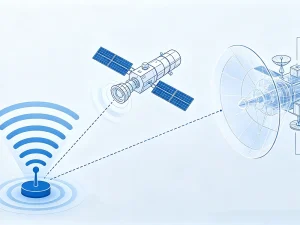
What is a soft kill anti-satellite weapon? In simple terms, it is a counter-space capability designed to deny, degrade, disrupt,...

Search interest in the Starlink jammer effective range calculation formula usually starts with a simple question: how far can a jammer reach?...
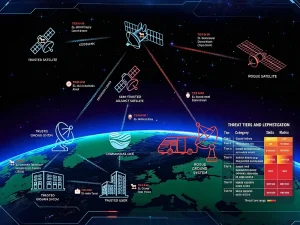
Search queries and industry discussions often frame 14–14.5 GHz as the primary Starlink jamming frequency. The statement is directionally useful, but...