
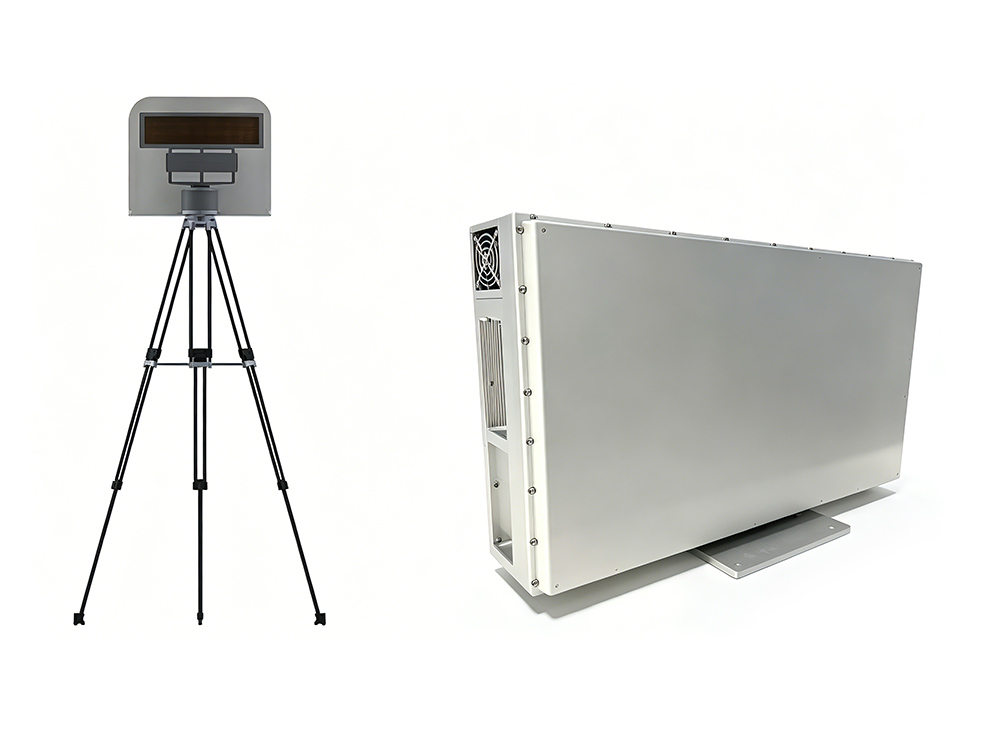
Starlink Detection System BNTSLD400: 14-14.5GHz, ≤3° beam, 30dB gain, ±60° scan, 500MHz BW, 90% detection at -10dB SNR, 1° DF, 30km range.
Introduction
Why a Starlink Detection System Is Critical Today
Core Specifications at a Glance
How Low-SNR Detection Stays Reliable
Precision Direction Finding and Reach
Real-World Deployment Scenarios
Plugging into a Larger Security Ecosystem
Final Word
The Starlink Detection System BNTSLD400 is a passive electronic support sensor built to intercept and geolocate Ku-band uplinks from Starlink user terminals. As LEO satellite internet becomes ubiquitous, unregulated or hostile use threatens controlled airwaves. This equipment silently scans, identifies, and bearings a signal source without radiating any energy of its own.
National regulators and defense agencies increasingly observe unauthorized satellite terminals crossing borders. A standard spectrum analyzer cannot handle the dynamic beam-hopping nature of modern constellations. A Starlink Detection System solves this by electronically sweeping a 500 MHz instantaneous window centered exactly on the 14.00–14.50 GHz band, matching the uplink characteristics defined by ITU fixed-satellite service allocations. Without such a dedicated receiver, signals simply blend into the noise floor.
Rapid identification demands tight hardware parameters. The table below summarizes what makes the BNTSLD400 a capable Starlink Detection System.
| Parameter | Specification |
|---|---|
| Receiving Frequency Band | 14.00 – 14.50 GHz |
| Azimuth Beam-width | ≤3° |
| Antenna Gain | ≥30 dBi |
| Electronic Scan Range (Azimuth) | ±60° |
| Instantaneous Bandwidth | 500 MHz |
| Detection Probability | ≥90% (at S/N = -10 dB) |
| Direction Finding Accuracy | 1° RMS |
| Uplink Signal DF Range | ≥30 km |
Most signals of interest hide well below the ambient RF noise. The high-gain phased-array front end combined with advanced DSP maintains a ≥90% detection probability even at a -10 dB signal-to-noise ratio. By processing the entire 500 MHz bandwidth in real time, the system captures short-burst uplink transmissions that frequency-hopping monitors miss. This sensitivity is what allows operators to spot a covert terminal before it completes a data session.
A reliable Starlink Detection System must give more than a vague bearing. With ≤3° beam-width and 1° DF accuracy, the BNTSLD400 builds a tight geolocation footprint. At a 30 km range, that angular precision translates into an actionable area small enough for patrol interdiction or camera slew. The ±60° electronic scan covers 120 degrees without any mechanical rotation, keeping the deployment tactically discreet.
Border security teams use a Starlink Detection System to detect terminals operating beyond authorized checkpoints—often linked to smuggling or trafficking. In military operations, it reveals adversary reliance on commercial satellite links for command and control. For EMSEC specialists, the sensor flags rogue Starlink connections used to exfiltrate data from sensitive facilities. Each use case benefits from passive, non-cooperative detection.
The BNTSLD400 outputs standard TTL and IP-based threat tracks. Integration with C4ISR platforms, jammer modules, and optical systems turns this Starlink Detection System into an automated kill chain node. The open API also allows third‑party analytics to fuse DF lines with GIS overlays.
The BNTSLD400 Starlink Detection System delivers the sensitivity and beam agility required in today’s congested spectrum. For border security, EMSEC, or tactical operations, its ability to silently detect and locate Starlink uplinks provides an asymmetric advantage that radio‑quiet teams have been looking for.

How long does it take to jam a Starlink terminal? The question is popular in defense circles, emergency-response planning, and...
WASHINGTON — As Starlink expands its satellite internet footprint, search interest in “Starlink jammers” has grown alongside it. But under U.S....
The satellite connectivity market is expanding fast. So is regulatory scrutiny of devices designed to interfere with it. As Starlink...
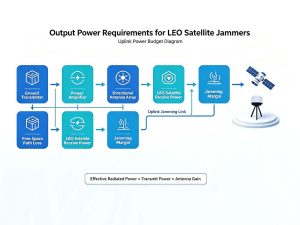
The phrase “Starlink jammer output power requirements for LEO satellites” suggests a straightforward engineering number: a certain wattage needed to...