As interest in counter-Starlink operations grows, analysts and procurement teams are asking a question that sounds financial but is fundamentally legal: what does a Starlink jammer actually cost to own? The answer is not a simple bill of materials. A credible total cost of ownership, or TCO, model must include authorization, spectrum enforcement, insurance, maintenance, and the possibility that the system cannot be legally deployed at all.

Intentional jamming is prohibited under ITU Radio Regulations and most national laws. Any legitimate TCO analysis therefore belongs to defense testing, spectrum enforcement, controlled research, or authorized countermeasure development—not to unauthorized commercial or civilian use.
Why hardware is the smallest part of the equation
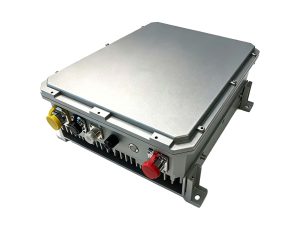
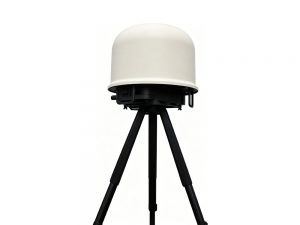
A basic cost estimate might focus on RF components, antennas, power supplies, and control software. In practice, those items are only the entry point. The larger costs appear after acquisition: site preparation, power generation, cooling, skilled operators, software updates, spectrum monitoring, and legal exposure. In remote or contested environments, sustainment can exceed initial hardware spending within months.
| TCO layer | What it includes | Cost pattern | Risk note |
|---|---|---|---|
| Acquisition | RF hardware, antennas, power systems, control software | High upfront | Export controls may apply |
| Integration and testing | Calibration, range fees, compatibility checks | Upfront | Requires authorized facilities |
| Deployment | Site preparation, power, cooling, security, transport | Upfront and recurring | Remote sites raise logistics costs |
| Operations | Staffing, monitoring, maintenance, software updates | Recurring | Skilled labor is scarce |
| Spectrum and regulatory | Licensing, coordination, enforcement, fines | Contingent | Can dominate all other costs |
| Legal and insurance | Defense, liability, sanctions, insurance exclusions | Contingent | Coverage is often unavailable |
| End-of-life | Decommissioning, disposal, remediation | Terminal | Liability can persist for years |
Lifecycle costs are not linear
TCO models often assume costs rise steadily. For jamming systems, they can spike at specific points. A legal challenge, an enforcement action, or a diplomatic incident can create costs that dwarf procurement. Similarly, a system that is never authorized may still generate engineering, legal, and compliance expenses with no operational return.
| Phase | Primary cost drivers | Commonly overlooked |
|---|---|---|
| Concept | Threat assessment, legal review, feasibility | Permit requirements and export classification |
| Acquisition | Hardware, software, integration | Test range availability and calibration |
| Deployment | Site infrastructure, power, cooling | Fuel, maintenance, and local security |
| Operation | Staffing, monitoring, updates | Spectrum coordination and interference complaints |
| Disposal | Removal, remediation, data destruction | Long-tail liability and reputational damage |
The legal cost is not a line item—it is a cliff
For most organizations, the expected legal cost of jamming is not a manageable budget item. It is a cliff. Penalties can include criminal liability, equipment seizure, license revocation, sanctions exposure, and civil claims from affected satellite operators. Insurance policies frequently exclude intentional interference, leaving the operator to absorb losses directly.
That changes the TCO calculation. A system with a low purchase price but a high probability of enforcement is not cheap. It is expensive with a delayed invoice.
Defensive TCO is easier to justify
For satellite operators, the more practical question is not “What does a Starlink jammer cost?” but “What does resilience cost?” Anti-jam antennas, adaptive coding, beam switching, spectrum monitoring, and GNSS-independent timing all carry costs, but they are legitimate, insurable, and sustainable. They also reduce exposure to service-level penalties and customer churn.
In that sense, the TCO of jamming is best understood as a comparison: the cost of attempting to disrupt a network versus the cost of defending one. The defender’s costs are predictable. The attacker’s costs are contingent, legal, and often irreversible.
Bottom line
A Starlink jammer TCO analysis is dominated by factors that have little to do with hardware. Authorization, spectrum regulation, insurance, skilled labor, maintenance, and legal risk usually matter more than the initial purchase price. For authorized programs, TCO should be modeled under strict legal review. For everyone else, the true cost of ownership includes fines, liability, mission failure, and strategic fallout—making the cheapest-looking option the most expensive one.