Demand for satellite connectivity has made Starlink a household name. It has also created a darker search trend: “Starlink jammer price.” There is no official price list, no authorized dealer network, and no consumer warranty. In most countries, jamming is illegal. What follows is an industry analysis of reported gray-market price ranges and the technical and legal cost factors behind them. It is not a buyer’s guide.

Market Snapshot: No Transparent Pricing
The market for Starlink jamming equipment is opaque by design. Legitimate vendors do not publish MSRPs for devices whose primary purpose is harmful interference. Listings that appear on unregulated forums, encrypted chat groups, or classified sites are difficult to verify and often turn out to be scams, seized goods, or low-power devices that cannot affect Starlink at all.
The term “Starlink jammer” is also imprecise. Interference may target Ku-band or Ka-band satellite links, the user terminal, or GNSS timing signals that many networks rely on. Performance claims are rarely tested independently, and published prices rarely include legal penalties, seizure risk, or the cost of failed deployments.
Starlink Jammer Price Range: Reported Tiers
The figures below reflect reported asking prices and industry estimates from unlicensed or gray-market sources. They are not verified, not endorsed, and not stable. They exclude fines, legal fees, confiscation, and imprisonment.
| Device Class | Reported Asking Price (USD) | Typical Claims | Reality Check |
|---|---|---|---|
| Low-power handheld / GNSS-only | $50–$500 | “Pocket jammer” | Usually affects GNSS, not Starlink Ku/Ka links; very short range |
| Vehicle-mounted single-band | $1,000–$8,000 | Mobile coverage | Limited ERP; thermal and power problems |
| Portable multi-band rack | $10,000–$50,000 | Multiple bands, directional | Complex, heavy, and highly visible to regulators |
| High-power fixed / containerized | $50,000–$250,000+ | Wide-area denial | Custom build; generator and cooling needs; export-control risk |
| Custom R&D / integrator system | $100,000+ | Tailored waveforms | Engineering, SDR, testing; not a shelf product |
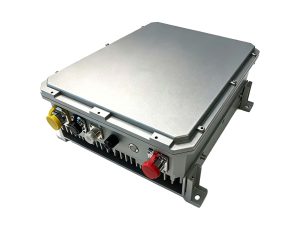
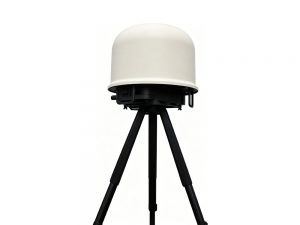
These ranges are broad because the underlying hardware is not standardized. A device advertised as a “Starlink jammer” may be a repurposed GNSS jammer, a broadband noise source, or a custom RF system. Price alone says little about whether it can reliably interfere with a phased-array LEO terminal.
Cost Factors Behind Starlink Jammer Prices
Several technical and commercial factors drive reported prices upward. The more capable the system claims to be, the more it resembles a custom RF engineering project rather than a consumer gadget.
| Cost Factor | Why It Matters | Price Impact |
|---|---|---|
| Frequency coverage and bandwidth | Ku/Ka links use wide bandwidth; wideband RF chains and amplifiers are expensive | High |
| Output power and ERP | Denying a phased-array LEO terminal requires significant power and directional gain | High |
| Antennas and beam steering | Tracking or directional antennas add mechanical and electronic complexity | High |
| Multi-band operation | Adding GNSS, Ku, Ka, or control-link bands multiplies components | High |
| Power supply and cooling | High-power RF generates heat; batteries, generators, and heatsinks add cost | Medium-high |
| Ruggedization and portability | Field use demands weatherproofing and size/weight trade-offs | Medium-high |
| Software and signal processing | SDR, detection, scheduling, and user interfaces require engineering | Medium-high |
| Testing and integration | Spectrum analyzers, anechoic chambers, and field trials are costly | High |
| Legal and regulatory risk | Illicit market pricing includes seizure, penalties, and anonymity premiums | Variable/high |
| Supply chain and export controls | Restricted RF components can raise costs and lead times | High |
Why Starlink Is Not an Easy Target
Starlink is a low-Earth-orbit constellation. Its satellites move quickly, and user terminals use phased-array antennas that can switch beams and satellites. Spot beams and dynamic resource allocation reduce single-point vulnerability. Effective interference would need to be precise, powerful, and sustained—while avoiding disruption to other users, emergency communications, aviation, and navigation systems.
That technical difficulty is one reason high-performance jamming systems are expensive. It is also one reason they attract regulatory attention. Spectrum monitoring can locate interference sources, and satellite operators can work with authorities to investigate disruptions.
Legal Overlay: The Highest Cost
In the United States, the FCC prohibits operating, marketing, or selling jammers. Penalties can include large fines and criminal liability. Under ITU Radio Regulations, administrations are expected to prevent harmful interference. Many countries criminalize the import, possession, sale, or use of jamming equipment. Export controls may also apply to RF components and systems.
Starlink’s terms prohibit interference with the service. Even if a device is advertised online, buying or using it can lead to seizure and prosecution. The legal cost is often the largest cost factor—and the one that turns a cheap device into serious criminal exposure.
What the Market Signals
Gray-market prices are not reliable benchmarks. Technical barriers keep high-performance systems expensive. Enforcement and spectrum monitoring raise the risk premium. Meanwhile, legitimate demand is shifting toward interference detection, RF monitoring, resilient timing, and anti-jam antennas—not jammers.
Bottom Line
The “Starlink jammer price range” is a moving target: from hundreds to hundreds of thousands of dollars in reported illicit listings, depending on power, bands, portability, and risk. The cost factors are technical, logistical, and legal. The legal cost is often the largest—and the one that matters most.
Disclaimer: This article is for informational and industry-analysis purposes only. It does not endorse, promote, or provide instructions for jamming or interfering with satellite, wireless, or navigation services. Jamming is illegal in many jurisdictions.