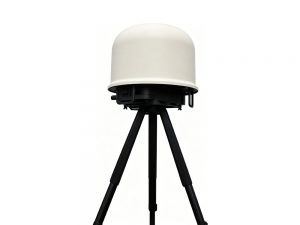
The Starlink jammer vs GPS jammer differences are often underestimated because both systems are casually described as “jammers.” In practice, they target different signals, serve different tactical purposes, and carry very different operational risks. One is designed to disrupt broadband satellite connectivity; the other is built to deny precise positioning and timing.

Starlink Jammer vs GPS Jammer Differences at a Glance
A Starlink jammer generally aims at Ku-band or Ka-band user links. A GPS jammer targets L-band navigation signals around 1.5 GHz. That single RF distinction drives most of the differences in hardware design, antenna choice, power demand, and legal exposure.
A Starlink jammer is usually part of a larger SATCOM countermeasure architecture. A GPS jammer is often a smaller, localized denial tool. The two may be used in the same operation, but they are not interchangeable.
Why the Comparison Matters
Procurement teams often ask for “a jammer” without defining the target layer. That vague requirement leads to mismatched hardware. A system optimized for wideband satellite downlinks may be poor at narrowband navigation denial, and vice versa.
The comparison also matters for compliance. GPS jamming is tightly restricted in most jurisdictions because of aviation, maritime, and timing-infrastructure risks. Starlink jamming raises different spectrum-management and satellite-operator concerns. For broader spectrum rules, review the ITU spectrum resources.
1. Target and Frequency: Broadband SATCOM vs Navigation Signals
Starlink user terminals receive Ku-band downlinks and use Ka-band for gateway and tracking functions. A Starlink jammer must therefore address wider bandwidths and agile beam patterns. It may need to sweep, spot-jam, or follow frequency changes.
GPS signals sit in the L-band, centered near 1575.42 MHz for L1. GPS jamming is narrower in absolute bandwidth but still demanding because the received signal is extremely weak. A small power advantage can produce a large denial effect.
Starlink Jammer vs GPS Jammer Differences in RF Behavior
Starlink jamming is closer to broadband interference management. GPS jamming is closer to precision denial of a low-power timing and ranging signal. The table below summarizes the contrast.
| Dimension | Starlink Jammer | GPS Jammer |
|---|---|---|
| Primary target | Ku/Ka-band SATCOM user links | L-band GNSS/GPS signals |
| Typical bandwidth focus | Wider and more agile | Narrower, centered on L1/L2 |
| Antenna approach | Directional or sector-based | Compact directional or omni |
| Power profile | Higher for area coverage | Lower for localized denial |
| Timing sensitivity | Moderate to high | Very high |
| Main operational intent | Disrupt broadband connectivity | Deny positioning, navigation, timing |
2. Mission Objective: Connectivity Denial vs Positioning Denial
A Starlink jammer is used to interrupt data links, video feeds, command channels, and remote operations that depend on LEO broadband. The objective is often temporary connectivity denial or degradation.
A GPS jammer targets navigation and timing. That can affect route guidance, synchronized communications, drone navigation, and precision timing. The effects can reach far beyond the intended target, which is why GPS jamming carries elevated collateral risk.
3. Power and Footprint: Area-Wide vs Localized
Starlink jamming often requires more RF power because the target is a broadband link with directional user antennas. Power demand rises further when the operator wants to cover a sector or protect a moving convoy.
GPS jamming can achieve denial with lower power, but the footprint is harder to contain. Even low-power GPS jammers can affect nearby infrastructure. Integrators should model both intended coverage and unintended leakage before deployment.
4. Collateral and Regulatory Risk
GPS jamming is highly sensitive. Aviation, maritime, financial timing, and cellular synchronization all depend on GNSS. Regulators treat GPS interference as a serious safety issue. For public guidance on GPS dependency, see GPS.gov.
Starlink jamming raises different concerns. It may affect satellite operator service quality, neighboring spectrum users, and regional communications. The legal exposure depends on jurisdiction, power level, antenna pattern, and duration. Neither category should be treated as a low-risk tool.
5. Detection and Counter-Countermeasures
Starlink terminals and network operators can use beam switching, frequency agility, and link-quality telemetry to resist interference. A capable Starlink jammer system therefore needs monitoring, feedback, and remote control. That is why a Starlink jammer remote control and monitoring system is central to modern SATCOM countermeasures.
GPS receivers use antenna arrays, filtering, and integrity monitoring to detect interference. GPS jamming is easier to notice because loss of lock and timing drift are observable. Starlink jamming may appear first as throughput degradation, latency spikes, or handover failures.
Side-by-Side Comparison Table
| Evaluation Area | Starlink Jammer | GPS Jammer |
|---|---|---|
| Signal environment | Broadband LEO SATCOM | Narrowband GNSS |
| Typical hardware | Directional panels, SDR, thermal management | Compact antenna, low-power amplifier |
| Control requirement | Often networked remote monitoring | Often local or vehicle-mounted |
| Main effect | Data-link disruption | Positioning and timing denial |
| Collateral sensitivity | Moderate to high | Very high |
| Regulatory sensitivity | High | Very high |
| Best-fit use case | SATCOM denial in a defined area | Localized navigation denial |
Operational Implications for Integrators
Integrators should separate requirements by target layer. If the mission is to disrupt Starlink connectivity, specify bandwidth, antenna gain, remote control, and thermal limits. If the mission is GPS denial, specify coverage radius, timing effects, and containment measures.
The two systems can be complementary, but they should not share a single requirements document without clear boundaries. A combined architecture may use separate RF front ends and a common command layer. For strategic context on electronic warfare, review <a href=”https://www.csis.org” rel=”dofollow”>CSIS research</a>.
Conclusion
The Starlink jammer vs GPS jammer differences come down to target signal, mission intent, power footprint, and risk. Starlink jamming is a broadband SATCOM countermeasure problem. GPS jamming is a navigation and timing denial problem with exceptionally high collateral sensitivity.
Teams that treat them as interchangeable will likely overbuild one layer and underbuild the other. A disciplined comparison, backed by spectrum modeling and remote monitoring, produces safer and more effective system designs.