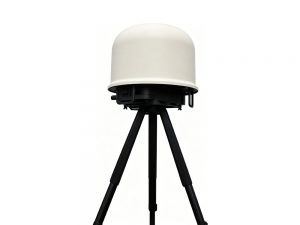
September 22, 2026 — In defense, security, and critical-infrastructure circles, the terms “Starlink jammer” and “drone jammer” are increasingly discussed in the same procurement meetings. They sound closely related, and both involve radio-frequency interference. Operationally, however, they address very different targets, missions, and legal risks.
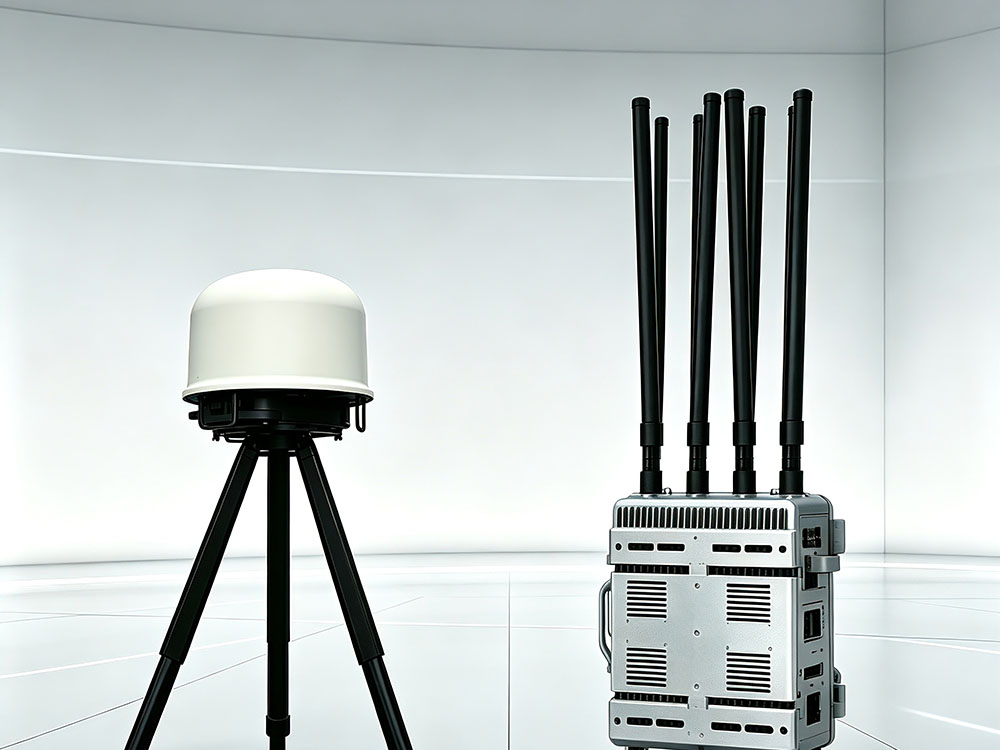
The short version: a Starlink jammer is generally associated with disrupting low-Earth-orbit satellite internet connectivity, while a drone jammer is usually a counter-UAS tool designed to interrupt unmanned aircraft control, telemetry, video, or navigation links. Treating them as interchangeable categories can lead to poor procurement decisions and serious compliance exposure.
Market snapshot: two different demand curves
The growth of LEO satellite broadband has made satellite communications resilience a board-level issue for militaries, maritime operators, and emergency-response agencies. At the same time, commercial drones have become cheaper, more autonomous, and more widely used, driving demand for counter-drone systems at airports, prisons, borders, stadiums, and military bases.
That dual expansion has created a crowded vendor landscape. Some suppliers market “jamming” capabilities broadly, but authorized use remains narrow. In most countries, transmitting interference against satellite or drone signals is illegal unless conducted by approved government or military units under strict legal authority.
What each system actually targets
A Starlink jammer is typically discussed in the context of denying or degrading satellite internet service to a user terminal. The target is not the satellite itself in most practical scenarios, but the link between the terminal and the constellation. Because LEO terminals can electronically steer beams and track moving satellites, interference is technically complex and highly contested. The operational goal is usually area denial or communications disruption, not drone control.
A drone jammer, by contrast, is a counter-UAS component. It may aim to disrupt command-and-control, telemetry, video downlinks, or GNSS-dependent navigation. The intended effect can be to force a drone into failsafe mode, trigger return-to-home behavior, or simply prevent the operator from completing a mission. Modern drones with autonomous flight, frequency hopping, or fiber-optic control can reduce the effectiveness of traditional jamming approaches.
Regulation is the dividing line
The most important difference is not technical—it is legal. Satellite jamming can affect licensed spectrum, international coordination, and civilian broadband users across borders. Drone jamming can interfere with aviation safety, public communications, and emergency services. Both categories are tightly controlled in most jurisdictions.
For industry teams, the compliance question should come before any technical evaluation. Unauthorized marketing, sale, import, or use of jammers can lead to criminal penalties, license revocation, and reputational damage. Legitimate programs typically involve government authorization, defined rules of engagement, spectrum coordination, and strict training.
Technology and deployment realities
Starlink jamming and drone jamming also differ in deployment scale. Satellite-link interference often requires specialized, high-complexity systems and may be limited by geography, power, and collateral-interference concerns. Drone jamming is often more localized, but it must contend with a fragmented protocol environment and rapid innovation in unmanned systems.
Table 1: Starlink jammer vs drone jammer at a glance
| Comparison area | Starlink jammer | Drone jammer |
|---|---|---|
| Primary target | LEO satellite internet terminal and associated links | UAV control, telemetry, video, and navigation signals |
| Operational focus | Denying or disrupting broadband connectivity in a defined area | Counter-drone mitigation, such as link disruption or failsafe triggering |
| Typical authorized users | State defense, sovereign programs, critical-infrastructure protection | Military, law enforcement, airports, prisons, VIP security |
| Regulatory sensitivity | Very high; satellite spectrum and cross-border issues | Very high; aviation safety, public spectrum, and public safety |
| Technical complexity | High; moving satellites, steerable terminals, wideband links | High; diverse protocols, autonomy, frequency hopping, swarms |
| Market drivers | Electronic warfare, satellite resilience, GNSS concerns | Drone incursions, airport disruption, prison contraband, infrastructure security |
| Key limitations | Collateral interference, legal exposure, rapidly evolving satellite technology | Autonomous drones, fiber-optic control, short engagement windows |
| Procurement trend | Defense-led, limited public detail, sovereign capability focus | Broader counter-UAS market, often integrated with detection systems |
What buyers and policymakers should take away
First, Starlink jammers and drone jammers should not be placed in the same procurement category. They require different authorities, testing standards, operational concepts, and interference-risk assessments.
Second, detection and mitigation should be integrated. A jammer alone is rarely a complete countermeasure. Radar, RF detection, electro-optical sensors, and command-and-control software are increasingly part of layered counter-UAS and electronic-warfare architectures.
Third, vendors should avoid broad marketing claims. In regulated markets, promoting jamming capability to unauthorized users can create legal and ethical problems. Compliance-aware messaging is becoming a competitive advantage.
Outlook
Demand for both satellite-communications resilience and counter-drone capability is expected to rise. Governments are investing in electronic warfare, sovereign satellite networks, and integrated airspace security. At the same time, regulators are paying closer attention to spectrum interference and aviation safety.
The comparison between a Starlink jammer and a drone jammer is therefore not about which system is “stronger.” It is about mission fit, legal authority, target set, and escalation risk. As the market matures, the winners will likely be vendors that combine technical credibility with clear compliance boundaries.