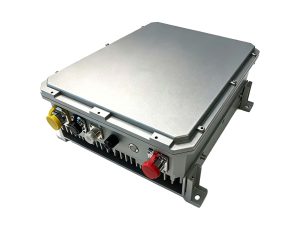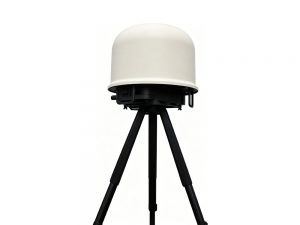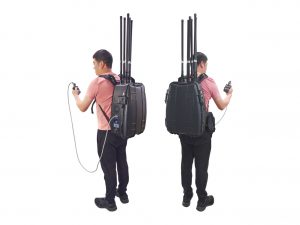
LONDON — As low Earth orbit satellite networks such as Starlink become more embedded in military, maritime, and emergency communications, defense planners are asking a familiar question: can a counter-LEO capability fit on a dismounted soldier? The phrase “Starlink jammer weight and dimensions for manpack use” has become a niche search term in electronic warfare circles. The short answer is that public, verifiable specifications are almost nonexistent.
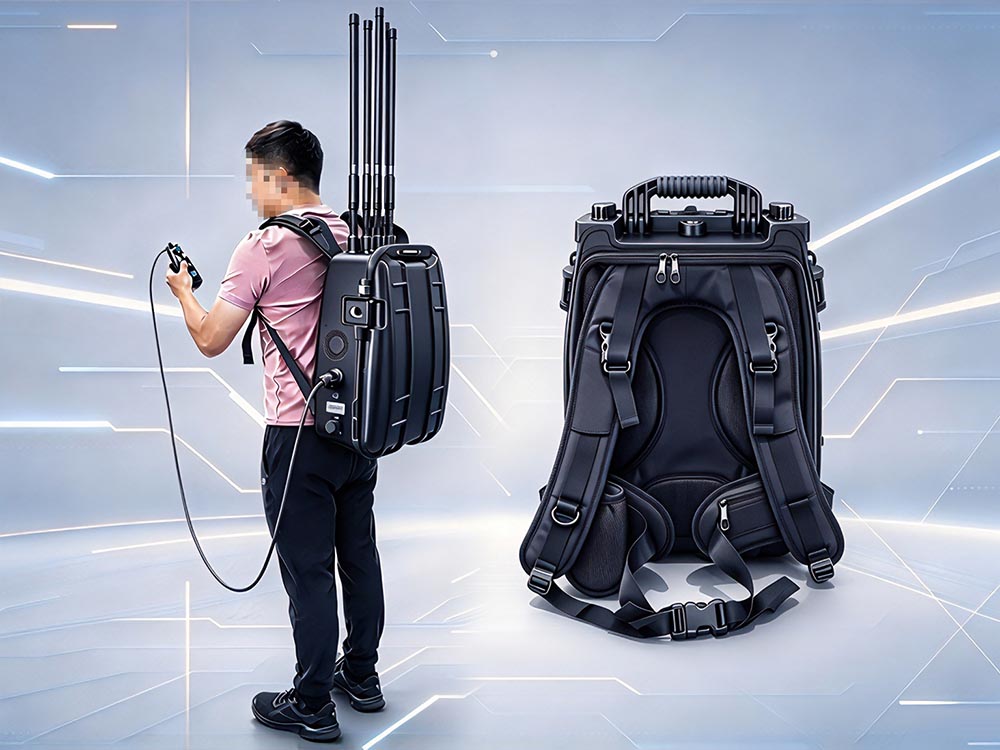
Why Manpack Design Is Different
Manpack systems are not simply scaled-down vehicle jammers. Every kilogram matters. An operator may already carry weapons, armor, water, radios, and batteries. Adding a counter-satellite payload creates trade-offs among size, weight, power, cooling, and antenna size.
Starlink terminals operate in high-frequency bands, often described as Ku- and Ka-band. Interfering with those links from a backpack is technically demanding. It requires energy, directional antennas, and thermal management. Those requirements work against the low weight and small volume that dismounted troops prefer.
What Public Sources Suggest
No open-source specification for a Starlink-specific manpack jammer has been independently verified. Vendors rarely publish exact figures. Instead, they market “portable SATCOM countermeasures,” “LEO interference systems,” or “manpack EW suites.” Trade-show materials and procurement documents indicate broad size and weight classes rather than precise numbers.
Table 1: Manpack EW design benchmarks and counter-Starlink implications
| SWaP factor | Common manpack EW benchmark | Implication for counter-Starlink concepts |
|---|---|---|
| Total weight | Often 7–20 kg with batteries and antennas | High-power RF chains and cooling can push systems to the upper end; lighter units may sacrifice duty cycle or range |
| Electronics volume | Backpack or two-part load; roughly 40–60 cm H × 30–40 cm W × 15–25 cm D | Antenna arrays and heat sinks increase bulk; separate antenna packs are common |
| Power and battery | Battery endurance measured in hours, not days | Continuous jamming drains power quickly; spare batteries add weight |
| Thermal load | Sealed enclosures limit heat dissipation | Sustained operation requires derating, heat pipes, or duty-cycle limits |
| Antenna | Directional or sector antennas | Pointing, stabilization, and cable losses affect performance |
| Legal status | Jamming is prohibited in many jurisdictions | Authorized military or government use only; export controls apply |
These figures are generic benchmarks, not a specification for any Starlink jammer. They illustrate why manpack counter-LEO systems remain a compromise.
The Physics Problem
The central challenge is physics. A manpack starlink jammer can carry only so much battery energy and antenna aperture. Starlink’s LEO architecture also changes the targeting problem. Satellites move quickly, and terminals may use phased-array antennas that can steer beams electronically. A jammer designed for a fixed geostationary satellite may not translate directly to a mobile LEO constellation.
Industry engineers are responding with gallium nitride amplifiers, software-defined radios, and modular power supplies. These technologies can improve efficiency and reduce size, but they do not eliminate the need for power and cooling. As a result, many new systems are marketed as “modular” or “distributed”: some components go in a backpack, while antennas and batteries are split among team members.
Procurement Signals
Defense ministries and law enforcement agencies have shown growing interest in portable counter-drone and counter-SATCOM tools. However, most public tenders avoid naming Starlink directly. They use neutral language such as “non-terrestrial network interference” or “portable RF effectors.” This ambiguity serves two purposes: it avoids signaling capability to adversaries, and it reduces legal and diplomatic exposure.
For buyers, the key metrics are not just weight and dimensions. They include duty cycle, mean time between failures, battery swap time, electromagnetic signature, and integration with existing command-and-control systems. A system that weighs 9 kg but overheats after ten minutes may be less useful than a 15 kg system that runs for an hour.
Regulatory and Ethical Limits
Jamming satellite signals is not a consumer activity. In the United States, the FCC prohibits operating jammers. Many other countries have similar bans. Unauthorized use can interfere with emergency communications, aviation, maritime safety, and military operations. Export-control regimes also restrict the transfer of advanced EW hardware.
Any legitimate manpack counter-Starlink system would be limited to authorized government or military users, with strict rules of engagement and spectrum-management procedures. Industry sources increasingly emphasize compliance training alongside hardware sales.
Outlook
The search for lighter, smaller manpack counter-LEO systems will continue as Starlink and similar constellations expand. But the market is unlikely to produce a widely published “Starlink jammer weight and dimensions” datasheet. The most credible information will come from government evaluations, not marketing brochures.
For now, the realistic manpack profile remains a backpack-scale system weighing roughly 7–20 kg, with separate antennas and limited endurance. That is not a simple gadget. It is a complex electronic warfare capability with significant legal, operational, and logistical consequences.
Key takeaways
-
Public, verified Starlink-specific manpack jammer specs are scarce.
-
Manpack EW systems typically trade weight, power, and duty cycle.
-
Ku-/Ka-band counter-LEO concepts need directional antennas and thermal management.
-
Jamming is illegal in many jurisdictions and restricted to authorized users.
-
Buyers should evaluate SWaP-C, endurance, and compliance—not just weight.