Project Background and Pain Points
A PLA ground unit based in Yuxi, Yunnan, needed a way to stop small drones that relied on Starlink terminals for beyond-line-of-sight control and live video feeds. The unit patrols mountainous border terrain where fixed-site jammers cannot follow dismounted patrols, and standard handheld jammers lack the power or frequency coverage to touch Ku-band Starlink downlinks. Existing 2.4 GHz and 5.8 GHz jammers were essentially useless against satellite-linked drones. The team required a man-portable system that could cover S, C, Ku, and GNSS bands, run for at least an hour, and switch between directional and omnidirectional modes without losing mobility.
Procurement Specifications
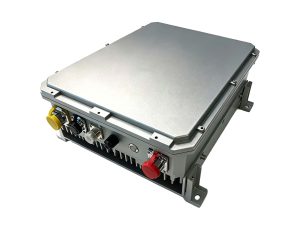
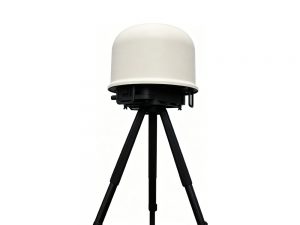
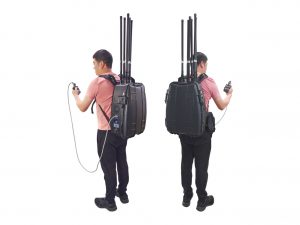
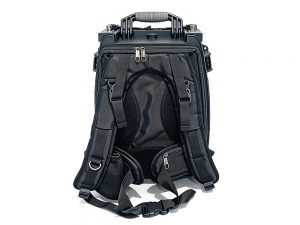
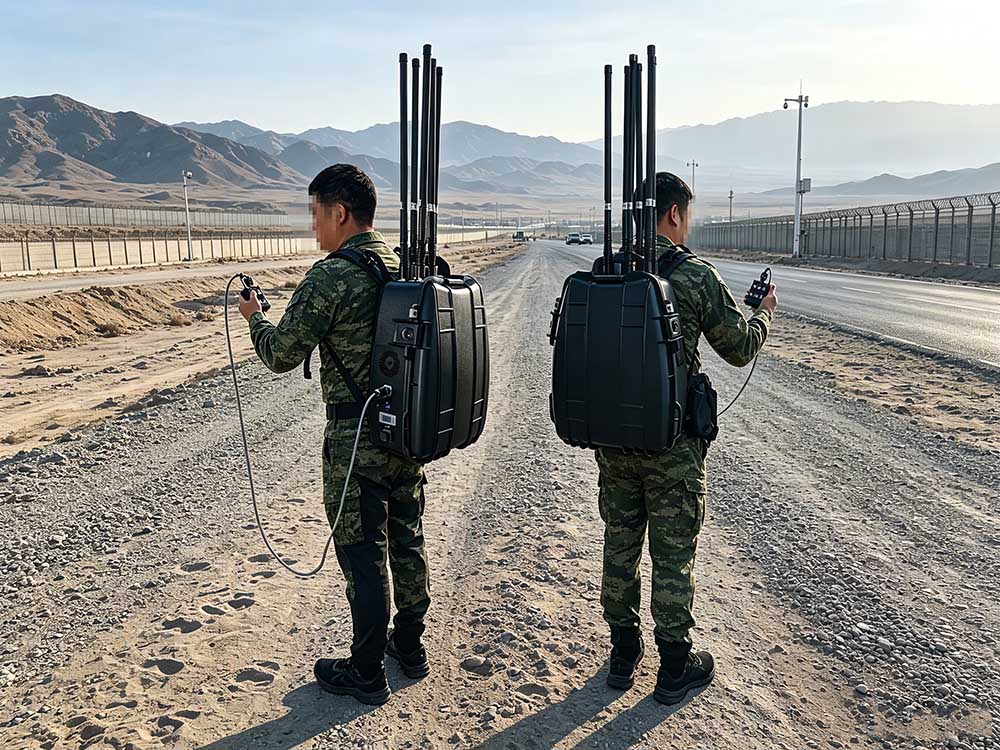
The unit purchased five BNT-S900-B8 Backpack Starlink Jammers. Each system packs eight independent 50 W RF channels driven by a wideband software-defined radio exciter. Frequency coverage spans S-band low/high, C-band low/high, Ku-band low/mid/high, GNSS L1/L2, and GNSS L5. Power comes from a 29.4 V / 30 Ah Li-ion battery rated for 60–90 minutes of continuous output. The unit weighs about 16 kg without antennas and measures 488 × 369 × 189 mm. Antenna options include directional high-gain horns and wideband omnidirectional whips. The backpack frame uses forced-air cooling with a heat-sink array to stay stable under full load.
Field Performance and Data
During a week-long exercise in the hills around Yuxi, the five jammers were deployed in both directional and omnidirectional modes. With directional horns, operators locked onto Starlink downlinks arriving at -60 to -80 dBm and injected enough shaped noise to exceed the signal level at the receiver. At a stand-off range of 5 km, the link dropped within seconds, with packet loss above 95%. In omnidirectional mode, the whip antennas created a 1–1,500 m isolation zone that blanked all Starlink and GNSS signals in the immediate area.
Battery run time in the field averaged 72 minutes in mixed use. Pure directional operation reached about 85 minutes, while constant omnidirectional output lasted around 65 minutes. The hot-swap battery option allowed a pack change in under five seconds, so there was no gap in coverage during long operations. Setup from pack to full output took under three minutes, and the external controller let operators change bands or kill transmission without removing the pack.
Project Value
The BNT-S900-B8 gives the Yuxi unit a true counter-Starlink capability in a backpack form factor. It fills the gap between low-power handheld jammers and heavy fixed-site systems. The SDR architecture means future frequency changes can be handled with software updates, protecting the investment. Five units can work together to cover a wide front directionally or saturate a smaller area with omnidirectional antennas. For dismounted patrols and temporary forward bases, that is a significant operational upgrade.