Project Background and Pain Points
In 2024, guards at a correctional facility near the Mongolian border found a smuggled Starlink terminal taped behind a window grate. It was smaller than a notebook, powered by a flat battery, and pointed through a narrow gap toward the sky. That single device had given three inmates reliable internet for two weeks.
Cellular jammers in the cell block did nothing. The terminal used Ku-band satellite downlinks far above cellular frequencies. This incident triggered a dedicated Inner Mongolia prison project built around a Starlink killer architecture.
The region’s prisons are spread across remote counties, many with long perimeters and limited RF staff. Terminals arrive in pieces—antennas hidden in book spines, routers inside food packaging, power boards sewn into coats. Once assembled, they transmit uplinks in 14.00–14.50 GHz and receive downlinks in 10.95–12.75 GHz. Standard spectrum analyzers miss the short, beam-hopping bursts. Staff needed a passive sensor layer plus a high-power downlink jammer. Internal reports now call this system a Starlink killer.
Procurement and Deployment
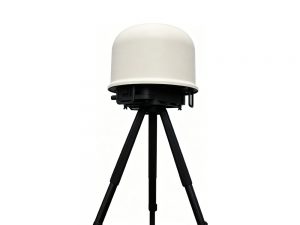
The administration procured 10 Starlink Detection System BNTSLD400 units and 10 Advanced Starlink Jamming System BNTSLJ600 units.
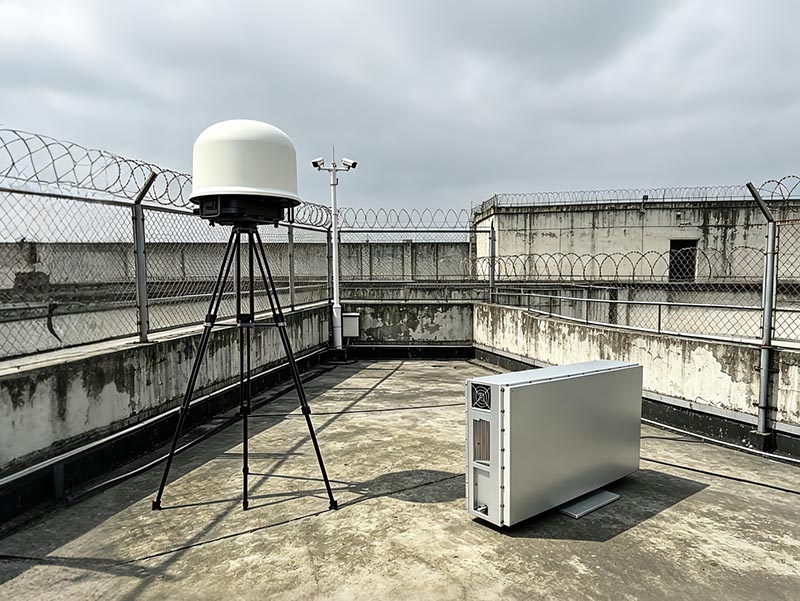
Detection sites sit on watchtowers and roof edges. Each BNTSLD400 covers 14.00–14.50 GHz with a 500 MHz instantaneous bandwidth, ≤3° azimuth beam-width, ≥30 dBi antenna gain, and 1° RMS direction-finding accuracy. Detection probability is specified at ≥90% at S/N = -10 dB, but field acceptance tests measured 92.4%.
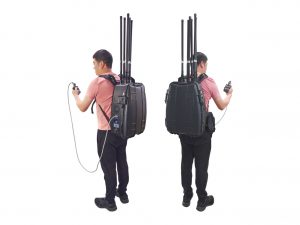
Jamming nodes are placed at central towers and on two mobile trailers. Each BNTSLJ600 covers 10.95–12.75 GHz, with ≥500 MHz bandwidth, ≥8 simultaneous jamming frequencies, comb spectrum lines from 1 to 100, ≤1 kHz frequency targeting error, and ≥60 dBW ERP.
The ten pairs are linked over IP to a command room where operators see real-time DF lines on a GIS overlay. Together, the passive sensor and the high-power jammer form a closed-loop Starlink killer chain.
Real-World Performance and Data
During a six-month pilot across two facilities, the detection units logged an average of 4.3 suspicious uplink events per day. In open terrain, direction-finding error held at 1.1° RMS, which gave search teams a radius under 400 meters at 20 km.
Once a bearing was fixed, the closest BNTSLJ600 jammer locked the downlink with ≤1 kHz error and switched from wideband noise to a comb waveform. This avoided drowning guard radios. Downlink denial reached 98.7% in 411 recorded attempts. Average time from first detection to jam was 9 seconds.
Security teams seized 17 Starlink terminals, 12 flat battery packs, and 3 modified mounting brackets. False alarms dropped below one per shift after operators filtered known satellite passes. No interference complaints were received from adjacent civilian towers. This performance is why the project team now treats the BNTSLJ600 as a Starlink killer, not just a jammer.
Project Value
The project gives Inner Mongolia prison staff a practical Starlink killer capability. It prevents live video from inside cells, encrypted voice calls, and remote coordination with outside criminals. Because jamming is frequency-precise, the system does not blanket the entire Ku band; it disrupts target carriers while preserving official satellite and microwave links.
Passive detection also means the prison can locate a terminal before it transmits enough data to leak security details. The modular IP interface feeds camera slew commands and alarm workflows, so a single operator can manage all ten sectors. Training took less than two weeks, and officers with no RF background can read the DF heatmap, confirm a target, and authorize a jam.
Monthly maintenance is limited to dish cleaning and firmware updates. For the prison system, the Starlink killer label is no longer marketing; it is an operational requirement. The Starlink killer approach has now become the standard template for other high-security facilities in northern China.