Project Background and Pain Points
The Jiangxi Provincial Meteorological Center operates multiple ground stations that receive Ku-band data from geostationary weather satellites. In early 2025, operators noticed intermittent dropouts, rising noise floors, and corrupted image frames. Routine checks found no hardware faults.
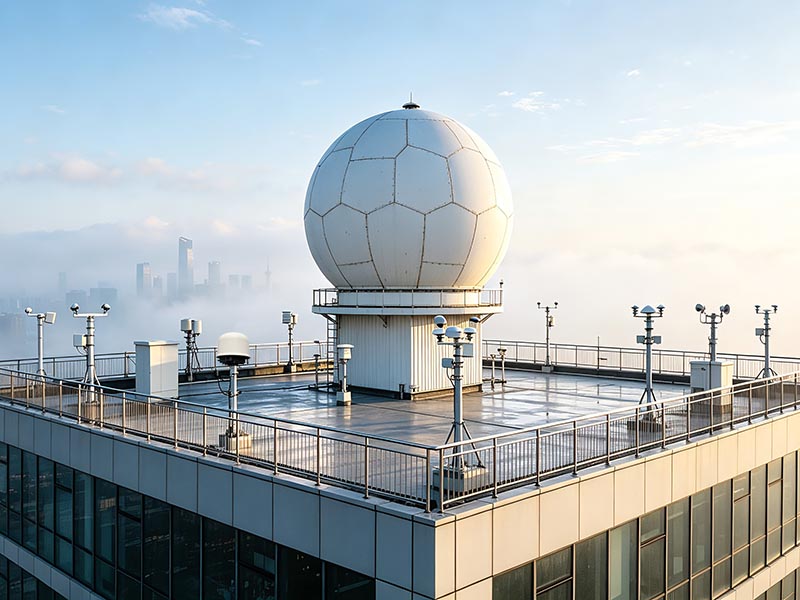
The real cause was illegal Starlink terminals operating nearby. These terminals transmit uplinks in the 14.00–14.50 GHz range and receive downlinks between 10.95 and 12.75 GHz. That overlaps directly with the center’s protected satellite spectrum. Traditional spectrum analyzers could not catch the short, frequency-hopping bursts. The center needed a dedicated Starlink disruption system that could detect and neutralize the source without blinding its own receivers.
Procurement Overview
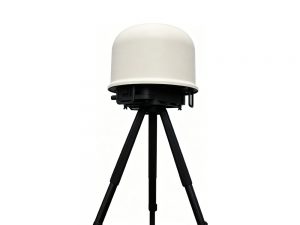
To solve the problem, the center purchased one BNTSLD400 Starlink Detection System and one BNTSLJ600 Advanced Starlink Jamming System. Together, the two units form a compact Starlink disruption system built for fixed-site protection.
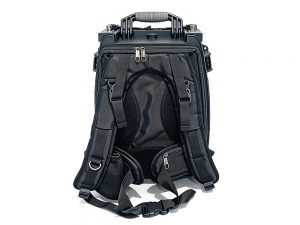
Both devices were installed at the primary downlink site and connected via IP to the existing monitoring console. A single operator can run the entire kill chain from a ruggedized laptop.
How the Detection System Works
The BNTSLD400 is a passive electronic support sensor. It sweeps a 500 MHz instantaneous window from 14.00 to 14.50 GHz, matching Starlink uplink behavior. The phased-array front end provides ≥30 dBi antenna gain and ≤3° azimuth beam-width.
Direction finding accuracy is 1° RMS, with a detection range of 30 km. Even when a signal sits 10 dB below the noise floor, the system keeps at least 90% detection probability. The passive design is critical here: the center’s weather satellite receivers continue operating normally because the sensor emits nothing. This silent detection forms the first half of the Starlink disruption system.
How the Jamming System Works
The BNTSLJ600 handles the active side of the Starlink disruption system. It jams the 10.95–12.75 GHz downlink band with ≥8 simultaneous frequencies. Operators can choose narrowband, wideband, or comb spectrum waveforms.
A comb generator places 1 to 100 tunable spectral lines across 500 MHz. Frequency targeting error stays at ≤1 kHz. With 60 dBW equivalent radiated power across a 500 MHz bandwidth, the jammer reaches stand-off ranges that keep operators away from the threat terminal.
Before deployment, the center tested different jamming modes. Comb spectrum proved most effective against frequency-hopping behavior. Wideband noise worked best for continuous downlink denial.
Field Results and Data
During a two-week validation period, the detection system spotted an intermittent Starlink uplink at 27.6 km. Measured bearing accuracy was 0.8° RMS, well within the 1° specification. The DF data moved to the jammer over IP in under 200 ms.
The BNTSLJ600 then applied a 200 MHz comb spectrum waveform plus wideband noise on the 10.95–12.75 GHz downlink segment. The unauthorized terminal dropped its connection in 2.8 seconds and could not reacquire a satellite lock while jamming stayed active.
Over 14 days, the Starlink disruption system detected and blocked 11 illegal link attempts. Heavy rain and fog during the second week did not reduce detection range or jammer performance. The system clearly suited Jiangxi’s variable weather.
Meteorological data reception returned to baseline. Bit error rates dropped from 8.4×10⁻⁵ to below 1×10⁻⁹.
Operational Value
For the Jiangxi center, this Starlink disruption system turned a frustrating interference problem into a manageable security process. Passive detection gives early warning without radiating. The jammer acts only when a confirmed threat appears, reducing collateral interference with the center’s own satellite receivers.
Since deployment, unscheduled data outages have dropped to zero. The team can now produce geolocation evidence for regulatory enforcement. The BNTSLD400 and BNTSLJ600 combination now serves as the electromagnetic security backbone for all regional weather data downlinks.
The entire Starlink disruption system runs unattended around the clock. The project also gave local operators hands-on training in passive detection and selective jamming. Those skills are now being applied to other critical downlink sites across the province.