Project Background & Challenge
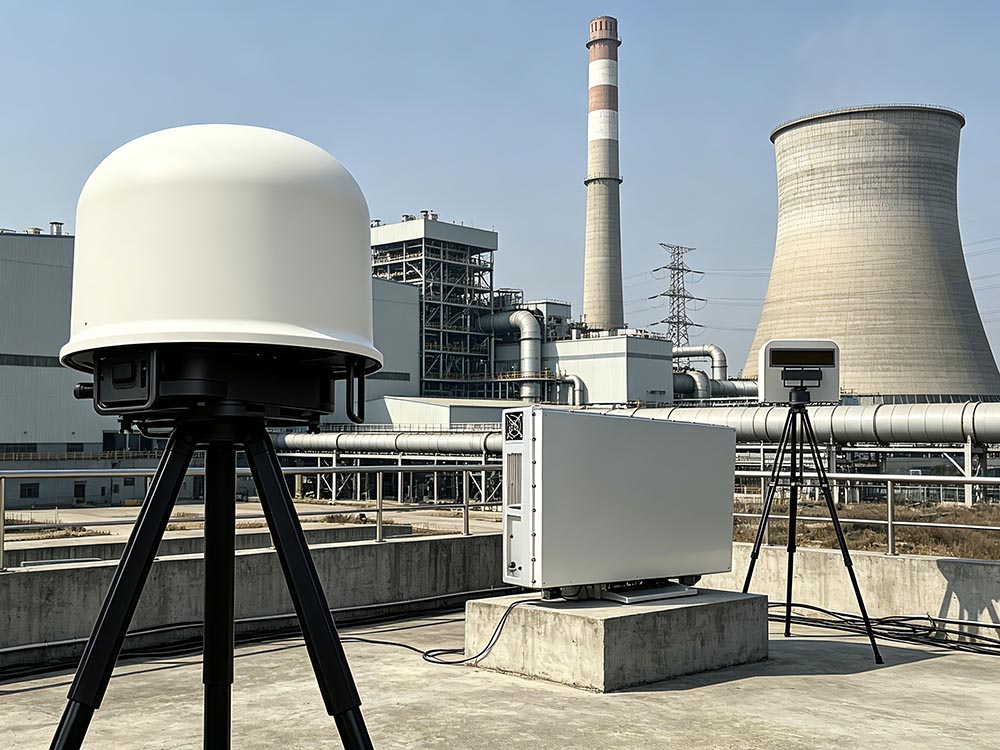
A 1,200 MW thermal power plant in Guangxi, China, started seeing unauthorized drone flights near its turbine hall and 220 kV switchyard in early 2025. Security staff initially assumed the drones used common 2.4 GHz or 5.8 GHz control links. Handheld detectors found nothing.
A two-week spectrum survey then caught intermittent Ku-band uplinks in the 14.00–14.50 GHz range. The pattern matched Starlink user terminals. The drones were being flown beyond visual line of sight, streaming video to a remote pilot. No existing counter-UAS gear could touch that link.
The plant’s Wi-Fi and UHF radios occupied adjacent bands. A broad Ku-band barrage was not an option. Previous wideband noise jamming had also caused brief outages in satellite telemetry. A surgical approach was required.
System Deployment
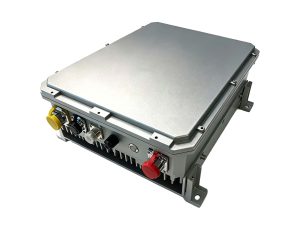
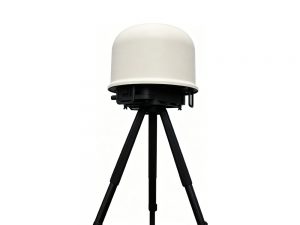
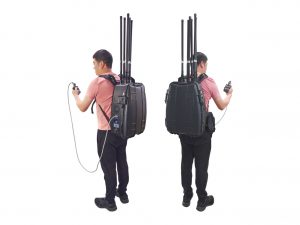
The project deployed one BNTSLD400 Starlink Detection System and one BNTSLJ600 Advanced Starlink Jamming System.
The BNTSLD400 covers 14.00–14.50 GHz with a 500 MHz instantaneous bandwidth. Its phased-array front end provides ≥30 dBi gain, a ≤3° azimuth beam-width, and ±60° electronic scanning. Direction-finding accuracy is 1° RMS, and uplink detection range reaches 30 km.
The BNTSLJ600 targets the 10.95–12.75 GHz downlink with ≥60 dBW ERP over 500 MHz. It supports eight or more simultaneous jamming frequencies plus narrowband, wideband, and comb-spectrum waveforms. Frequency targeting error is ≤1 kHz.
Detection & Jamming Integration
The detection antenna was mounted on a perimeter tower overlooking the northern approach corridor. The jammer was installed in the security operations center and linked to the existing C4ISR console through IP.
Operators geofenced the detection sector. During normal operations, the system stayed in detection-only mode. When the BNTSLD400 passed a bearing track, the BNTSLJ600 automatically switched to a narrowband jamming pattern focused on the detected downlink segment.
This kept emissions low and avoided collateral interference with plant communications.
Field Test Results
During a 14-day validation, the plant logged 14 Starlink uplink detections. The BNTSLD400 acquired 13 of 14 signals at signal-to-noise ratios between -8 and -12 dB. This confirmed the stated ≥90% detection probability.
Average direction-finding error was 0.8° RMS. The earliest detection occurred at 27 km. The closest was 4 km. Jamming activation averaged 2.8 seconds from detection.
After the BNTSLJ600 began transmitting, 11 drones initiated fail-safe return-to-home within 10 seconds. Two descended immediately. One lost video downlink and drifted until manual recovery.
Throughout the test, plant Wi-Fi, UHF radios, and satellite TV receivers showed no measurable interference outside the 10.95–12.75 GHz downlink band.
Project Value
The passive BNTSLD400 lets the plant detect Starlink-controlled drones without radiating. This preserves tactical surprise. The BNTSLJ600 uses 60 dBW ERP and ≤1 kHz targeting accuracy to deny the downlink at standoff range. The site does not need barrage noise across the entire Ku band.
The two modules close the kill chain from silent detection to active disruption. Event-driven jamming reduces operator workload and keeps radio emissions low. That matters for a power plant that must avoid interfering with its own SCADA and communication links.
The security team also saved man-hours previously spent on manual patrols with handheld spectrum analyzers.
Conclusion
The system now runs continuously. Detection-only operation keeps the radio signature low. Jamming activates only when a bearing crosses the geofenced area.
The plant security manager said, “We finally have a tool that sees the uplink and cuts the downlink without killing our own links.” The same two-module setup is being evaluated for other power plants in the region facing the same satellite-terminal threat.