Background and Pain Points
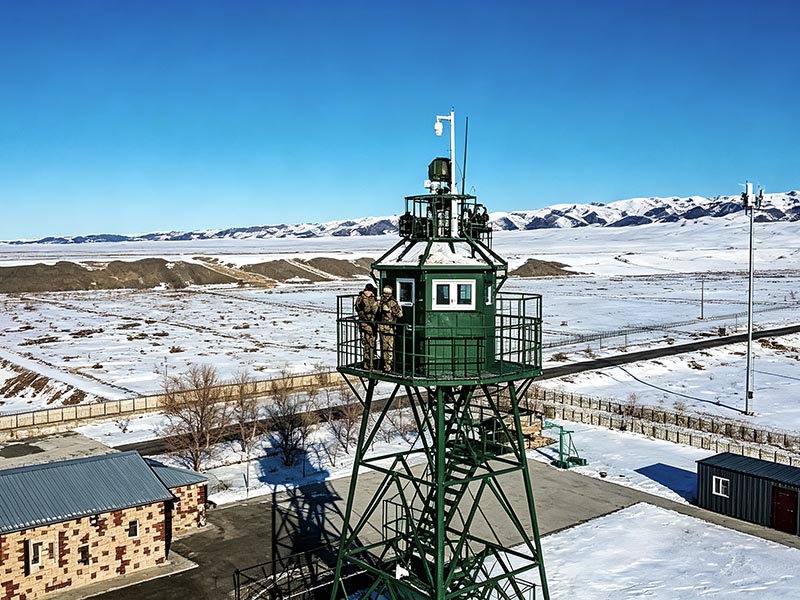
Along a remote stretch of China’s western frontier, a border defense unit kept running into the same frustrating problem. Smuggling networks had started carrying compact Starlink kits—terminals the size of a laptop—powered off portable batteries and hidden in ravines. These user terminals provided a high-bandwidth link that bypassed every cellular and VHF radio net the patrols normally monitored. The 14 GHz uplink beam is so narrow and the transmission bursts so brief that conventional spectrum analyzers rarely captured more than a fleeting blip. Without a dedicated passive detection and precision jamming setup, the unit was practically blind to the terminals until a physical patrol stumbled across them. The command team decided it was time to plug a Starlink countermeasure system directly into their existing vehicle-borne electronic warfare shelter.
What Was Procured
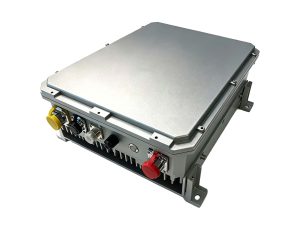
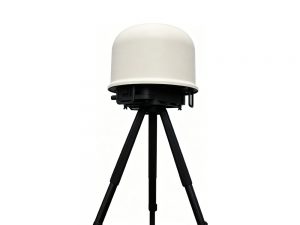
After a technical assessment, the unit acquired two specialized modules:
The BNTSLD400 covers 14.00–14.50 GHz with an antenna gain above 30 dB and an azimuth beamwidth no wider than 3°. It scans electronically across ±60°, grabbing 500 MHz of instantaneous bandwidth without emitting any signal of its own. Detection probability stays above 90% even when the target signal sits 10 dB below the noise floor. Direction finding accuracy is rated at 1°, and the system can locate an uplink at ranges beyond 30 km.
The BNTSLJ600 addresses the downlink side. It blankets the 10.95–12.75 GHz band with a configurable instantaneous bandwidth of at least 500 MHz, supporting eight or more simultaneous jamming frequencies. Modes include narrowband, wideband, and comb spectrum—up to 100 independent lines, each with adjustable center frequency and width. Waveforms range from noise FM and pseudo-random code modulations (2FSK, MSK, BPSK, QPSK) to OFDM, all expandable. Frequency targeting error is held under 1 kHz, and the effective radiated power reaches 60 dBW across the 500 MHz band.
Integration into the Existing Countermeasure Platform
The unit already operated a truck-mounted shelter with a telescoping mast and a centralized battle management console. The BNTSLD400 antenna was mounted on the mast alongside the legacy UHF/VHF direction finders. Inside the shelter, the BNTSLJ600 was racked next to the existing power amplifier drawers and patched into the console via Ethernet and RF cables. The integration allowed the operator to see DF bearings from the BNTSLD400 directly on the same screen that controlled the jammer. A single confirmed detection could cue a jam pattern automatically—or the operator could override and tailor the response manually.
Field Performance and Data
During a two-week evaluation in rugged terrain, the system consistently outperformed baseline expectations. The BNTSLD400 picked up Starlink uplink activity at 32–35 km on multiple occasions, even when terminals were partially shielded by rocky ridgelines. Bearings proved accurate enough to vector a patrol to within 400–500 meters of the source, slashing search times that previously took half a day.
In one recorded engagement, a Starlink terminal activated 28 km from the shelter. The detection system locked the bearing in under three seconds. The operator triggered a comb-spectrum jamming pattern with 16 lines spread across 300 MHz of the Ku downlink band. The terminal dropped offline within two seconds and attempted nine re-acquisition hops over the next 20 minutes—every attempt was suppressed. Logs confirmed the jammer maintained a frequency targeting error below 800 Hz throughout, with no spillover into adjacent non-targeted bands.
A multi-terminal stress test was also conducted using cooperative transmitters at 8, 15, and 22 km. The BNTSLJ600 activated a wideband noise waveform across the full 500 MHz bandwidth. All three terminals lost lock simultaneously. After the jam was lifted, the quickest terminal to reacquire took 14 seconds, confirming that the denial window was more than sufficient for a tactical response. Ambient temperature inside the shelter reached 33°C, yet the forced-air cooling kept the jammer fully stable without any power foldback.
Critically, the passive detection chain generated zero false alarms during the entire trial. Every alert that surfaced was either a genuine Starlink signal or a planned test emission, giving the crew confidence to act without hesitation.
Value and Future Scalability
Before this integration, the unit’s counter-Starlink posture was essentially reactive—a patrol might find a terminal by chance. Now, the border force runs a persistent, silent stare over the 14 GHz uplink band and can answer any detected threat with surgical downlink denial within seconds. The whole kill chain operates under strict EMSEC discipline: the system radiates nothing until a threat is verified, and even then it confines its emission to the specific band necessary.
For the future, the architecture is designed to scale. A second BNTSLD400 can be networked for TDOA-based geolocation, turning bearing-only cues into coordinates accurate to tens of meters. The jammer’s SDR waveform library accepts new modulation types via firmware updates, keeping pace with evolving satellite waveforms. If the unit’s area of responsibility grows, the same console can ingest feeds from counter-UAS sensors, building a single-pane-of-glass electromagnetic picture that covers low-orbit satellite links, drones, and ground-based threats simultaneously. What started as a gap-filler project has become the backbone of the unit’s electromagnetic defense posture along the border.