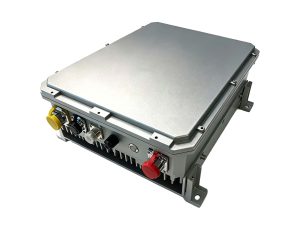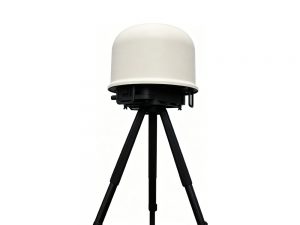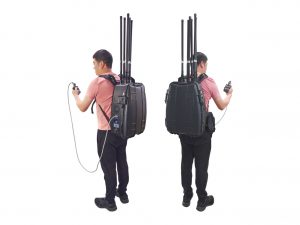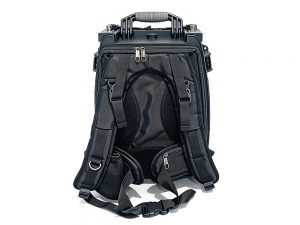
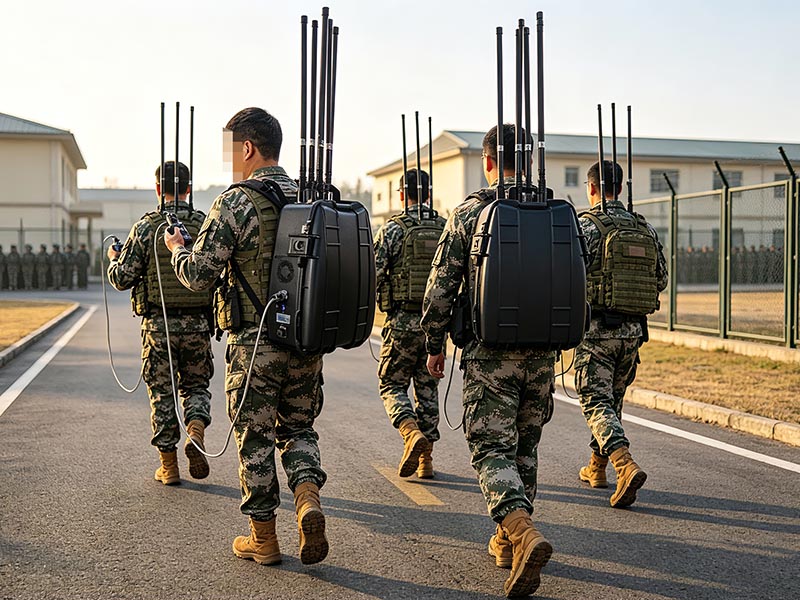
When a forward unit stationed near Chifeng, Inner Mongolia, first identified unauthorized Starlink terminals operating inside their area of responsibility, the existing electronic warfare kit fell short. Vehicle-mounted systems were too conspicuous, and handheld options lacked the raw power to reliably sever the link. After a thorough market survey, the unit procured ten BNT-S900-B8 Backpack Starlink Jammer systems—a decision that reshaped their tactical electronic warfare posture.
Project Background and Pain Points
The core problem was low-observable satellite communication. Small Starlink dishes, easily hidden and quickly set up, allowed adversary reconnaissance teams to exfiltrate real-time imagery and cross-border coordination data. Downlink signals routinely arrived at -60 to -80 dBm, and the constellation’s frequency-hopping across Ku-, C-, and S-bands made simple barrage jamming ineffective. The unit needed a man-portable solution that could simultaneously cover all relevant uplink and downlink bands, lock onto a bearing, and push enough effective isotropic radiated power to overwhelm the terminal’s front end—without weighing down a soldier already carrying body armor and combat load.
Procurement: BNT-S900-B8 Backpack Starlink Jammer
Ten units of the BNT-S900-B8 were acquired. Far from a stripped-down handheld, each pack integrates eight independent 50 W channels driven by a wideband software-defined radio exciter. On paper and in the field, the specs solved every pain point the unit had documented:
-
Full-band SDR core: generates precisely shaped interference waveforms on S-band, C-band, Ku-band, and GNSS L1/L2/L5 in parallel.
-
Power & endurance: an integrated 29.4 V / 30 Ah Li-ion pack delivers 60–90 minutes of continuous full-load output; hot-swap trays can extend that beyond two hours.
-
Antenna flexibility: high-gain directional horns for 5 km stand-off engagement, plus wideband whip antennas for omnidirectional saturation out to 1,500 meters. Both modes run simultaneously.
-
Compact footprint: the whole system fits into a 488 × 369 × 189 mm frame and weighs roughly 16 kg without antennas—light enough for a dismounted patrol.
-
User control: an external wired controller lets the operator select bands, adjust output power, or kill the transmission instantly without opening the backpack.
Field Performance and Live-Test Data
During a week-long validation exercise on the grasslands outside Chifeng, the jammers were put through their paces against commercially available Starlink terminals and multi-GNSS receivers.
With directional horns aligned using bearing data from an organic detection sensor, operators locked onto a target terminal at 4.8 km. The SDR injected shaped noise across the 10.7–12.75 GHz downlink window, burying the residual signal beneath a +15 dB jammer-to-signal ratio. The terminal dropped connectivity in under four seconds and could not re-acquire a satellite lock as long as the beam remained on target. When the team switched to the omnidirectional whip mode, they established a full 1.2 km isolation bubble: every Starlink terminal and L1/L2 GNSS receiver inside that radius lost fix, and a small commercial quadcopter relying on GPS immediately entered fail-safe hover and then auto-landed.
Across 40 individual test runs, link-disruption success exceeded 96%. The battery routinely powered all eight channels at maximum output for 72 minutes before the system throttled back, and the active cooling fan array kept the chassis temperature within safe limits even under the midday Inner Mongolian sun.
Operational Value
Putting ten Backpack Starlink Jammer packs into the hands of squad-level operators gave the Chifeng unit a level of tactical flexibility they hadn’t possessed before. Patrols could now deploy responsive, directional denial at stand-off distances without revealing their own position through large-array signatures. During multi-team maneuvers, two or three jammers could be daisy-chained in overlapping sectors to create a seamless denied zone spanning several kilometers, all coordinated through a simple external controller.
The project also validated the logistical model: hot-swap batteries and a minimal maintenance footprint meant the systems kept pace with a highly mobile infantry unit. Trainers noted that soldiers with basic signals training reached operational proficiency in under three hours, and the quick-release harness worked well over standard-issue plate carriers.
For the Chifeng command, the acquisition changed the calculus against low-cost, high-impact satellite ISR threats. A small number of man-portable systems now deliver the kind of wide-spectrum denial previously reserved for fixed-site or heavy vehicle-mounted platforms, proving that a true tactical Backpack Starlink Jammer can blend raw power with genuine field portability.