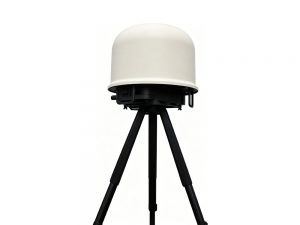
A fixed-site Starlink jammer for area denial is a site-based radio-frequency effect system intended to make Starlink user connectivity unreliable or unavailable across a defined geographic area. Unlike a mobile or airborne jammer, it is installed at a persistent location and is designed around continuous or repeatable operation. The concept sits at the intersection of electronic warfare, critical infrastructure protection, and space-service resilience—and it is best examined as a system-of-systems problem rather than a single piece of equipment.
This article looks at the concept from an industry and policy perspective. It does not provide operational instructions.
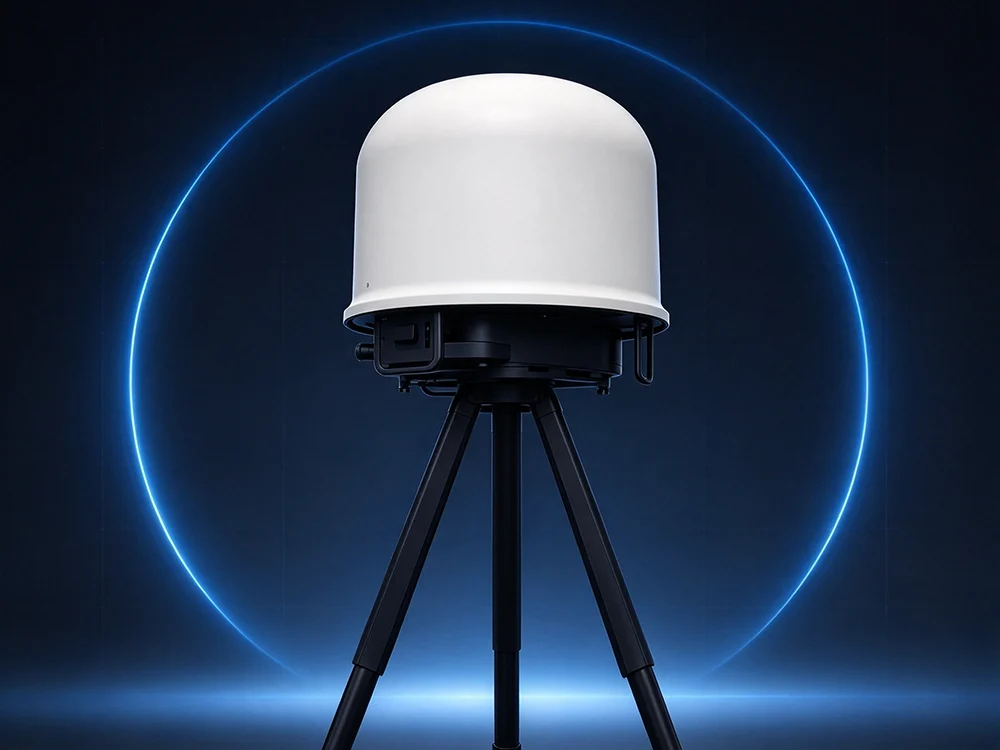
Why Fixed-Site Matters
Fixed-site designs offer advantages that mobile systems struggle to match: reliable power, larger antenna apertures, stable pointing geometry, and simpler maintenance. Those benefits matter when the objective is area denial—not a brief disruption, but a sustained condition in which Starlink terminals in a given zone cannot depend on normal service.
The trade-off is predictability. A fixed installation is easier to locate, characterize, and target than a mobile system. It also has to cope with terrain, local spectrum conditions, and the evolving beam patterns of a low-Earth-orbit broadband network. For a broader view of how Starlink-focused RF effects are developing, see Next-Gen Starlink Jamming Systems.
What “Area Denial” Actually Requires
Area denial is often described as simply “covering a map,” but real-world performance depends on geometry and link margins. A fixed-site jammer must account for the victim terminal’s view of the sky, the satellite constellation’s spot beams, local clutter, and the difference between disrupting one link versus degrading a whole user population. In practice, area denial is a spectrum of outcomes:
| Denial Level | Practical Meaning | Typical Constraint |
|---|---|---|
| Localized disruption | Terminals in a narrow zone lose reliable service | Terrain and antenna pointing |
| Sector-level degradation | Connectivity becomes intermittent across a wider area | Power, spectrum, and beam geometry |
| Population-level pressure | Many terminals experience reduced throughput or outages | Predictable site location and countermeasures |
| Persistent area denial | Sustained unreliability over time | Power, cooling, maintenance, and escalation risk |
This is why fixed-site systems are often evaluated less on peak output and more on persistence, coverage shape, and survivability.
Fixed-Site Versus Mobile and Airborne Approaches
The table below compares fixed-site area-denial jammers with other basing concepts at a high level. The point is not that one is universally superior; each imposes different logistics, signatures, and escalation dynamics.
| Basing Concept | Strengths | Weaknesses | Best Fit |
|---|---|---|---|
| Fixed-site | Stable power, large apertures, persistent presence, easier sustainment | Predictable location, vulnerable to targeting, limited mobility | Defended zones, fixed infrastructure protection, persistent denial |
| Mobile ground | Repositionable, harder to target, flexible coverage | Power and antenna limits, logistics burden | Maneuver operations, temporary denial |
| Airborne | Wide area potential, standoff options | Costly, endurance-limited, politically sensitive | Surge or wide-area effects |
| Space-based | Global reach in theory | High cost, complex policy and escalation issues | Strategic signaling, not tactical area denial |
For most fixed-site concepts, the central engineering challenge is not simply generating RF energy. It is shaping that energy into a predictable denial footprint while remaining survivable and supportable.
Operational and Policy Constraints
A fixed-site Starlink jammer for area denial raises several constraints that industry planners should treat as design drivers:
-
Spectrum regulation: Terrestrial jamming is restricted or prohibited in many jurisdictions; military and security exceptions are highly context-dependent.
-
Attribution and escalation: A persistent fixed site is easier to attribute than a brief mobile effect, which can change the political calculus.
-
Collateral effects: RF denial can affect nearby commercial, civil, and emergency communications.
-
Counter-targeting: Fixed sites require force protection, camouflage, redundancy, and decoy planning.
-
Technical adaptation: Starlink and similar networks can adjust beams, frequencies, and terminal behavior; a static countermeasure ages quickly.
-
Sustainment: Power, cooling, spares, and skilled operators often matter more than nominal jammer specifications.
Detection, Mitigation, and Resilience
On the defensive side, Starlink users and network operators can reduce exposure through layered resilience. Useful measures include interference monitoring, terminal antenna pattern control, route and constellation diversity, and operating procedures for degraded connectivity. Defenders should also assume that a fixed-site jammer will be discovered and targeted; survivability is therefore part of the denial equation, not an afterthought.
Procurement Questions for Industry Buyers
Organizations examining fixed-site area-denial concepts should ask:
-
What denial level is required—localized disruption, sector degradation, or persistent population-level pressure?
-
How predictable is the site’s location, and what force-protection package is assumed?
-
How will the system adapt if the target network changes beam patterns or terminal behavior?
-
What spectrum authorities and legal reviews are required before operation?
-
How will collateral effects on civil and commercial users be assessed?
-
What sustainment model keeps the site operating under stress?
Takeaway
A fixed-site Starlink jammer for area denial is best understood as a persistent RF-effect installation with clear trade-offs: it offers stable power and sustained presence, but sacrifices mobility and survivability. Its real performance depends on coverage geometry, spectrum conditions, counter-adaptation, and legal-political constraints—not just hardware specifications. As Starlink-class networks continue to evolve, fixed-site denial concepts will remain a niche but strategically important part of the counter-space and electronic-warfare discussion.