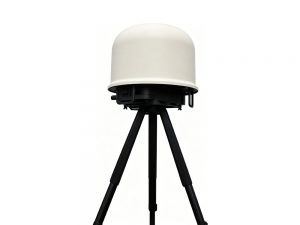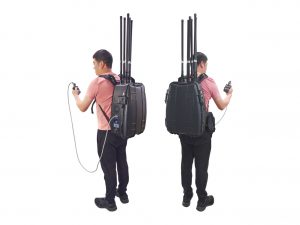
What is a soft kill anti-satellite weapon? In simple terms, it is a counter-space capability designed to deny, degrade, disrupt, or deceive a satellite’s mission without physically destroying the spacecraft. The emphasis is on effects, not on a single type of hardware. A ground-based jammer, a spoofing transmitter, a cyber intrusion, or a laser dazzler can all fall under the soft kill label if the objective is to impair satellite operations rather than create debris through kinetic impact.
That distinction matters because “soft” does not mean harmless or easily reversed. A soft kill can be temporary, but it can also persist through corrupted software, damaged sensors, or disrupted ground-segment trust. The term is therefore best understood as an umbrella category for non-kinetic or functional attacks on space systems.
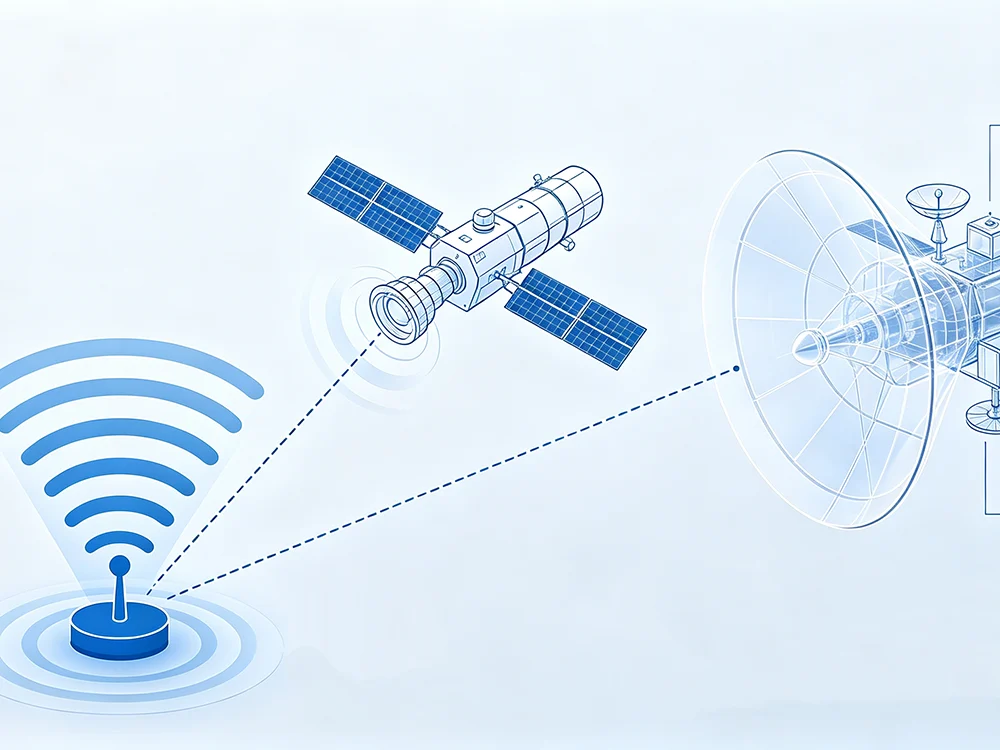
What the Term Does—and Does Not—Mean
A soft kill anti-satellite weapon is usually contrasted with a hard kill ASAT, which relies on kinetic or explosive effects to destroy a satellite or its critical components. Soft kill approaches target the information chain: radio-frequency links, navigation and timing signals, optical sensors, command-and-control pathways, and data processing systems.
However, the label is often used loosely. Not every electronic attack is a weapon in the traditional sense, and not every soft kill is reversible. Some effects last only while the jammer is active; others can leave a satellite in a degraded state long after the immediate attack ends. This ambiguity is one reason soft kill capabilities are strategically attractive: they can impose operational costs while complicating attribution and escalation management.
| Aspect | Hard Kill ASAT | Soft Kill ASAT |
|---|---|---|
| Primary mechanism | Kinetic impact, explosion, or physical destruction | Jamming, spoofing, cyber effects, dazzling, or other functional degradation |
| Physical debris | Likely or intentional | Usually minimal or none |
| Reversibility | Rarely reversible | Sometimes reversible, sometimes persistent |
| Escalation signal | Often clear and visible | Often ambiguous and deniable |
| Typical examples | Interceptor or co-orbital kinetic weapon | RF jammer, spoofing system, cyber intrusion, sensor dazzling |
A Practical Taxonomy of Soft Kill Effects
Soft kill anti-satellite weapons are not defined by platform. They are defined by the effect they produce. The table below outlines common categories used in industry and policy discussions.
| Technique | How It Works | Operational Effect | Reversibility |
|---|---|---|---|
| RF jamming | Transmits noise or interference on uplink, downlink, or navigation frequencies | Lost command links, degraded data, disrupted timing or positioning | Often reversible when jamming stops |
| Spoofing | Sends false signals that mimic legitimate navigation or communication sources | False position, false timing, lockout, or corrupted decision-making | Usually reversible, but trust recovery can take time |
| Cyber intrusion | Exploits ground segment, user terminals, or onboard software | Command manipulation, data corruption, service disruption | Depends on persistence and remediation |
| Laser dazzling | Directs optical energy at space-based sensors | Temporary sensor saturation or loss of imagery | Dazzling is often reversible; higher-power blinding may not be |
| Link disruption | Interferes with specific beams, terminals, or frequency bands | Localized or targeted service outage | Often reversible, but may require rerouting |
These techniques can be combined. A jammer might be used first to disrupt a link, while a spoofing or cyber effect creates confusion during the outage. That layered approach is one reason soft kill threats are difficult to detect and attribute quickly.
Why Soft Kill Matters for Modern Constellations
The growth of proliferated low-Earth-orbit constellations has changed the economics of counter-space effects. Large networks are more resilient in aggregate, but they also depend on complex radio links, commercial ground terminals, and software-defined operations. That creates more potential entry points for jamming, spoofing, and cyber interference. For a closer look at how this pressure is evolving in low Earth orbit, see Next-Gen Starlink Jamming Systems.
Soft kill capabilities also appeal to state and non-state actors because they sit in a gray zone. They can be used below the threshold of physical attack, and their effects may look like routine interference, equipment failure, or poor link quality. The result is a security problem that is less about dramatic explosions and more about sustained operational degradation.
Detection and Resilience: What Operators Can Do
Defending against soft kill anti-satellite weapons requires layered resilience rather than a single fix. Practical measures include:
-
Spectrum monitoring and interference geolocation to detect jamming early.
-
Signal authentication and encryption to reduce spoofing risk.
-
Multi-constellation navigation and alternate timing sources.
-
Beamforming, frequency agility, and route diversity to limit link disruption.
-
Cyber hygiene across ground stations, user terminals, and mission software.
-
Onboard autonomy and degraded-mode procedures for when links are contested.
-
Regular operator training that treats interference as an operational scenario, not an anomaly.
Bottom Line
A soft kill anti-satellite weapon is best defined by its objective: to make a satellite or space service ineffective without destroying it physically. Jamming, spoofing, cyber effects, and sensor dazzling all fit that description, but they differ sharply in reversibility, attribution, and escalation risk. As space systems become more networked and more commercially dependent, soft kill effects will remain a central—and often ambiguous—part of the counter-space threat landscape.