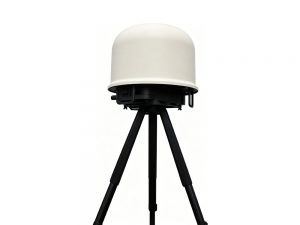
Starlink jamming technology explained is a topic that combines advanced RF engineering with serious legal consequences. To understand how jamming would work against a low Earth orbit (LEO) satellite constellation, you need to examine frequencies, beam patterns, and signal protocols. This article breaks down the technical side in plain language, while noting why actual jamming is illegal in most countries.
How Starlink Communications Work
Starlink uses a constellation of LEO satellites. Each satellite communicates with ground stations and user terminals. The user terminal—often called Dishy—is a phased-array antenna that electronically steers beams toward satellites.
The satellites use Ku-band and Ka-band frequencies. They also use spot beams to focus signals on small geographic areas. This design provides high throughput and low latency.
The link has two directions: downlink from satellite to terminal, and uplink from terminal to satellite. Jamming could target either direction, but the technology is complex.
Starlink Jamming Technology Explained: Core Principles
At its core, jamming means transmitting radio energy on the same frequency as the target signal. This raises the noise floor at the receiver. If the interference is strong enough, the receiver cannot decode the wanted signal.
There are several ways to do this. The table below summarizes the main principles.
| Principle | How it works | Effect on Starlink |
|---|---|---|
| Noise jamming | Transmit random noise on target frequency | Raises noise floor, blocks demodulation |
| Tone jamming | Transmit a single strong tone | Overloads receiver front-end |
| Sweep jamming | Sweep a narrowband signal across a range | Hits different frequencies over time |
| Protocol-aware jamming | Exploit known signal structure | More efficient but requires deep knowledge |
| Uplink jamming | Target the satellite’s uplink receiver | Affects the gateway or user uplink |
These methods are general. But Starlink’s specific waveform and frequency hopping make them harder to apply.
5 Jamming Methods That Could Target Starlink
1. Broadband Noise Jamming
This is the simplest approach. A jammer transmits high-power noise across the Ku or Ka band. But Starlink uses wide bandwidths and frequency hopping. A broadband jammer would need enormous power to cover the whole band. It would also interfere with many other services, making it easy to detect and locate.
2. Spot Beam Jamming
Starlink satellites use spot beams. A jammer could try to target a specific spot beam. But the satellite moves quickly, and the beam footprints shift. The jammer would need to track the satellite and aim precisely. This requires a phased array and tracking software.
3. Uplink Jamming
Instead of jamming the user terminal, an attacker could jam the uplink from the user terminal to the satellite. This means transmitting on the uplink frequency from a location near the terminal. The satellite receives both the legitimate signal and the jammer. If the jammer is strong enough, the satellite cannot decode the user’s signal. But the satellite’s receiver may have anti-jam features.
4. Downlink Jamming
This targets the user terminal’s receiver. The jammer transmits on the downlink frequency. The terminal’s phased array may try to null out the interference. But if the jammer is close and powerful, it can still overwhelm the receiver. The challenge is that the terminal is directional and may be pointing at the satellite, not the jammer.
5. Protocol-Aware Jamming
This is the most sophisticated method. The jammer knows the Starlink waveform and protocol. It can generate signals that look like legitimate traffic but cause errors. For example, it could spoof synchronization signals. This requires deep reverse engineering and is beyond most actors. It also risks being detected as a cyber attack.
Why Starlink Is Hard to Jam
Starlink is not easy to jam for several reasons. The table below lists key factors.
| Factor | Why it complicates jamming |
|---|---|
| Frequency hopping | Signal moves across frequencies rapidly |
| Phased array antennas | Electronically steers beams; can null interference |
| LEO motion | Satellites move fast; jammer must track |
| Spot beams | Signals are focused, not global |
| Adaptive power control | Terminal and satellite adjust power |
| Encryption | Even if jammed, data is protected |
These features mean a simple jammer is unlikely to succeed. A sophisticated military-grade system might have some effect, but it would be complex and expensive.
Technical Challenges and Real-World Limits
Even if someone builds a jammer, physics limits it. The jammer must be within range. For uplink jamming, it must be near the user terminal. For downlink jamming, it must be near the terminal. The power required grows with distance.
Also, the jammer itself is a beacon. Its transmission can be detected and geolocated. That makes it vulnerable to enforcement.
Moreover, Starlink operates in licensed spectrum. Interfering with it is illegal under ITU rules and national laws. The FCC has enforcement actions against jammers. So while the technology is interesting, real-world use is blocked by law and detection.
Legal and Practical Alternatives
If the goal is testing or resilience, there are lawful ways. Shielded enclosures allow testing without over-the-air interference. Spectrum monitoring receivers can detect interference without causing it.
If you are interested in the supply chain, read about Starlink jammer OEM and ODM services. For pricing, see Starlink jammer price range and cost factors.
Conclusion
Starlink jamming technology explained comes down to RF principles: noise, tone, sweep, protocol-aware, uplink, and downlink methods. But Starlink’s design makes jamming difficult, and the law makes it illegal.
For engineers and researchers, the better path is lawful testing and monitoring. For everyone else, understanding the technology helps appreciate why satellite networks are resilient and why interference is a serious offense.