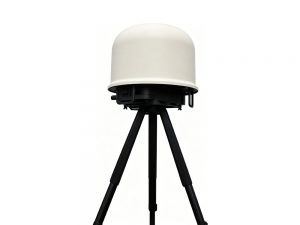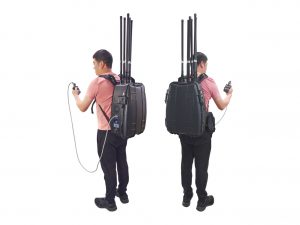
Starlink jammer export license requirements begin with a hard truth: there is no standard export license pathway for a device whose core purpose is to interfere with licensed satellite communications. That reality shapes every regulation, every classification, and every enforcement risk discussed below. This article walks through the five major hurdles that manufacturers, exporters, and buyers face when they search for a lawful route to move Starlink jamming hardware across borders.
Why Starlink jammer export license requirements exist
Harmful interference is prohibited internationally
The ITU Radio Regulations, binding on 193 member states, prohibit any interference—deliberate or unintended—to radio services of other member states. Starlink operates as a licensed satellite service in most markets. A jammer that disrupts its downlink signals does not just affect one user; it can disrupt emergency communications, aviation, maritime operations, and critical infrastructure.
National security and dual-use concerns
Export control regimes treat jamming technology as a dual-use or military item because the same hardware that blocks satellite internet can also disrupt military communications, GPS-guided systems, and emergency response networks. That is why Starlink jammer export license requirements sit at the intersection of telecommunications law, export control law, and national security review.
Hurdle 1: US Export Administration Regulations (EAR) and ECCN 5A001
The classification that captures jamming equipment
Under the US Commerce Control List, ECCN 5A001 controls “jamming equipment specially designed or modified to intentionally and selectively interfere with, deny, inhibit, degrade or reduce mobile telecommunication services”. The entry also covers RF monitoring equipment designed to identify the operation of such jamming equipment.-24
Why the Surreptitious Listening reason matters
ECCN 5A001 groups very different technologies under one number, but items controlled for Surreptitious Listening (SL) reasons—including interception and jamming gear—face some of the most restrictive licensing in the entire CCL. Licenses are required to virtually all destinations and are reviewed with a presumption of denial for human-rights-concern countries.
Licensing reality for Starlink jammers under EAR
| Factor | Practical effect on Starlink jammer export |
|---|---|
| ECCN classification | Likely 5A001.f (jamming equipment) |
| License requirement | Required for nearly all destinations |
| License exception availability | Most exceptions unavailable for SL-controlled items |
| Presumption of denial | Applies to many destinations |
| Civil penalty exposure | Up to $300,000+ per violation (adjusted annually) |
| Criminal penalty exposure | Up to 20 years imprisonment |
The Starlink Kit classification is not the jammer classification
SpaceX has confirmed that the Starlink Kit itself is controlled as a mass-market commodity under ECCN 5A992.c, with components at EAR99. That classification applies to the user terminal—not to a jammer designed to interfere with it. Confusing the two is a common and costly mistake. For a deeper look at the supply-chain side, see our guide to Starlink jammer OEM and ODM services.
Hurdle 2: ITAR controls on electronic attack equipment
When jamming crosses into ITAR territory
The International Traffic in Arms Regulations (ITAR) control defense articles on the US Munitions List. USML Category XI(a)(4)(iii) covers “electronic attack and jamming equipment” defined in ECCN 5A001.f and .h that are subject to the ITAR. If a Starlink jammer is classified as a defense article rather than a dual-use item, ITAR registration and a DDTC license become mandatory.
ITAR registration and licensing burden
ITAR registration is mandatory for manufacturers and exporters of defense articles, and export licenses are reviewed by the Directorate of Defense Trade Controls. ITAR violations carry criminal penalties, including imprisonment. For any company considering a Starlink jammer export, the ITAR question must be resolved before any shipment is contemplated.
EAR vs. ITAR: which applies?
| Regulatory framework | Applies to | Licensing authority | Penalty severity |
|---|---|---|---|
| EAR (ECCN 5A001) | Dual-use jamming equipment | Bureau of Industry and Security (BIS) | Civil + criminal |
| ITAR (USML Cat. XI) | Defense article jamming equipment | Directorate of Defense Trade Controls (DDTC) | Criminal primarily |
| Both may apply | If item has both dual-use and defense characteristics | BIS and DDTC coordination | Maximum exposure |
Hurdle 3: EU dual-use and military list controls
EU dual-use regulation
The EU dual-use list includes jamming equipment specially designed or modified to intentionally interfere with cellular mobile telecommunications services. For GNSS jamming equipment, the EU refers exporters to Military Goods Controls. Satellite jamming equipment falls under similar catch-all provisions when the exporter knows or suspects the end use involves interference.
EU Common Military List ML11
ML11 of the EU Common Military List covers electronic equipment not controlled elsewhere, including jamming and counter-jamming equipment. Global Navigation Satellite Systems (GNSS) jamming equipment and specially designed components are explicitly listed. A Starlink jammer operating in Ku-band and Ka-band would likely fall within these controls when assessed for military end use.
EU member state implementation
Each EU member state implements dual-use and military list controls through national legislation. Export license applications are submitted to the national authority, which coordinates with other member states and the European Commission. Denial in one member state can block the same export from other member states.
Hurdle 4: China’s dual-use export control list
The 2024 dual-use list
China published its consolidated Dual-Use Items Export Control List effective December 1, 2024, under the Export Control Law and the Dual-Use Items Export Control Regulations. The list includes categories relevant to RF jamming and satellite interference equipment.
Licensing requirements under Chinese law
Chinese exporters must obtain a dual-use export license before shipping controlled items. Unlicensed exports constitute export control violations with administrative and criminal penalties. For satellite jamming equipment, the classification depends on technical parameters including frequency range, output power, and intended use.
Impact on global supply chains
Many RF hardware components are manufactured in China. Even if final assembly occurs elsewhere, Chinese-origin components may trigger Chinese export control requirements for re-export. This creates a layered compliance problem: US EAR, EU dual-use, and Chinese dual-use controls may all apply to the same shipment.
Hurdle 5: End-use, end-user, and sanctions screening
Military end-use controls
The US BIS has expanded military end-use controls to all 25 countries in Country Group D:5, as well as Macau. A Starlink jammer export to any of these destinations would face heightened scrutiny and a presumption of denial.-2
Sanctions programs
US, EU, UK, and UN sanctions programs prohibit exports to designated countries, entities, and individuals. Russia, Iran, North Korea, Syria, and occupied regions of Ukraine are subject to comprehensive or targeted sanctions that would block any Starlink jammer export.
The red flag problem
Even if a destination is not comprehensively sanctioned, the nature of the product creates red flags. Exporters must screen end users for military, intelligence, or security agency connections. A commercial buyer with no verifiable end use is not a safe end user for jamming equipment.
Country-by-country export license snapshot
| Country / Region | Applicable control | License required? | Typical review outcome |
|---|---|---|---|
| United States | ECCN 5A001.f / ITAR Cat. XI | Yes, for nearly all destinations | Presumption of denial for many |
| European Union | Dual-use Reg. + Common Military List | Yes, national authority review | Restrictive; case-by-case |
| United Kingdom | Export Control Order 2008 | Yes, ECJU review | Restrictive |
| China | Dual-Use Items Export Control List | Yes, MOFCOM license | Restricted |
| Australia | Defence and Strategic Goods List | Yes, DEC review | Restrictive |
| India | DGFT restricted item | Yes, DGFT license in consultation with security agencies | Government use only |
| Japan | Foreign Exchange and Foreign Trade Act | Yes, METI license | Restricted |
What a compliant export license application actually requires
For a hypothetical lawful RF product that falls under dual-use controls, the application process typically demands:
| Requirement | Why it matters |
|---|---|
| Technical specifications | Frequency range, output power, modulation type |
| End-user statement | Who will use it and for what purpose |
| End-use description | Specific application, not vague “testing” |
| Non-transfer undertaking | Commitment not to re-export without authorization |
| Import license (destination) | Many countries require prior import approval |
| Compliance program documentation | Internal controls, training, audit trails |
| Legal opinion | Classification analysis and licensing rationale |
For a Starlink jammer, the end-use description cannot be lawful in most jurisdictions. That is why the application fails at step three.
Lawful alternatives that can be exported
| Lawful product | Export classification | Can it be licensed? |
|---|---|---|
| Shielded RF enclosures | EAR99 or 5A992 | Yes, with end-use checks |
| Spectrum monitoring receivers | EAR99 or 5A001.b | Yes, for many destinations |
| GNSS/satellite simulators | EAR99 or 5A992 | Yes, with end-use checks |
| Authorized counter-UAS systems | Government-approved; case-by-case | Only to approved government end users |
| RF engineering services | EAR99 (technology may be controlled) | Subject to deemed export rules |
These products serve legitimate testing, monitoring, and resilience purposes without triggering the export control prohibitions that apply to jamming equipment.
Conclusion
Starlink jammer export license requirements are not a paperwork exercise—they are a legal barrier. US EAR, ITAR, EU dual-use and military list controls, China’s dual-use list, and end-use sanctions screening all point in the same direction: no lawful export pathway exists for a device designed to jam licensed satellite communications. For manufacturers and exporters, the smart move is to focus on compliant RF products—test equipment, shielded systems, and spectrum monitoring—that can be exported with proper licenses and clean end-use documentation.