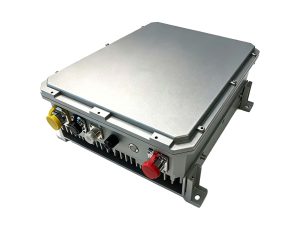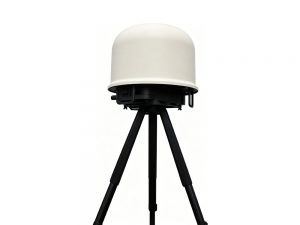
The phrase “Starlink jammer OEM and ODM services” appears in B2B search queries because some buyers look for private-label or custom-designed RF interference products. But this is not a normal consumer electronics category. It sits at the intersection of satellite communications, radio regulations, public safety, and national security. For manufacturers, distributors, and brands, the compliance risk is not a footnote—it is the entire story.
Why the keyword is misleading
OEM and ODM usually signal a mature supply chain: a factory builds to a buyer’s brand, or supplies a design that buyers rebrand. In jamming, that model breaks down. Most reputable RF manufacturers will not accept a Starlink jammer OEM/ODM project because the device’s core function—deliberately interfering with authorized radio communications—is illegal in most jurisdictions. Even if a device is marketed for “privacy” or “signal control,” regulators generally assess purpose and effect, not just labels.
OEM vs. ODM in this context
| Model | Common meaning | Why it is high-risk for jammers |
|---|---|---|
| OEM | Buyer provides brand/spec; factory manufactures | Factory may still be liable for unlawful product purpose and exports |
| ODM | Factory designs product; buyer rebrands | Design origin does not remove regulatory liability from seller or buyer |
| White-label | Existing product with new branding | Certifications may be invalid or nonexistent for jammer use |
| Custom development | Buyer commissions new hardware | Export controls, sanctions, and criminal exposure can apply |
The table matters because many B2B buyers assume OEM/ODM shields them from responsibility. It does not. If the product is intended to jam satellite signals, both the entity commissioning it and the entity manufacturing it can face enforcement.
Regulatory snapshot
| Region | General position on jammers | Practical impact on OEM/ODM |
|---|---|---|
| United States | Jamming is prohibited under communications law; FCC enforcement is active | No lawful FCC certification for jammer purpose |
| European Union | National regulators prohibit harmful interference; CE marking is not a loophole | Customs and market surveillance can seize products |
| United Kingdom | Wireless telegraphy laws restrict interfering transmissions | Criminal liability and equipment forfeiture possible |
| Australia | ACMA prohibits jamming and interference | Import and supply can trigger penalties |
| International | ITU Radio Regulations require protection of authorized services | Cross-border sales increase legal exposure |
Starlink operates as a licensed satellite service in many markets. Interfering with its signals can disrupt more than one user. It can affect emergency communications, aviation, maritime, and critical infrastructure. That is why regulators treat jamming as a serious offense rather than a simple product-compliance issue.
Why legitimate factories say no
A factory that already produces RF equipment has three concerns:
-
Certification: No recognized test lab can issue a legitimate FCC, CE, UKCA, or equivalent approval for a jammer whose purpose is interference.
-
Export controls: RF hardware can fall under dual-use or military-related controls, especially when sold across borders.
-
Reputation and liability: One enforcement action can jeopardize the factory’s lawful product lines, banking relationships, and customer contracts.
For these reasons, many suppliers that appear in search results are not manufacturers at all. They may be intermediaries, drop-shippers, or sellers using SEO terms to capture traffic. Buyers who send deposits often find no verifiable factory, no compliance documentation, and no after-sales support.
Lawful alternatives for RF testing and protection
If the real goal is testing, network resilience, or protecting a facility from interference, there are lawful paths. They require engineering discipline and often a license or shielded environment.
| Lawful need | Compliant approach | Key condition |
|---|---|---|
| Test a satellite terminal | Conducted testing or shielded RF enclosure | Prevent any over-the-air leakage |
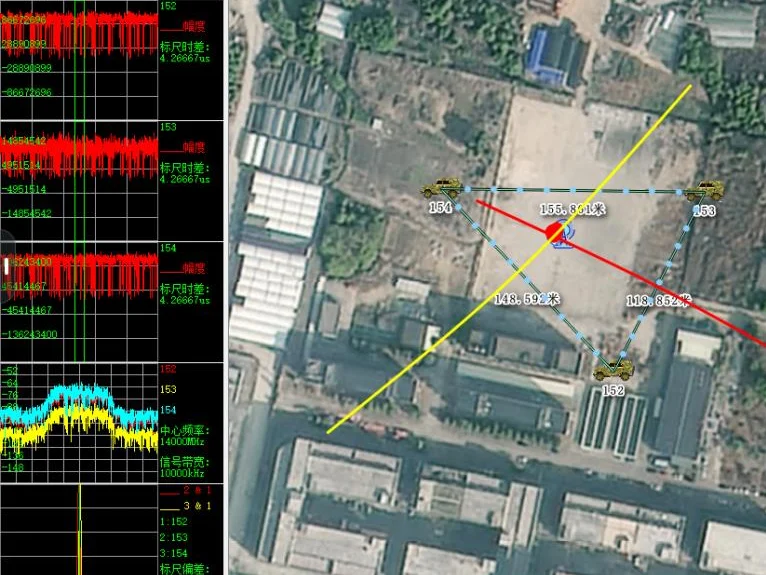
| Monitor spectrum for interference | Licensed spectrum monitoring and direction-finding | Operate as a receiver, not a jammer |
| Protect a site from drone or signal threats | Authorized counter-UAS or interference detection | Use only government-approved systems |
| Validate GNSS/satellite resilience | Simulators in Faraday cages or licensed test ranges | No harmful interference outside test area |
| Research RF effects | Academic or commercial lab with proper authorization | Ethical review and regulatory approval |
These alternatives do not carry the same SEO appeal as “Starlink jammer OEM and ODM services,” but they keep companies on the right side of the law. They also produce data that is defensible in audits, court, and procurement reviews.
A buyer’s compliance checklist
Before engaging any supplier that claims to offer Starlink jammer OEM or ODM services, ask:
-
Can the supplier provide a valid equipment authorization for the intended use?
-
Will the factory disclose its legal entity, export license status, and test reports?
-
Does the contract require compliance with ITU and local radio laws?
-
Is the product marketed for interference, or for lawful monitoring/testing?
-
Are there sanctions or end-user restrictions on the destination country?
If the answer to the first question is no, the project is not a commercial opportunity. It is a legal exposure.
Conclusion
The market for “Starlink jammer OEM and ODM services” exists mainly in search queries and gray-market channels, not in reputable manufacturing. Legitimate OEM/ODM providers focus on compliant RF products: test equipment, shielded systems, spectrum monitoring, and authorized resilience tools. For brands and buyers, the smart move is to separate hype from compliance. A product that cannot be certified, exported, or used lawfully is not a product—it is a liability.